Collaborative robotics test-bed at The James Hutton Institute shortlisted for industry prize
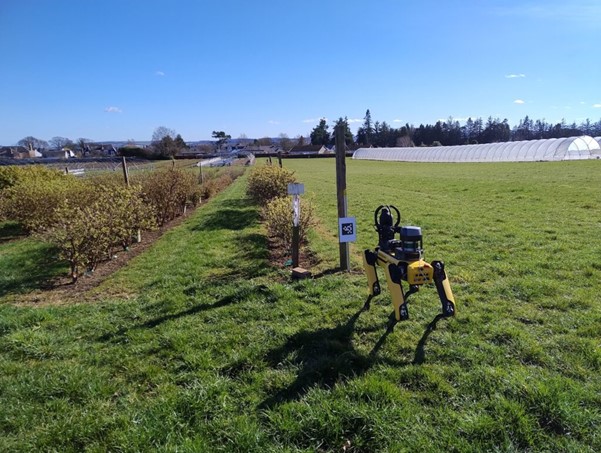
The James Hutton Institute, in collaboration with The National Robotarium, Scotland 5G Centre, Boston Dynamics and telecommunications innovators, Freshwave; has piloted the use of robotic systems that can perform precision farming tasks, including crop health monitoring, targeted fertiliser application and soil condition assessment, through portable 5G private networks on the research farm at its Invergowrie campus.
The partnership, funded by Scotland’s 5G’s Innovate UK Technology Mission Fund Programme, has been shortlisted for the Engineer’s 2025 Collaborate 2 Innovate awards in the Information, Data and Connectivity category, which highlights the success of ongoing collaborative research to implement precision agriculture techniques while addressing rural connectivity challenges.
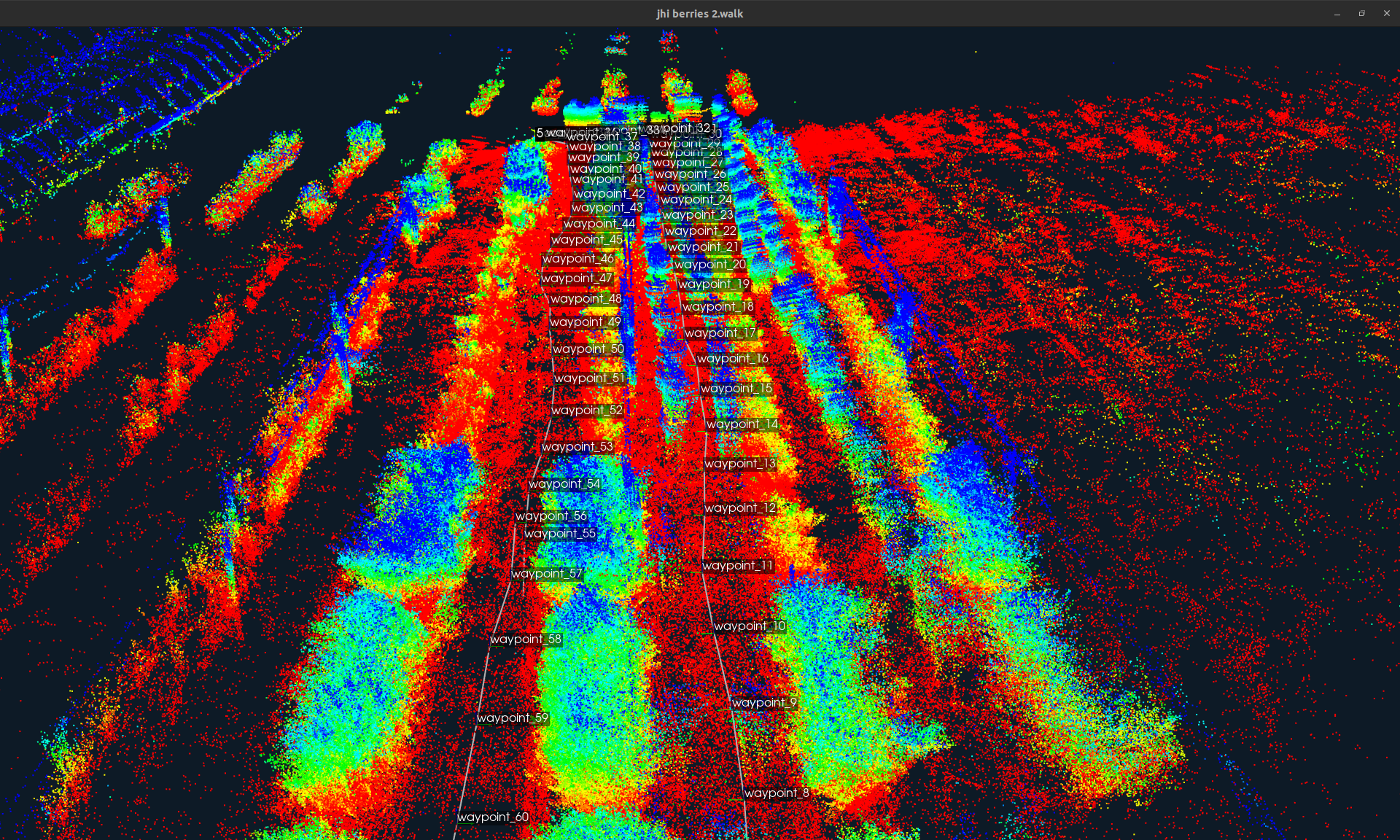
The robotic systems use high-speed 5G connections to communicate with other robotic devices securely in real time, transmitting detailed information about crops, soil conditions and growing environments, enabling farmers to make informed decisions based on current field conditions.
A key breakthrough has been addressing connectivity limitations in rural areas. Agricultural operations requiring data-intensive robotic applications often face inadequate mobile network coverage and bandwidth constraints. The partnership has worked with portable 5G private networks that can be rapidly deployed on farms, providing the high-speed, low-latency connectivity (the delay before a transfer of data begins) essential for real-time robotic operations.
The robotic systems can stream high-definition video, generate detailed field mapping and, with visual recognition systems under development, identify issues such as disease, pest infestations or water stress significantly earlier than traditional monitoring methods. Applications that previously required expensive specialised equipment, technical expertise and optimal weather conditions can now be implemented more efficiently and cost-effectively.
A working partnership between robot engineers, agricultural scientists and farmers has been crucial to develop a proof of concept that could provide a solution to ongoing challenges facing the agricultural sector. The team gained insights into data-driven farming practices and how barriers, such as speed and reliability in remote and rural locations, may hinder the wide-scale adoption of remote and autonomous technologies that could greatly enhance the efficiency and productivity on farm, reducing manual workloads and improving efficiencies.
Building on successful demonstration projects led by the Hutton for irrigation automation, and open-source tractor autosteer, the move to robotics was a natural next step, making use of the unique expertise and experience of cropping systems and cutting-edge technology available on site.
The National Robotarium’s existing relationship with leading global robotics company, Boston Dynamics, allowed engineers from both organisations to work together to bridge a compatibility gap, that became apparent in the early stages of development, between the private modem and the SPOT robot platform software. The transatlantic teams worked quickly to identify and deliver the solution. Boston Dynamics published a case study to show its 1.5m+ social media followers how the partnership helped to push the boundaries of remote robotics.
SPOT also found fame with many headlines in the press throughout the course of the project, including The Scottish Farmer, as well as an appearance on BBC Landward –(2025 Episode 19 for those who wish to see more).
Public engagement forms an important part of applied research, achieving impact through communication, and this kind of novel technology often captures the imagination.
Much of the technology involved in automation and robotics is already present in the highly advanced equipment used today in modern agriculture, with their ongoing development and integration into farming systems being more a case of evolution than revolution.
However, the technical skills and knowledge required to operate the advanced technology applied on farm is rarely reflected in the wider media, with the industry at times being unfairly portrayed as backwards or old-fashioned. We should celebrate that in Scotland, and more broadly in the UK, we have an advanced agricultural sector supported by leading agritech research.
Looking ahead to the awards announcement on 26th February, the Hutton hopes that it has been able to promote recent developments in agritech and highlight the technological innovation in agriculture through ongoing collaboration. Its work showcases how groundbreaking technologies and collaborative work between experts in the fields of robotics, telecommunications, agriculture, and engineering can help transform industries that have been active for thousands of years, bridging the gap between traditional ways of working and the rapidly advancing, highly-technological future.
Andrew Christie, Field Manager and Agronomist, at The James Hutton Institute works at the cutting-edge of precision farming, taking the lead in research projects that can provide case studies for farmers, giving them confidence in the ability of agricultural robots to perform in challenging field conditions and evidence to justify the cost.
This article was first published in The Scottish Farmer.
Disclaimer: The views expressed in this blog post are the views of the author, and not an official position of the Hutton or funder.