Hutton PhD student wins top prize at STEM for BRITAIN
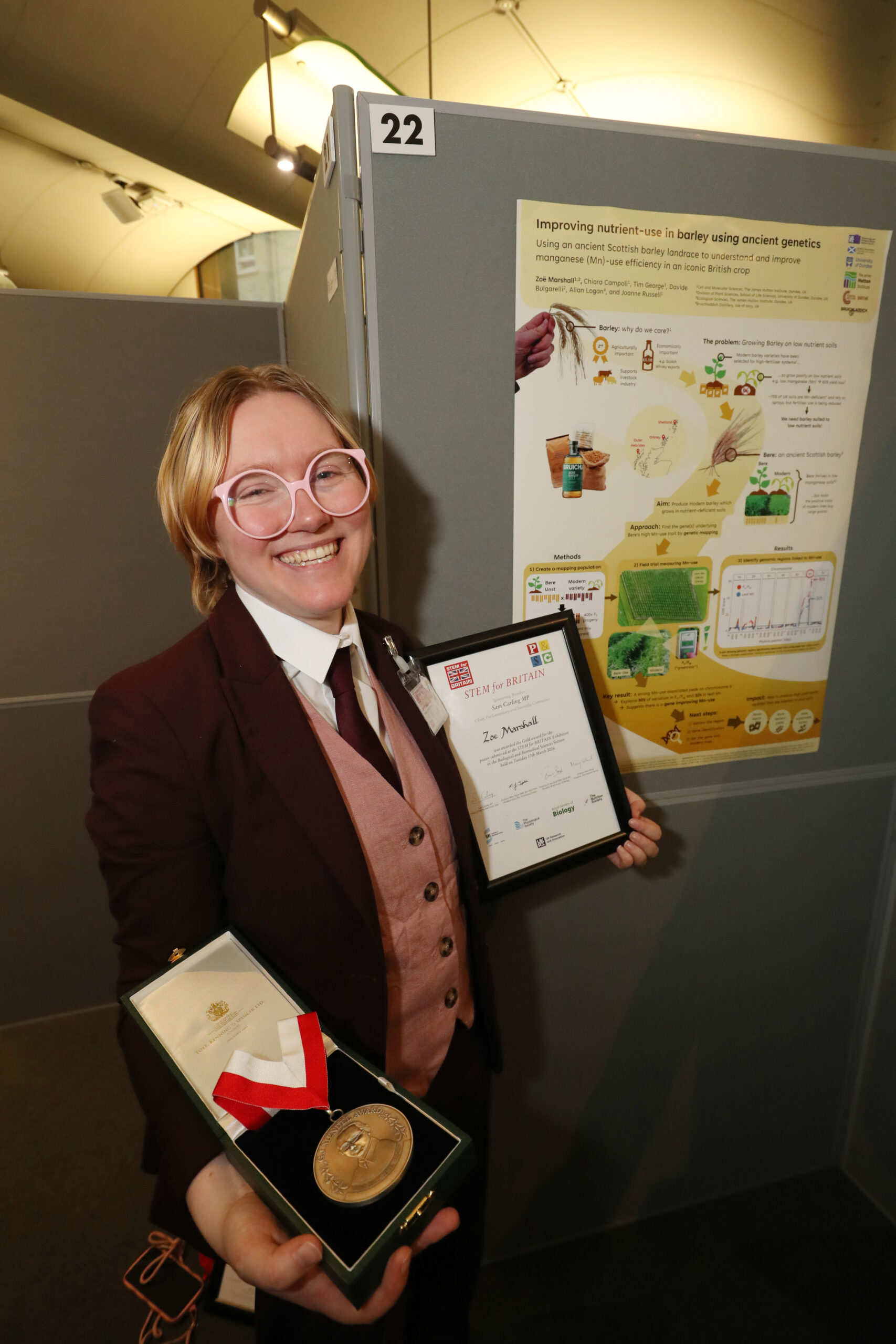
The James Hutton Institute is delighted to announce that Zoe Marshall, a second-year student in its Barley Industrial Training Network (BARIToNE) programme won the gold award in the biological and biomedical sciences category, and the prestigious G.J. Mendel medal at this year’s STEM for BRITAIN competition.
Zoe received the top honour for her poster presentation exploring how ancient Scottish Bere barley landraces can be used to genetically map manganese-use efficiency, offering new insights that could help improve nutrient use in today’s British crops.
She said, “The event was a wonderful opportunity to gain experience in science communication, in sharing my work simply and accessibly in an engaging narrative. It was inspiring to see the diversity of research being presented by early career scientists across the UK.
“I would encourage any other students or post‑doctoral researchers who are interested to apply for next year’s event once applications open in September.”
“I would encourage any other students or post‑doctoral researchers who are interested to apply for next year’s event once applications open in September.”
Zoe Marshall – The James Hutton Institute
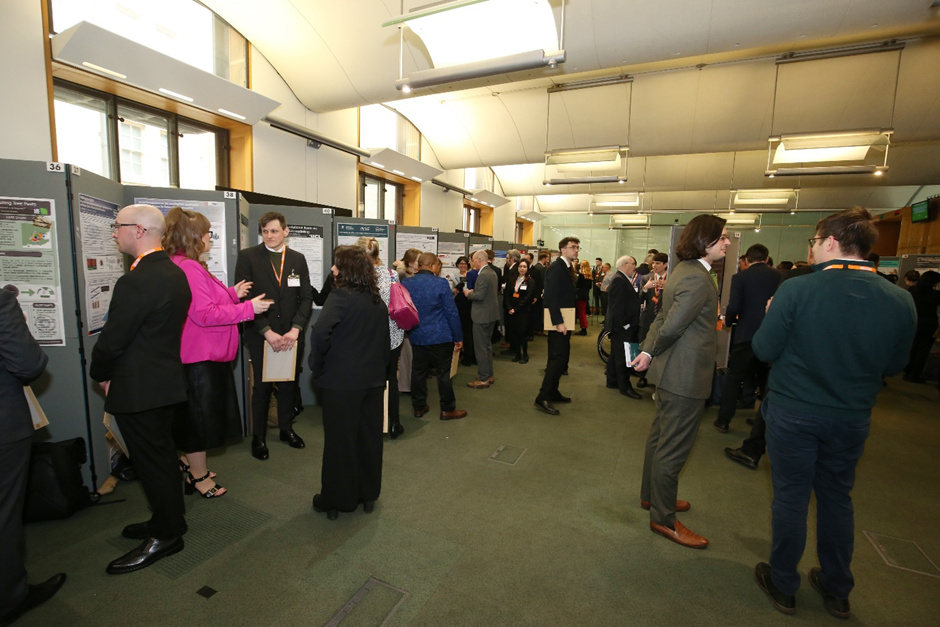
STEM for BRITAIN, organised by the Parliamentary & Scientific Committee, is a major annual scientific poster competition that has been held in the Houses of Parliament since 1997. The event showcases cutting‑edge research from early‑career scientists, engineers, technologists and mathematicians from across the UK, providing MPs and peers with a window into innovative work happening in UK institutions. Prizes are awarded for the posters which best communication high level science, engineering or mathematics to a lay audience.
BARIToNE is a £5million Biotechnology and Biological Sciences (BBSRC) and industry-funded collaborative training partnership, comprising 18 industrial and seven academic partners which has funded 42 PhD studentships over seven years.
Its research focus is on driving down the environmental footprint of primary production while maintaining a sustainable supply of high-quality barley.
More information on Zoe’s project, “Back to the future: using ancient barley in a changing climate” can be found here.
