A vibrant future for barley: highlights from the 2026 International Barley Hub Stakeholder Meeting
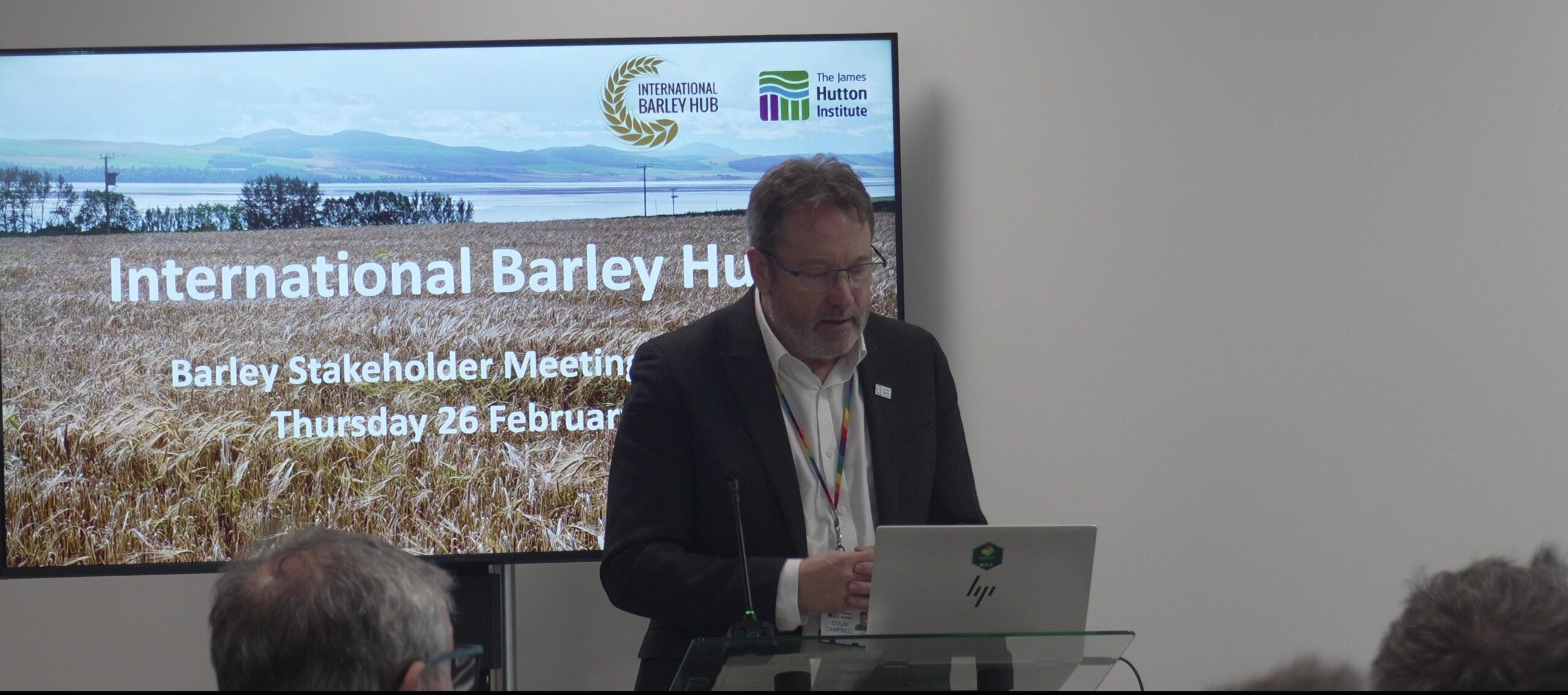
More than 80 professionals from across the barley supply chain gathered at The James Hutton Institute’s Crop Innovation Centre on 26 February 2026 for the annual International Barley Hub (IBH) Stakeholder Meeting.
As the beating heart of barley research and innovation in Scotland, the IBH continues to drive scientific discovery that strengthens and future‑proofs the nation’s most widely grown crop. The initiative forms part of a £62 million investment through the Tay Cities Region Deal, uniting government, academia, industry and the voluntary sector.
Setting the scene: a day packed with insight and innovation
The day opened with a welcome from Professor Colin Campbell, Chief Executive of the Hutton, who highlighted the Institute’s unique multidisciplinary research environment and introduced Hutton Unearthed, its first public-facing fundraising drive, to help speed up research into climate resilience, sustainable farming, biodiversity recovery and environmental justice.
The IBH management team then took the stage to outline a refreshed operational structure designed to meet the evolving challenges of the barley supply chain.
IBH Chair, George Lawrie, emphasised the IBH’s positive impact on Scotland’s whisky industry and the untapped potential to extend these benefits across the wider food sector.
IBH Director, Professor Tim George, reinforced the IBH’s mission: tackling pre‑competitive challenges for the benefit of the entire industry. He described the transition toward a more collaborative partnership model, one shaped directly by industry needs. Business Development Manager, Dan Langford, expanded on this vision, outlining opportunities for stakeholders to take “a seat at the table” through new industry and technical advisory boards.
Deputy Directors, Dr Isabelle Colas (Community), Dr Kelly Houston (Capacity) and Dr Sarah McKim (Collaboration) closed the session by presenting their strategies for strengthening the IBH’s future. A shared theme ran through all talks: the need for deeper partnership, co‑creation of priorities and collective action to secure sustainable barley production.
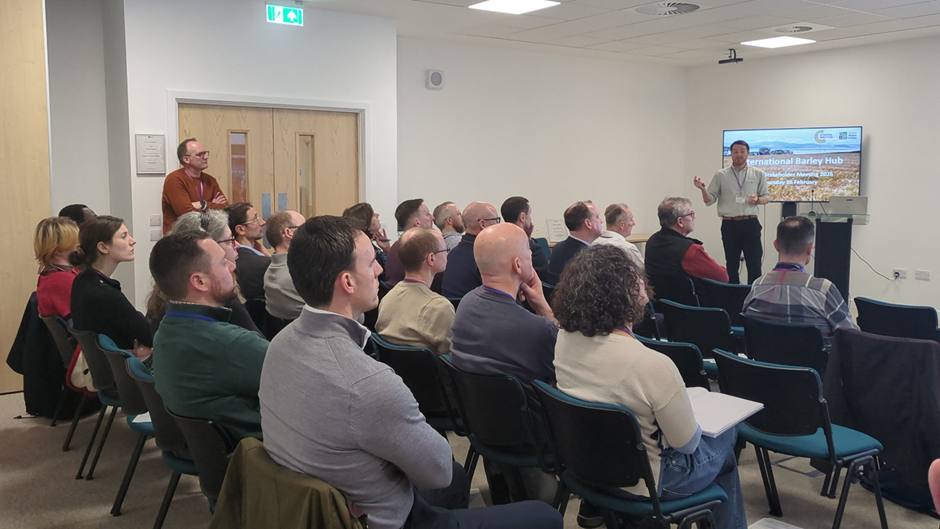
Environmental, social and governance (ESG) reporting, regenerative farming and the science behind barley
The research showcase began with a presentation from Nigel Davies, ESG consultant at The Maltdoctor. He highlighted the growing importance of robust ESG reporting, noting that investors increasingly demand transparent carbon planning and measurable targets.
Nigel also explored how regenerative farming and emerging standards, such as CRCF (carbon removals and carbon farming regulation), VERRA carbon methodologies, Boortmalt’s MRV tools and the Sustainable Agriculture Platform, can support decarbonisation across the barley sector.
A series of technical talks followed:
- Stevie Gray, Scottish Agronomy, examined how the unusually dry spring of 2025 created uneven tiller growth and smaller grains, underscoring the need for research into crop energy management.
- Adam Carson, DIAGEO, echoed the value of regenerative farming and shared updates on collaborative programmes with the Hutton, SAC, Agricarbon and Scottish Agronomy.
- Dr Ken Loades, The James Hutton Institute, discussed the critical role of soil health in carbon management.
- Dr Esther Carmen, The James Hutton Institute, offered a social science perspective, demonstrating how behavioural insights can accelerate sustainability adoption and improve knowledge exchange.
Building capacity: new PhD programme and breeding ambitions
After a well‑earned lunch and networking session, Edgar Huitema from the University of Dundee introduced CIC‑START, a new PhD programme inspired by the success of BARIToNE, which trained 42 students over seven years. CIC‑START aims to recruit its first cohort in October 2026, training 24 PhD students to address skills shortages across potatoes, barley and minority cereal crops.
Dr Ian Archer, the new Director of James Hutton Science Services, joined Dan Langford to discuss the Hutton’s breeding initiatives in potatoes and soft fruit, and the exciting possibility of establishing a barley breeding programme. Stakeholders were encouraged to help shape what such a programme should deliver.
The scientific excellence of the Hutton community was showcased through expert talks:
- Dr Miriam Schreiber on the dormancy gene MKK3 and its role in pre-harvest sprouting
- Dr Ruth Hamilton on the success of R‑evolve project in modernising landrace varieties to increase the biodiversity available to breeders
- Dr Mike Rivington on a crop‑modelling prototype designed to support farmer decision‑making
- BARIToNE PhD students, David Ashworth (developing novel phytonutrients for whisky) and George Epaku (studying organic fertiliser impacts on malt production)
Closing reflections: collaboration as the path forward
The final presentation came from Andy Griffiths of DIAGEO, who returned to the theme of ESG and the need to share risk across the supply chain. He highlighted the Landscape Enterprise Networks (LENs) model as a powerful tool for building collaborative, place‑based solutions. In Scotland, the Leven Hub, supported by DIAGEO, SSEN‑D and Perth & Kinross Council, now includes 10 farms trialling green manures, cover crops, reduced cultivation and demonstration plots to address four key missions: water quality, flood management, biodiversity and carbon sequestration.
A growing community with growing momentum
The 2026 IBH Stakeholder Meeting was rich with inspiration, insight and forward‑thinking ideas. It showcased a vibrant, committed barley community and the enormous potential for innovation across the supply chain.
The IBH management team extends sincere thanks to all attendees for their contributions, discussions and enthusiasm. The momentum built this year sets the stage for even greater collaboration ahead and we look forward to welcoming everyone back next year.
Blog by Dr Isabelle Colas, Deputy Director of the International Barley Hub
Disclaimer: The views expressed in this blog post are the views of the author, and not an official position of the Hutton or funder.