ElecTrickle: Hutton researchers developing wastewater treatment process to improve efficiency and cut greenhouse gas emissions
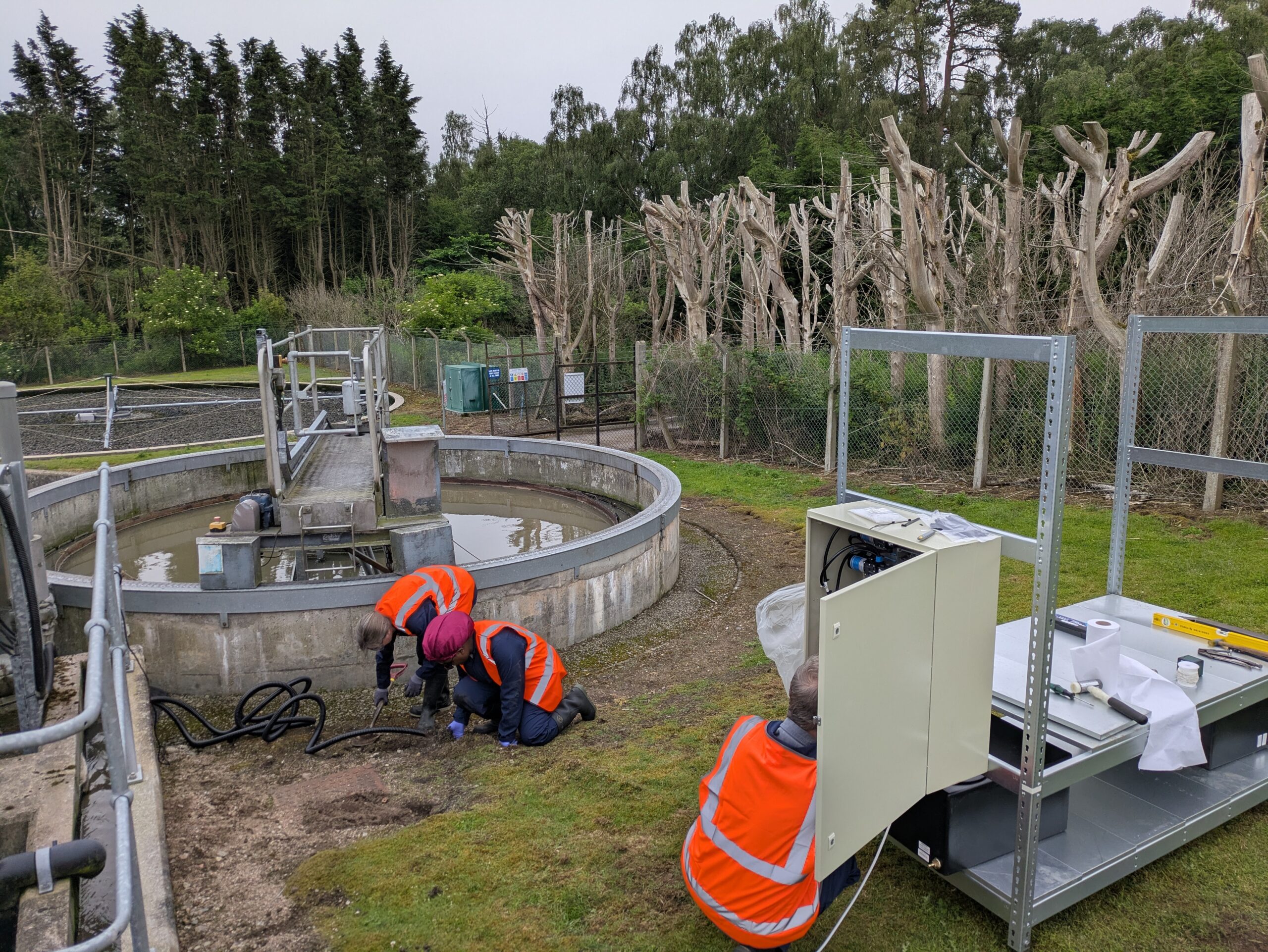
Researchers at The James Hutton Institute have begun field trials on a new wastewater treatment process that could improve efficiency while cutting greenhouse gas emissions.
The UK water utility sector produces around 2.5 million tonnes of carbon dioxide equivalent (CO₂e) each year, representing approximately 33% of the nation’s industrial process and waste management emissions. Around 75% of this comes from power consumption, with the remaining 25% generated by treatment processes.
In response, Scottish Water and the Hydro Nation Chair Research and Innovation Programme launched the Hydro Nation Crucible series in 2022. Each Crucible event focused on bringing together academics and research institutions to develop innovative solutions to a range of high-priority net zero challenges. The inaugural Crucible, held in April 2022, focused on wastewater process emissions as a key net zero challenge, bringing together diverse expertise to explore solutions and foster collaboration.
One of the concepts that emerged from the programme, and was subsequently funded by the Hydro Nation Chair, was ElecTrickle, led by researchers from The James Hutton Institute. ElecTrickle is a novel wastewater treatment process designed to improve operational efficiency while significantly reducing greenhouse gas emissions. The technology has been developed to enhance trickling filters, which are currently used in 60–70% of wastewater treatment works across the UK, despite treating only around 25% of the nation’s wastewater flow.
These trickling filters use a layer of microbes, known as biofilm, to break down organic matter in wastewater. While this is effective at cleaning water, the bacteria create greenhouse gas emissions which then enter the atmosphere. In contrast, the ElecTrickle filters use bioelectrochemical methods to cut the greenhouse gas emissions that come from this process.
Laboratory results have shown that the bioelectrochemical approach decreases greenhouse gas emissions by up to 90% while tripling the efficiency of the filtration. The system is now being scaled up at a Scottish Water wastewater treatment site, with researchers hoping to replicate their lab results.
If successful, ElecTrickle could be used to retrofit trickling filters across the country – representing a major decarbonisation opportunity. Replacing just 6,000 ageing filters with ElecTrickle could help the water utility sector cut 140,000 tonnes of carbon dioxide equivalent emissions annually – equal to taking 95,000 cars off the road.
ElecTrickle’s increased efficiency could also reduce the need for costly plant expansion, providing the sector with further savings.
So far, the project, in collaboration with the University of Glasgow, has received support and funding from the Hydro Nation Chair (University of Stirling), Scottish Water and UKRI Proof of Concept. It is also part of the Wayfinder Programme, led by James Hutton Scientific Services, and is being considered for commercial opportunities.
Dr Xavier Alexis Walter, a senior researcher at the Hutton and leader of the project, said: “It is an exciting moment as the technology leaves the laboratory to be tested in the field under real-world conditions.

“If our collective efforts bear fruit in the real world, we will be thrilled to have identified and delivered a potential new solution for the UK’s sustainability portfolio.”
David Millar, Senior Innovation Fellow at the Hydro Nation Chair (University of Stirling), said: “This collaborative approach to technology development has demonstrated how innovative ideas can be accelerated from concept to live field trial in less than five years.
“This is exactly the type of impact the Hydro Nation Chair programme was established to deliver for the Scottish water sector. We look forward to continuing our support for The James Hutton Institute and Scottish Water beyond the trial phase, helping to scale the technology across the industry and drive meaningful progress towards reducing process emissions.”