The crops of tomorrow are being tested today. Are we ready for the future of farming?
A recent report, the State of Agricultural Research & Innovation 2026 raises an important question: are we doing enough to connect scientific discovery with the real-world challenges facing agriculture?
Agriculture is facing a period of unprecedented change. Farmers are being asked to produce food more sustainably while dealing with increasingly unpredictable weather, evolving regulations and rising production costs.
At The James Hutton Institute, we’re investing in the science, facilities and people needed to help agriculture navigate this transformation. Breakthroughs in artificial intelligence, precision breeding and automation are opening up entirely new ways of understanding and improving crops.
What if farmers could spot drought stress in a crop before any visible signs appeared? What if breeders could identify disease-resistant varieties years faster than they can today? And what if we could develop crops that thrive in a changing climate while relying less on chemical inputs?
These aren’t distant possibilities. They’re challenges that our researchers are working on right now.
Turning research into real-world solutions
The report analysed more than £1.2 billion of publicly funded UK agricultural research awarded between 2022 and 2026 and gathered insights from over 600 farmers, researchers and other stakeholders.
One finding stood out. Only 7.3% of the funding analysed was classified as interdisciplinary or systems-based research, while just 0.3% was categorised as user-centred research.
While those figures don’t tell the whole story, they highlight a familiar challenge. Agriculture isn’t a collection of separate issues. Genetics, climate, soils, farming practices, markets and policy all influence one another.
That means innovation isn’t simply about making a scientific breakthrough. It’s about creating the connections that help new knowledge become practical tools, technologies and approaches that people can actually use.
Building the infrastructure for future farming
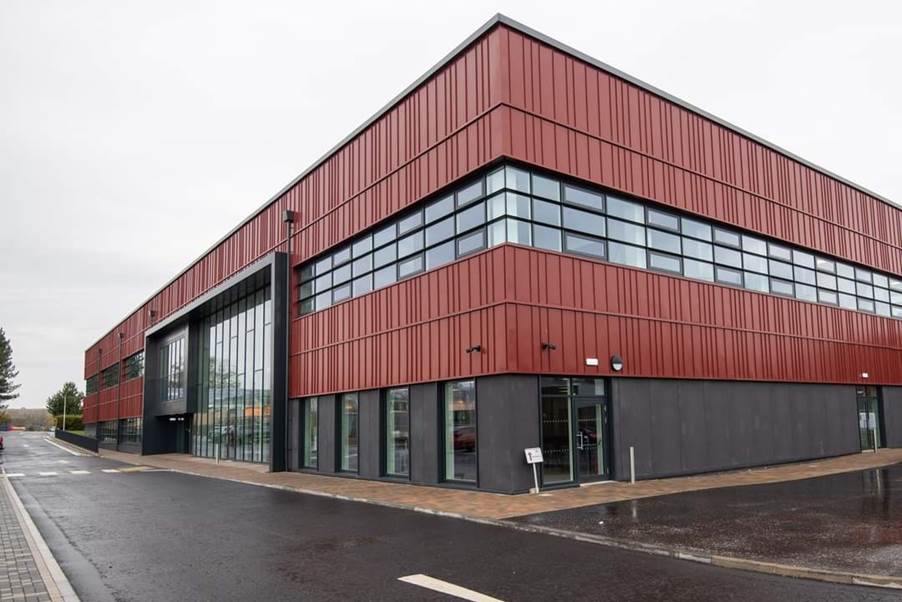
This challenge sits at the heart of our investment in the Crop Innovation Centre, part of a £62 million Tay Cities Region Deal investment that supports the Advanced PlantGrowth Centre (APGC), International Barley Hub (IBH) and associated facilities.
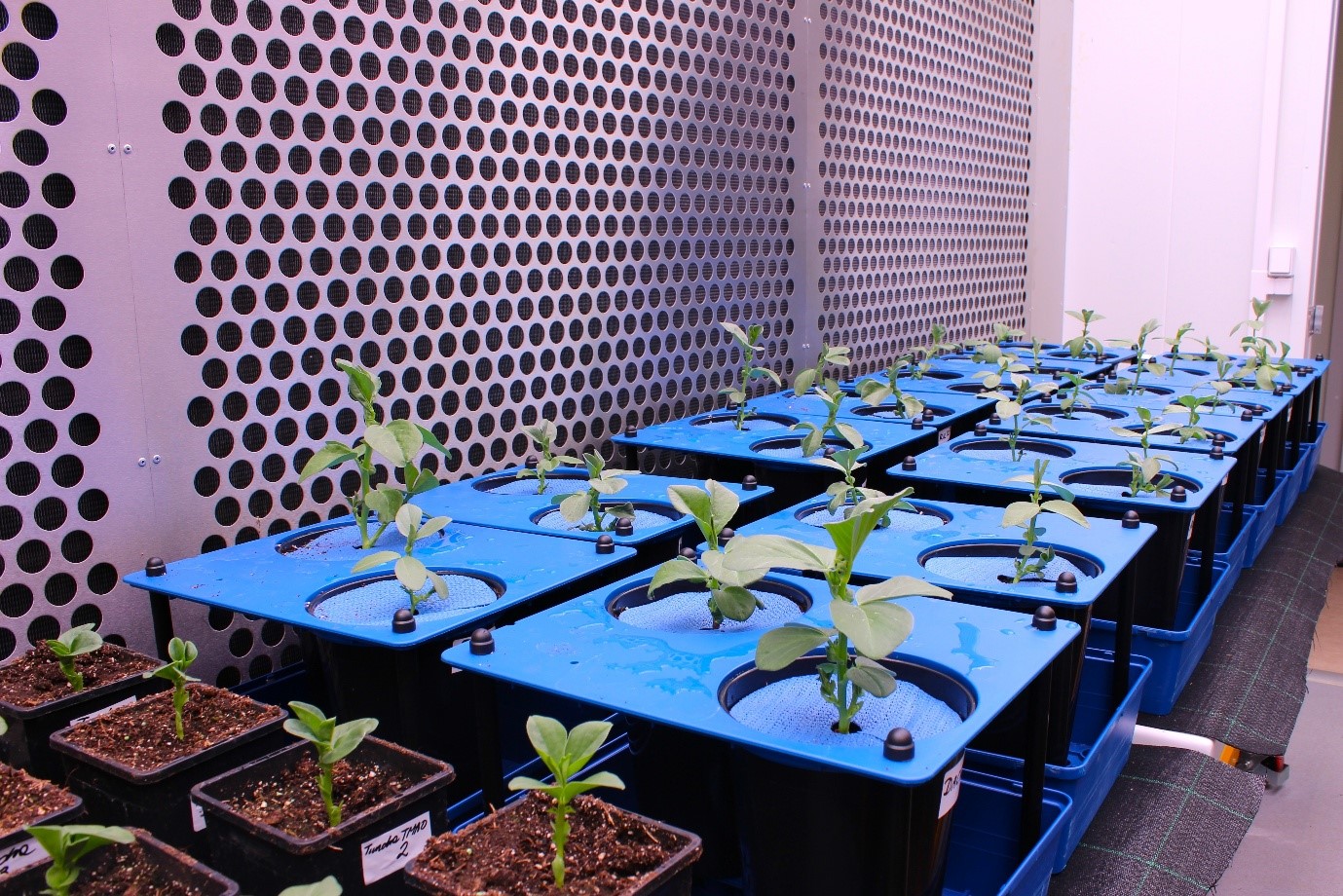
At the APGC, researchers can recreate and control environmental conditions such as temperature, humidity, light and atmospheric CO₂, allowing us to explore how today’s crops will perform in tomorrow’s climate and to develop more resilient production systems.
These controlled growing environments, along with our vertical farming capabilities and post-harvest storage facilities support research ranging from crop improvement and horticulture to novel production systems and supply-chain resilience.
Importantly, these facilities aren’t just for our researchers. Through Hutton Scientific Services(HSS), they are available to support collaborations with commercial partners, helping to connect scientific expertise with industry needs.
Seeing what the human eye can’t

Some of the most exciting advances in crop science are happening at the intersection of plant imaging, artificial intelligence and precision breeding.
Genomics can tell us what a plant is capable of. Phenotyping reveals how that potential translates into actual performance.
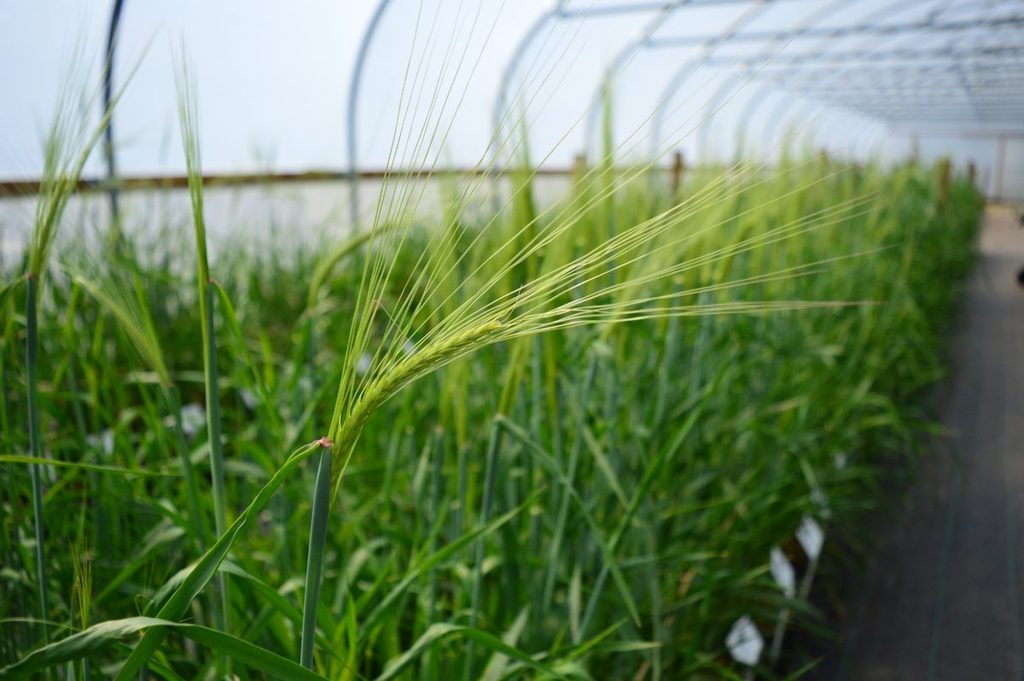
Supported by a £3 million Scottish Enterprise investment, the APGC’s high-throughput phenotyping facilities use advanced imaging technologies, automation and data analytics to measure how plants grow, respond to stress and adapt to changing conditions, revealing changes in plant health that conventional observations may miss.
Combined with AI and machine learning, these capabilities offer opportunities to identify stress responses earlier, improve the selection of valuable crop traits and accelerate the development of new varieties.
Preparing crops for a more challenging future
The need for crop innovation is becoming more urgent.
Climate change is altering pest and disease pressures. Resistance to crop protection products continues to emerge. Meanwhile, the UK’s Pesticides National Action Plan 2025 places greater emphasis on sustainable crop protection approaches and integrated pest management.
Our centres of excellence provide complementary capabilities connecting genetic discovery, plant performance testing, field evaluation and industry application to tackle these challenges.
The Hutton is also part of PhenomUK, a UK-wide six-year investment of approximately £35 in plant phenotyping infrastructure, furthering strengthening connections between controlled-environment testing and field-based crop evaluation.
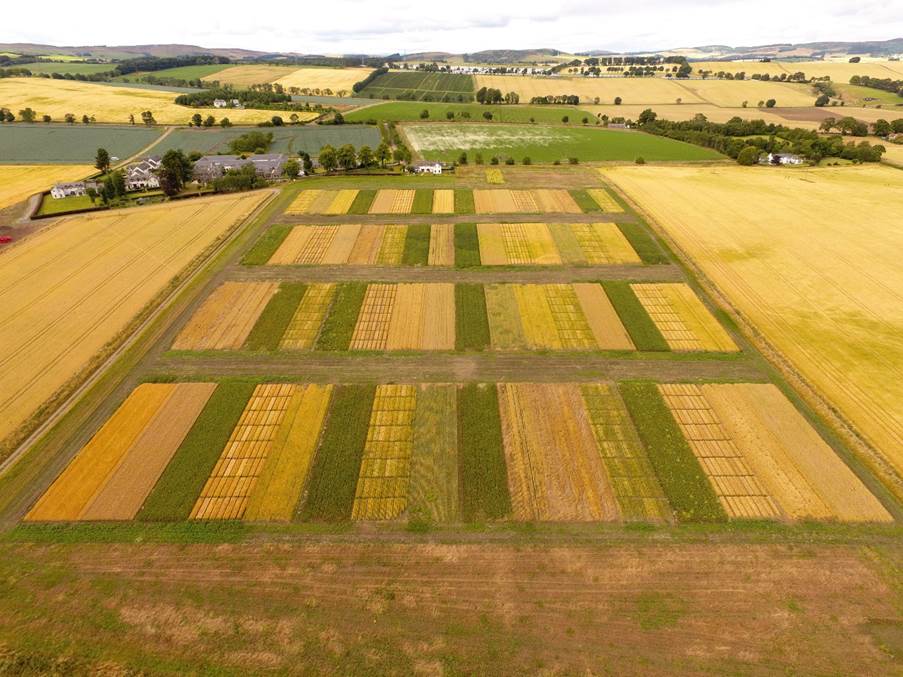
Technologies such as drones, remote sensing, field sensors and AI-driven decision-support systems are helping farmers monitor crops more accurately and use resources more efficiently. The goal isn’t simply to grow more crops. It’s to grow crops more reliably and more sustainably.
Innovation is about people as much as technology
The SARI report highlights the importance of knowledge and skills development as one of the most important pathways through which research can deliver impact.
Technology can only make a difference if people have the skills and confidence to use it. It is worth nothing if it’s too expensive, too complex or simply doesn’t solve the problems growers face.
We are investing in the next generation of crop innovation experts through CIC-START, a project run by the University of Dundee, in partnership with the Hutton, the University of Nottingham, Harper Adams University and 28 industry partners, to train 24 postgraduate researchers ready to lead within the potato and cereal industries.
Advanced facilities need talented scientists, engineers, technicians and data specialists. Equally, new technologies need farmers, growers and advisers who can evaluate them and put them into practice.
One of Hutton’s greatest strengths is the breadth of expertise within it. The future of farming won’t be shaped by any single technology or breakthrough. It will depend on how effectively we connect people, infrastructure, ideas and expertise.
Looking ahead
The SARI report identifies four priorities for the future of agricultural research: Preserve, Predict,Ground and Connect.
Protect existing scientific capabilities, anticipate emerging challenges, validate research under real-world conditions and connect expertise and infrastructure across organisations.
These principles reflect the opportunities created by Hutton’s recent investments.
Our innovation centres provide a strong foundation. The next challenge is to maximise their impact through stronger partnerships, wider access to specialist infrastructure, skills development and research that responds directly to the needs of industry and society.
The future of agriculture isn’t simply about developing better crops. It’s about building a better system for discovering, testing and delivering them.
The Advanced Plant Growth Centre welcomes collaborations with researchers, breeders, agritech companies and industry partners seeking to develop and evaluate the next generation of crop technologies.
For enquiries about our facilities, scientific capabilities and commercial partnerships, contact
Ramin Ebrahimnejad
Business Development Manager, Advanced Plant Growth Centre
ramin.ebrahimnejad@huttonltd.com
Blog by Ramin Ebrahimnejad, Business Development Manager, Advanced Plant Growth Centre
Disclaimer: The views expressed in this blog post are the views of the author, and not an official position of the Hutton or funder.