BARIToNE Industrial placements: bridging academia and industry
As part of the BARIToNE (Barley Industrial Training Network) Collaborative Training Partnership, each PhD student on the programme undertakes a three-to-six-month placement working with a designated industrial partner.
I was one of the first intake of BARIToNE students, starting in October of 2022, and earlier this year I moved to Keith, a small town in Moray, northeast Scotland, to complete my placement with Chivas Brothers, a major Scotch whisky distiller. My placement was built around three key questions which helped make it a productive and informative experience for me and for Chivas Brothers.
What can the student do for the company?
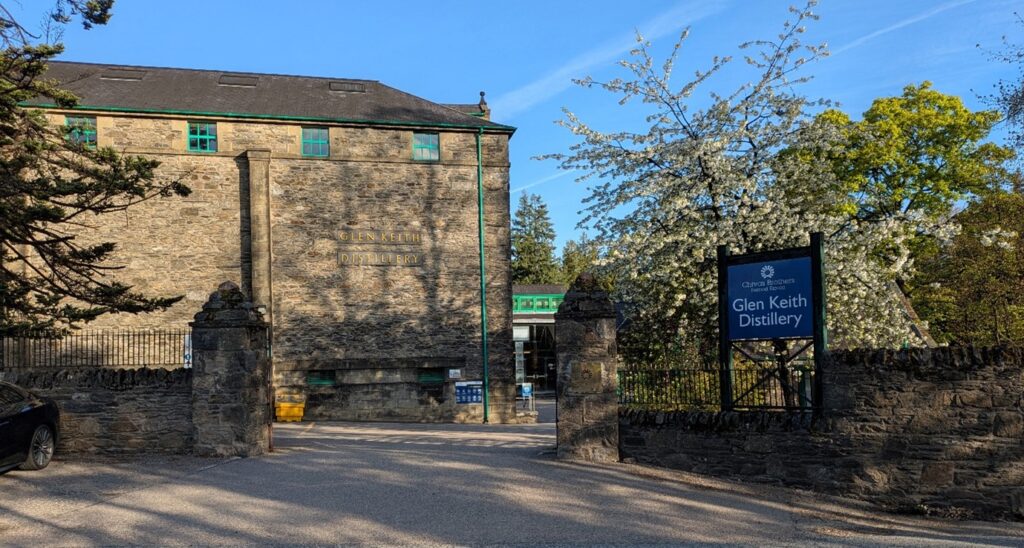
The first part of my placement was spent at Glen Keith Technical Centre, located at Glen Keith Distillery in the heart of Speyside. There I was tasked with understanding a new piece of equipment and establishing a protocol for using it to analyse the wash (the beer made in the first step of the whisky making process).
The technical centre team didn’t have prior experience with such equipment and didn’t have the time to experiment, due to other ongoing commitments. My training as a geneticist, which differed from the skillset of the analysts and specialists already at the company, allowed me to develop a start-to-finish process that went from receiving the wash sample, preparing it, analysing it and finally presenting the data, that I could then teach the other analysts.
As a result, this part of my placement allowed me to develop my skills and provided Chivas Brothers with a new method of analysis.
What can the company do for the student?
After the first part of my placement, I moved on to learn about the routine analysis carried out on the malt, wash and effluent. I learned the malt analysis pipeline from start to finish, including the total and soluble nitrogen measurement, moisture determination, milling, mashing and hot water extract (how much fermentable sugar is released from the flour).
My new skills were put to good use as I helped the team out with routine analysis. I could also use the equipment at the Technical Centre to analyse samples of malt from my 2024 field trial, carried out at Balruddery near the James Hutton Institute’s Dundee site, to get valuable data that puts my results closer to end-use relevance.

What is interesting to the student?
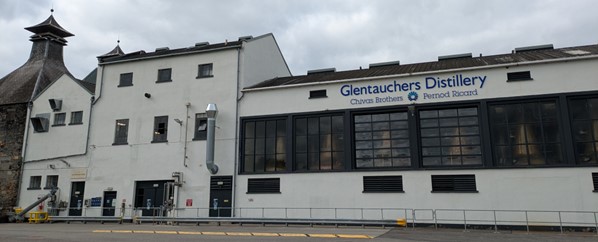
Once the analysis of the malt from my field trial was complete, I spent the last two weeks of my placement at Chivas’s training distillery, Glentauchers, just outside of Keith.
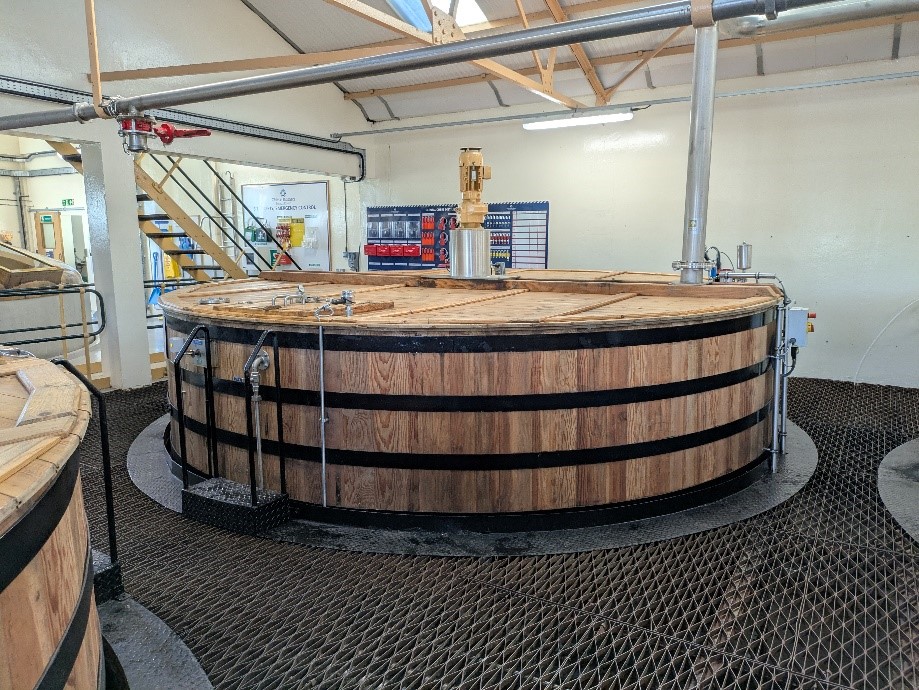
Glentauchers still has a manual mash house (the first part of the process where malt is milled, mashed, the sugars extracted into wort, and the wort fermented into wash), meaning that the flows and temperatures of water and wort are controlled by hand, not by an automated system.
For the first week, I got to learn the process and see a full mash through to completion, as well as read the gravity (a way of measuring sugar concentration using buoyancy) of the wash.
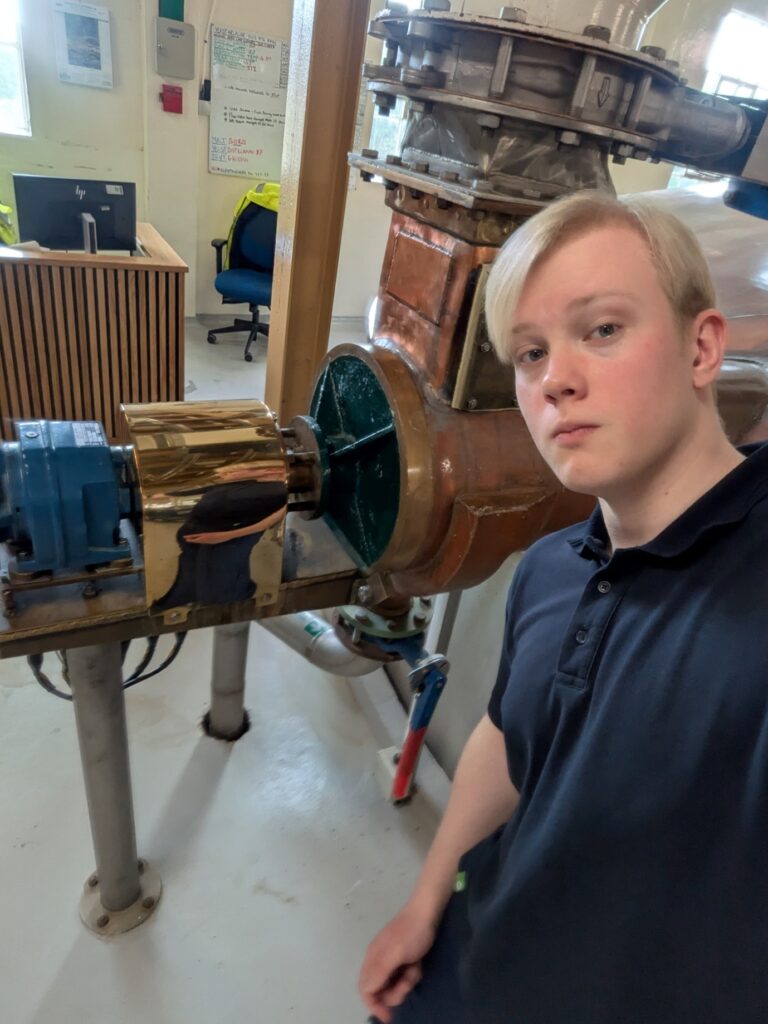
For the second week (and final week of my placement), I moved to the still house, where the wash goes through two rounds of distillation into spirit. This part is automated, but that means the stillman has a wider range of responsibilities. As well as using the automated system to fill and empty the stills, I helped with maintenance of the anti-implosion systems, checked the boiler was functioning properly, and lent a hand filling a spirit tanker to send the new-make spirit to maturation.
Conclusions
My experience exemplifies how productive a placement as part of the BARIToNE Collaborative Training Partnership can be. By transferring skills, knowledge and experiences between the student and company, both can benefit, much like academia and industry in general can benefit from close partnerships. Stefan Masson, my industrial supervisor and New Product Development, Innovation & Distilleries Support Manager at Chivas said:
“It was a great experience for all involved to have David with us; he wasn’t afraid to get stuck in and help out with the day-to-day lab work and an extra pair of hands was invaluable for getting a key project over the line. Hopefully his experience of the labs and the distilling process has given David a better understanding of the real-world implications and potential impact of his research.”
Though not directly related to my studies, I’d like to say that working in a distillery has given me a new appreciation for how complex the process is. As students, we are used to hearing about it only in the abstract.
I would also like to personally thank Stefan, the Technical Centre team and the team at Glentauchers for giving me a productive and enjoyable placement.
David Ashworth, 4th year BARIToNE PhD student
