From conference bingo to climate-ready crops at NFDI4LifeScience conference
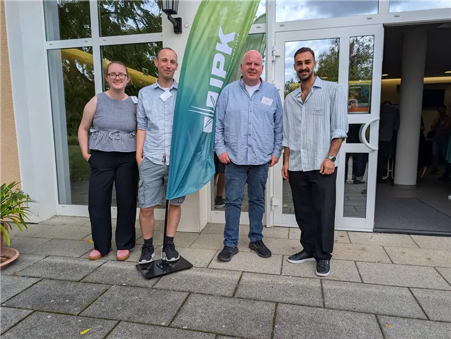
A team from the Hutton’s Information and Computational Sciences (ICS) group recently travelled to Germany to attend the NFDI4LifeScience conference at the Leibniz Institute of Plant Genetics and Crop Plant Research (IPK) in Gatersleben. The event brought together researchers, data scientists and infrastructure specialists from across Europe to discuss one of the biggest challenges facing modern biological research: how to make data more accessible, interoperable and useful.
This year’s meeting was particularly significant, as it marked the first time several major German National Research Data Infrastructure (NFDI) consortia joined forces with the 20th International Symposium on Integrative Bioinformatics. Organisations including DataPLANT, NFDI4Bioimage, NFDI4Biodiversity, NFDI4Objects, NFDI4Microbiota and FAIRagro came together to create a rich programme of talks, workshops, poster sessions and networking opportunities.
The conference focused on the growing importance of standardising biological data and developing digital infrastructures that allow researchers to share, integrate and reuse information more effectively. As biological datasets continue to increase in size and complexity, these conversations are becoming increasingly important for advancing research across fields such as genetics, biodiversity, crop science and biotechnology.
For the ICS team, the event offered a great opportunity to meet researchers working at the intersection of life sciences, data management and digital technology. Presentations were fascinating, covering a broad range of topics, including FAIR research data principles, genomics, large-scale biological data integration, knowledge graphs and artificial intelligence. Many discussions explored how emerging AI technologies could help researchers unlock insights from complex datasets and support future advances in crop breeding and agricultural research.
We also had fun taking part in conference bingo on the very useful GitHub page created for the event, https://ipk-bit.github.io/ib2026-abstract-book/bingo/.
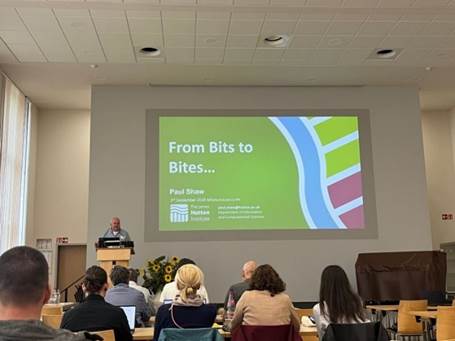
A highlight for the team was attending the keynote presentation by ICS’s Paul Shaw, From Bits to Bites. His talk showcased a range of digital tools, including Germinate, Helium and GridScore and demonstrated how they are helping to bridge the gap between plant science, data collection and data visualisation. He also shared his thoughts on how AI could build upon existing research infrastructures in the future, accelerating the development of new crop varieties capable of meeting the challenges posed by climate change and the importance of ensuring that biological diversity is both conserved and made available to the plant sciences community.
Beyond the conference sessions, we had the opportunity to visit IPK’s facilities, including its phenotyping platform and its internationally important genebank.
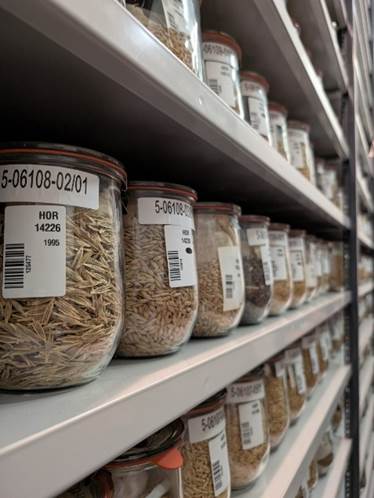
The IPK genebank is the largest in the EU and holds around 152,000 accessions across almost 3000 species. It has a mandate to collect, conserve and characterise its plant genetic resources ensuring that the diversity that it holds can be used by plant breeders and researchers around the world which houses a vast collection of plant genetic resources.
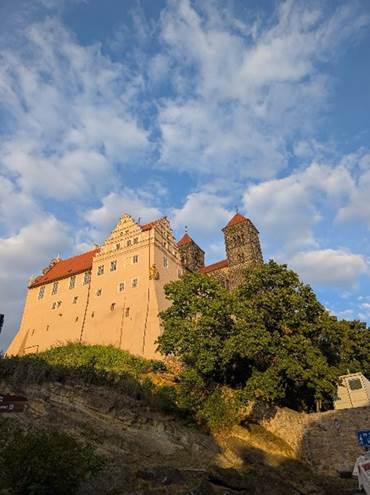
We also enjoyed a walking tour of the historic town of Quedlinburg, seeing the impressive castle and abbey complex – a UNESCO World Heritage Site due to the age and historical significance of its buildings and architecture – and sampling some local beers.
The meeting was a chance to talk to other researchers and students from around Europe about the work that we are doing on our BARIToNE PhD projects and to share experiences and ideas.
Overall, it was an enjoyable few days of learning, interesting conversations, and meeting people who are working on exciting challenges in research data and life sciences. These connections are sure to be useful to us as we journey through our PhDs. To find out more about the conference visit https://meetings.ipk-gatersleben.de/nfdi4LS-IB2026/
Blog by Amir Yousefi and Eloise Clarkson, first year BARIToNE PhD students
Disclaimer: The views expressed in this blog post are the views of the author, and not an official position of the Hutton or funder.
