The hidden carbon footprint of emails: why our everyday digital habits matter
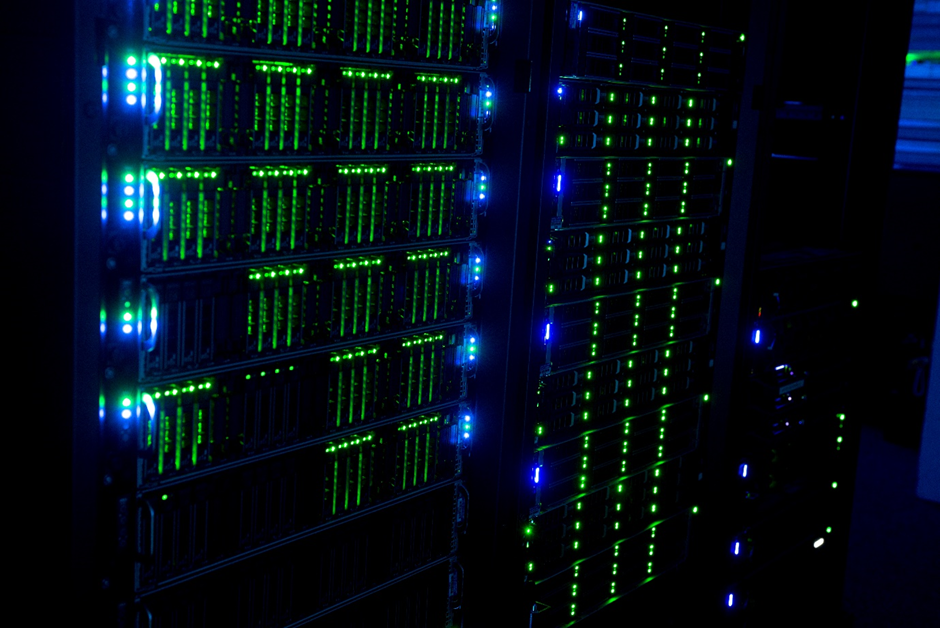
Emails and meetings are a routine part of how we work. They’re quick, convenient, and feel almost invisible in terms of our impact on the earth. But behind every message and meeting is a physical system of data centres, servers, cables and devices quietly humming away, consuming energy and generating emissions.
For an organisation like The James Hutton Institute, where collaboration is constant and often international, even these seemingly invisible actions add up to a measurable carbon footprint.
The hidden impacts of sending an email
We tend to think of email as a low‑carbon form of communication, and compared to flying or driving, it absolutely is. But ‘low‑carbon’ isn’t the same as ‘no carbon’ and at scale its impact becomes significant.
Between September 2025 and January 2026, staff at the Hutton sent an average of 96,948emails every month. To understand what this means in terms of carbon, we can apply widely used estimates: around 0.3 g CO₂e for a short email and 0.6–1 g CO₂e for one with a small attachment.
If we assume that half of all emails include attachments or are sent to multiple people, this gives an average of 0.5 g CO2e per email.
That doesn’t seem like much until we scale it up.
Across the organisation, email use is likely to generate
- 150–300 kg CO₂e per month, which is roughly equivalent to driving between 500 and 1,000 miles in a typical petrol car
- In a year that becomes 2 – 3.5 tonnes of CO₂e, equivalent to 15 return flights between Aberdeen and London
This is not one of the institute’s largest sources of emissions, but it is not trivial either. More importantly, it is a source of emissions embedded in routine behaviour, meaning it can be reduced immediately and simply, without major investment or disruption.
The data also reveal something more subtle. And potentially more important.
During the same five‑month period, Hutton staff received roughly 520,644 emails per month, but only 357,590 were read within that same month.
That leaves around 163,000 emails that weren’t opened within the same month they were received.
Now, this figure should be interpreted carefully. It doesn’t mean there are exactly 163,000 unread emails sitting in inboxes for ever. Some will be read later, and some emails read in a given month may have been received earlier.
But it does reveal something powerful: A significant portion of emails may not be generating immediate value. Yet every one of those emails has a carbon footprint. Energy is used to send it, store it and deliver it to inboxes. Even if it is never opened, or only briefly skimmed, that footprint has already been created.
This points to an important opportunity: reducing unnecessary email traffic is not just about productivity or inbox management. It is also a practical way to reduce emissions.

Online meetings: lower carbon than travel, but not zero
Meetings, particularly virtual ones, tell a similar story.
The shift to online meetings has significantly reduced travel emissions. A video call is almost always far lower in carbon than all participants making their way to the same location, but they are not impact-free. Video streaming, cloud processing, and device usage all require energy.
One meeting has a tiny footprint. Hundreds each week? Not so tiny.
As with email, the key issue is not that meetings exist, it is how they are used. Long meetings, large attendee lists and defaulting to video all increase energy consumption without necessarily improving the outcome.
The digital rebound effect
There is a broader dynamic at play here. As digital communication becomes easier and cheaper, we tend to use more of it. More emails are sent, more meetings are scheduled and more people are included ‘just in case’.
This is sometimes referred to as a rebound effect: efficiency gains encourage higher consumption. The result? Emissions don’t fall as much as expected and can even begin to rise again over time.
Hutton’s data hint at this phenomenon in the sheer volume of emails received versus those read.
What can we do differently?
The good news is that reducing digital emissions doesn’t require sweeping change. Small shifts in everyday habits can make a measurable difference.
1. Be more selective with emails
- Think before hitting send
- Remove unnecessary recipients
- Avoid “reply all” where possible
- Share links instead of attachments
- Compress files before sending
2. Focus on value, not volume
- A smaller number of well‑targeted, clear emails is better for recipients and for emissions.
3. Rethink meetings
Ask yourself:
- Does this need a meeting?
- Could a short, written update work instead?
- Do all invitees really need to attend?
- Could the meeting be shorter?
4. Use Video Intentionally
- Turn off cameras when visual interaction isn’t essential. This can significantly reduce data usage, especially in large calls.
5. Clean Up Digital Storage
- Old emails and large attachments continue to use energy through storage and backups. Routine housekeeping reduces this ongoing footprint.
A small change with wider meaning
The emissions from emails and meetings may seem modest compared to buildings or travel. But they highlight something important: everyday decisions shape our organisational carbon impact.
The Hutton is a leader in sustainability so addressing these emissions is part of leading by example. It shows that climate action isn’t only about major projects and high-profile initiatives, it’s also about how we work, communicate, and collaborate day to day.
Blog by Stefan Jindra, Sustainability Co-ordinator at The James Hutton Institute
Disclaimer: The views expressed in this blog post are the views of the author, and not an official position of the Hutton or funder.
