Unlocking the value of digestate: reflections from the ADBA Scottish conference
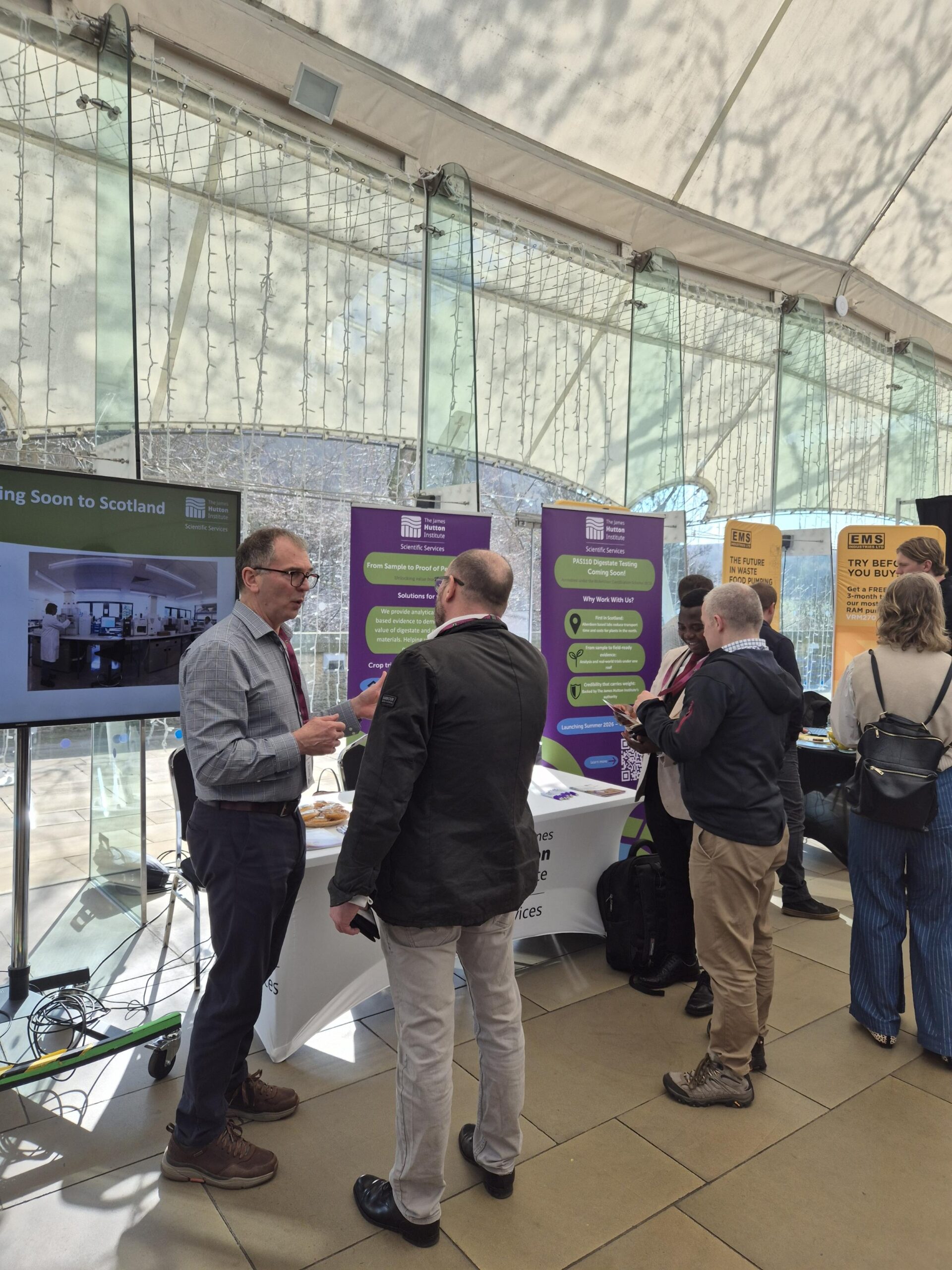
Members of our Hutton Scientific Services team attended the recent Anaerobic Digestion and Bioresources Association (ADBA) Scottish conference in Edinburgh. It was an energising event that brought together operators, farmers, regulators, and technology providers from across the biogas sector. We were particularly encouraged by the positive response to our plans to introduce PAS110 digestate testing.
The conversations throughout the day highlighted something we hear increasingly often across the sector: anaerobic digestion has enormous potential, but unlocking the full value of its outputs, especially digestate, requires quality assurance, and reliable data.
What is anaerobic digestion?
At its core, anaerobic digestion (AD) is a natural biological process. Organic materials such as food waste, agricultural residues, or manure, are broken down by communities of microorganisms, mainly bacteria and archaea. Because many of these organisms cannot tolerate oxygen, the process occurs in oxygen-free (anaerobic) conditions.
The benefits are twofold. First, AD prevents the greenhouse gas emissions that would occur if organic waste were left to decompose untreated. Secondly, it produces valuable outputs: biogas, a renewable energy source used for heat, transport, and electricity, and digestate, a nutrient-rich bioresource that can be used as a fertiliser.
With the push toward net zero and more circular systems of agriculture, these outputs are becoming increasingly important.
A sector looking toward Scotland’s renewable future
The conference explored how AD can contribute to Scotland’s renewable energy ambitions while strengthening rural economies and supporting more sustainable agricultural systems.
Throughout the day, conversations focused on the growing opportunity for AD in Scotland, from renewable gas production to the role digestate can play in improving soil health and reducing reliance on synthetic fertiliser.
A strong focus on digestate value
One of the standout moments for our team was the breakout session, Unlocking the Value of Digestate. The discussion focused on how operators can maximise digestate’s value as a fertiliser product while ensuring it meets regulatory and quality standards.
If digestate is to be confidently applied to land or traded commercially, it must be supported by robust testing and recognised certification.
Farmers and regulators need confidence that digestate products are safe, consistent, and beneficial for soils. This is where standards such as PAS110 play a key role. It is not just about regulatory compliance; it is a way to unlock the commercial value of digestate as a valuable agricultural input.
Conversations across the industry
Exhibiting at the conference gave us the opportunity to connect with a wide range of people working across the AD sector. From plant operators and farmers to consultants and technology providers, discussions repeatedly returned to the same challenge: how to turn digestate from a by-product into a trusted and marketable resource.
Many attendees were particularly interested in the combination of services we are developing, including analytical testing, alongside digestate crop trials. Bringing these capabilities together allows operators not only to demonstrate compliance with standards but also to understand how digestate performs in real-world agricultural systems.
Supporting the sector with PAS110 certification
Building on more than 30 years of analytical services provided by the James Hutton Institute, we expect to launch our new BCS-recognised PAS110 testing service through Hutton Scientific Services, in September.
Once operational, it will be the only PAS110 testing facility in Scotland, providing AD operators across Scotland and the North of England with a closer, more accessible option for digestate certification. It will support the sector with reliable, trusted analysis that helps operators demonstrate quality, meet regulatory standards, and maximise the value of their outputs.
Looking ahead
The ADBA Scottish Conference highlighted the rapid progress being made across the anaerobic digestion sector and the opportunities that still lie ahead.
As Scotland continues to expand its bioenergy infrastructure, digestate quality and usability will remain central to the conversation. Ensuring that this valuable bioresource can be confidently used in agriculture is key to building a truly circular system, where waste becomes a resource and nutrients are returned to the soil.
For our team, the event reinforced just how important trusted analytical services are in supporting the full lifecycle of anaerobic digestion, from production through to agricultural application.
We’re proud to be bringing PAS110 digestate testing to Scotland. It represents an important step forward for the circular economy, and for businesses looking to make better use of their waste.
If you would like to discuss PAS110 testing or digestate trials, please contact Gareth Newman at Gareth.Newman@hutton.ac.uk.
Blog by Jan Hewit, Marketing Manager, Hutton Scientific Services
Disclaimer: The views expressed in this blog post are the views of the author, and not an official position of the Hutton or funder.
