New study shows that extensive tree planting would be necessary to achieve net-zero carbon emissions in Scotland’s livestock sector by 2050
A new study from The James Hutton Institute has shown that planting several hundred thousand hectares of new woodland and agroforestry would be necessary to help Scotland achieve net-zero carbon emissions in the livestock sector by 2050.
The study, which was recently published in the journal Science of The Total Environment, investigated how multi-functional afforestation (planting trees to achieve a number of goals) and livestock reduction could contribute to helping Scotland achieve net-zero emissions in the livestock sector by 2050 – a goal which aligns with the Paris Agreement on climate change.
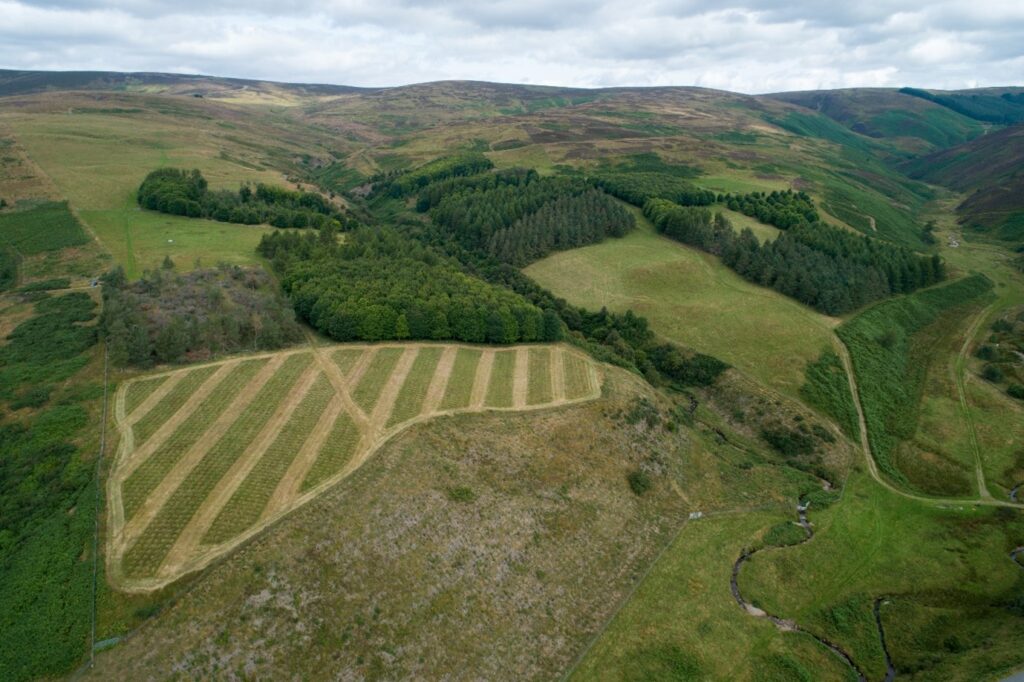
Agroforestry at Glensaugh Research Farm.
Researchers simulated a scenario in which approximately 30,000 ha per year of new woodland and agroforestry were planted in Scotland between 2020 and 2050, selecting locations where trees would improve biodiversity and aid the wider ecosystem, and accounting for the carbon released from soils while planting trees.
It is often assumed such planting can only occur at the expense of grazing area, so they coupled this planting effort with a linear decrease in livestock numbers, with an estimated total reduction of approximately 50% of the present numbers.
Their model showed that, under this scenario, annual carbon uptake by new woodlands would only start to offset annual livestock emissions around 2045. Until then, annual livestock emissions would exceed annual tree carbon sequestration. This results in a net offset of annual emissions thereafter, but also in annual surplus accumulating in the atmosphere between 2020 and 2045, leaving a substantial excess of carbon in the atmosphere over that period.
“These results were surprising to us, but we have noticed the same pattern in other catchments in Scotland, so this wasn’t a ‘one-off’.”
Dr Eulyn Pagaling
Additionally, the model predicted that the carbon offset from this afforestation effort would decline over time, with carbon absorption slowing down and levelling off as the forests matured.
An implication of these findings is that, if solely relying on tree planting to offset emissions, an even greater planting effort would be needed to balance emissions at the present stocking levels and only using trees.
Dr Alessandro Gimona, a senior landscape scientist at the Hutton and lead author of the study, said, “This study shows that achieving and sustaining net zero emissions in the land use sector would require a transformation in patterns of land use.”
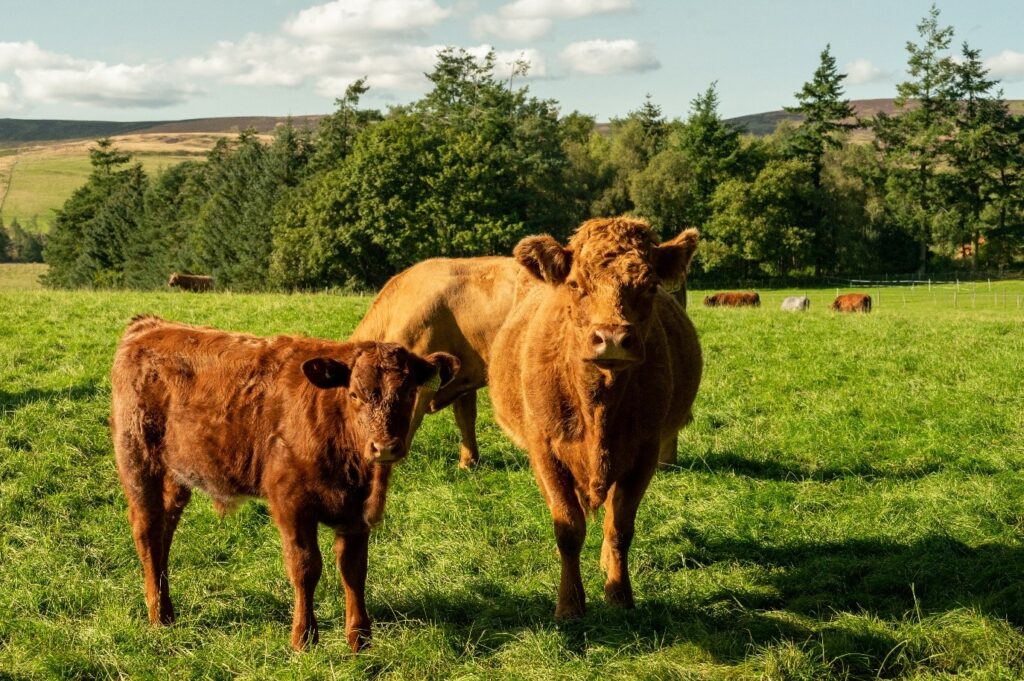
The study also shows that, to achieve multiple benefits from afforestation, tree planting efforts and livestock numbers cannot just be equated in terms of GHG emissions and our long term strategy needs to account for many other factors such as biodiversity, livelihoods from livestock and to find other ways to mitigate or account for emissions. The James Hutton Institute is testing this further at its Glensaugh Climate Positive Farming Initiative at Glensaugh where they have doubled the tree planted area without reducing livestock numbers and have agroforestry systems which allow animals to graze pasture between spaced trees.
The study, titled Transformative land use change towards net zero: balancing emissions through woodland expansion and livestock reduction in Scotland, is available in full on ScienceDirect.
