Farmers warned that cultivar resistance must play an increasing role in managing potato late blight
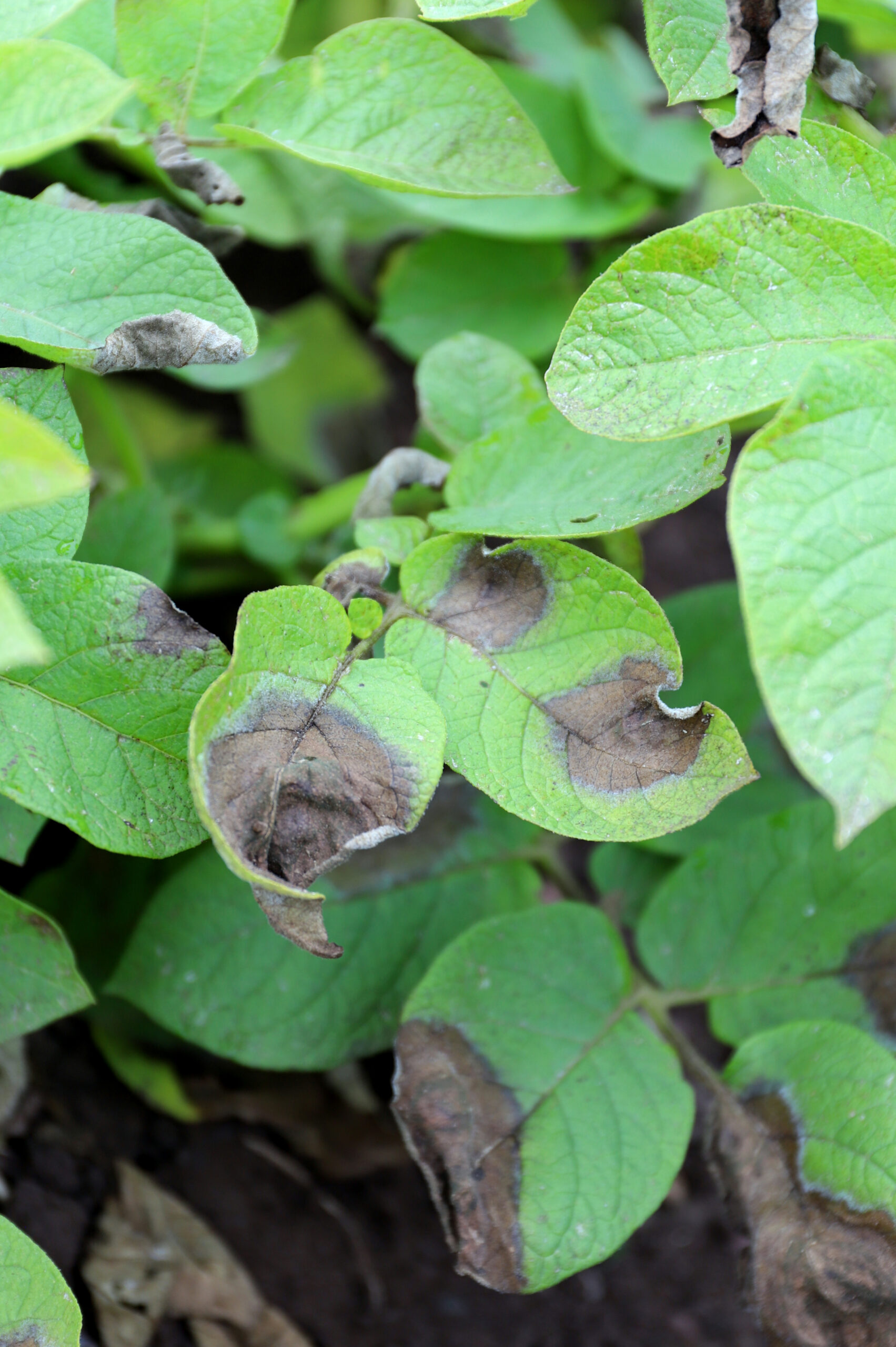
The findings of Fight Against Blight (FAB) 2025 is an industry-sponsored campaign that tracks the emergence and spread of the Phytophthora infestans (late blight pathogen) clones, highlight the importance of choosing potato varieties with built-in resistance in protecting future crops, as the disease continues to evolve.
Dr David Cooke of The James Hutton Institute, who leads the monitoring programme, noted that the 2025 potato growing season began quietly for the FAB scouts, the nationwide network of agronomists, growers and industry representatives who submit field samples from suspected late blight outbreaks throughout Britain, with exceptionally dry weather in April and May suppressing sources of primary infection. Remarkably, some potato-growing areas in the east of England didn’t see conditions suitable for blight until mid-July and by then, the early sources of infection had already been held in check.
The first outbreak was in Ceredigion in mid-May, followed in mid to late June with outbreaks in Cornwall, Pembroke, Perth and Kinross, and Aberdeenshire.
The Hutton is home to the National Potato Innovation Centre (NPIC), works in partnership with academics, industry and government in the UK and beyond to carry out scientific research to future proof the potato industry and support economic resilience and growth. It develops solutions that will help ensure the future of potato as a sustainable and profitable crop that provides nutritious food for all and supports the British economy.
Across the UK, 81 outbreaks were sampled by Hutton scientists in 2025 and more than half of these came from volunteer potato plants, not in commercial crops, that continued to grow in the warm and wet conditions from September onwards.
One strain of the pathogen, EU46, saw a sharp increase amongst the samples tested, making up 23% of all of the 300 FAB samples. However, it appeared in only seven locations, of which just two were conventional commercial potato crops, while the others were trial sites and organic crops.
These outbreaks caused by EU46 began in Wales and later spread to the Midlands and Derbyshire, possibly helped by Storm Amy. The fact that EU46 has become established in Wales suggests it may return in 2026.
Dr Cooke said that growers must stay alert: “EU46 has a known resistance to oxathiapiprolin, a key fungicide ingredient. All the FAB strains tested in 2025 were found to have the mutation that confers that resistance.
“However, unlike on the continent in 2023 and 2024, management failures were not reported which implies that growers are following industry and Fungicide Resistance Action Committee (FRAC) guidelines correctly when implementing their blight control programmes.
“The absence of EU43, in which resistance to mandipropamid has been widely reported, was good news for the British industry, though the prevalence of the EU41 clone at multiple sites in Scotland will need to be closely monitored given last year’s reports of it having reduced sensitivity to low doses of cyazofamid.
“Despite the doses in question being well below field rate, it does flag the potential for population shifts through selection. Bearing in mind that the effective dose in the crop progressively reduces in the intervals between applications, growers need to avoid consecutive applications of any fungicide product, particularly those with only a single active ingredient.”
Other key findings from 2025 were:
- EU36 was again the most common strain, making up over 40% of samples. It is known for breaking down resistance in potato varieties and has shown signs of fungicide resistance in parts of Europe. In the past this clone was more prevalent in the east, but it has now spread more widely across the UK than in previous years.
- EU37, which is resistant to the fungicide fluazinam, has almost disappeared, being found on just two sites in 2025, an encouraging sign that careful fungicide management is working.
- EU13, resistant to metalaxyl, caused only two outbreaks, both on volunteer plants
Although this year’s campaign received far fewer samples of suspected late blight than usual, Dr Cooke warns against complacency. He said, “It remains crucial that growers continue to alternate the actives in their spray programmes to reduce the threat of resistance developing. There is no place for block spraying.
“Cultivar resistance has become increasingly important to complement fungicides, and care should still be taken to maintain long rotations to reduce the numbers of long-lived sexual oospores in the soil plus managing other key sources of primary inoculum such as cull piles and potato volunteers.”
James Lynott, Research Assistant on the Hutton team tested several fungicides for their efficacy against current strains and found that:
- Oxathiapiprolin: EU36 and EU41 remain sensitive; EU46 is resistant.
- Mandipropamid: all UK isolates (the cultures grown from samples of late blight) remain sensitive, unlike some resistant strains found in Europe.
- Amisulbrom, propamocarb, and fluopicolide: all UK isolates tested remain sensitive.
James also expanded DNA-based fungicide resistance testing during the season, reporting any issues immediately to give growers real-time guidance to optimise Integrated Pest Management (IPM) of late blight in line with the new UK Pesticides National Action Plan for 2025.
Dr Cooke stressed: “Care must be taken in 2026 to ensure that industry continues to follow FRAC guidelines on mixing and alternating active ingredients, in particular considering the loss of multi-site mancozeb products.”
He emphasised three key actions for 2026:
- Rotate fungicides and avoid repeated use of the same active ingredient, especially with the loss of mancozeb from the market.
- Choose more blight-resistant potato varieties to reduce reliance on chemicals.
- Manage sources of infection such as volunteer plants, waste piles, and oospore contaminated soil.
These steps, which support a more sustainable, integrated approach to blight control, are essential as the pathogen continues to adapt and evolve.
The FAB scheme was first launched in 2006, using the monitoring of Phytophthora infestans populations via a nationwide network of agronomists, growers, and industry representatives (the FAB Scouts). This network annually submits up to 1,500 field samples from suspected late blight outbreaks throughout Britain. The work, led by Dr David Cooke, Dr Alison Lees and James Lynott from The James Hutton Institute, includes the annual sampling of late blight outbreaks, the characterisation of pathogen populations, and fungicide sensitivity testing on active ingredients prioritised by the industry.
The FAB programme acknowledges funding from the following sponsors, Certis Belchim, UPL, GB Potatoes, BASF, Bayer, Corteva, Syngenta, Albert Bartlett, FMC, Pepsico, Agrovista, Frontier, Hutchinsons, McCain, Scottish Agronomy, ProCam, SAC, Agrico, Branston, Agrii.
