Hutton Scientific Services to collaborate with SSEN and project partners on three projects with £18m of Ofgem funding
Hutton Scientific Services, the commercial wing of Scotland’s pre-eminent interdisciplinary scientific research institute for the sustainable management of land, crop and nature resources, The James Hutton Institute, has joined forces to work with Scottish and Southern Electricity Networks (SSEN) Distribution on three projects which will limit the environmental impact of creosote, provide natural protection for our electricity infrastructure and transform the way local, low-voltage networks are planned.
These projects have been funded by Ofgem through the Strategic Innovation Fund, which is delivered in partnership with Innovate UK. As the energy regulator, Ofgem sets what the SSEN Distribution can invest over a set period and also provides funding for projects which benefit the environment and help accelerate decarbonisation.
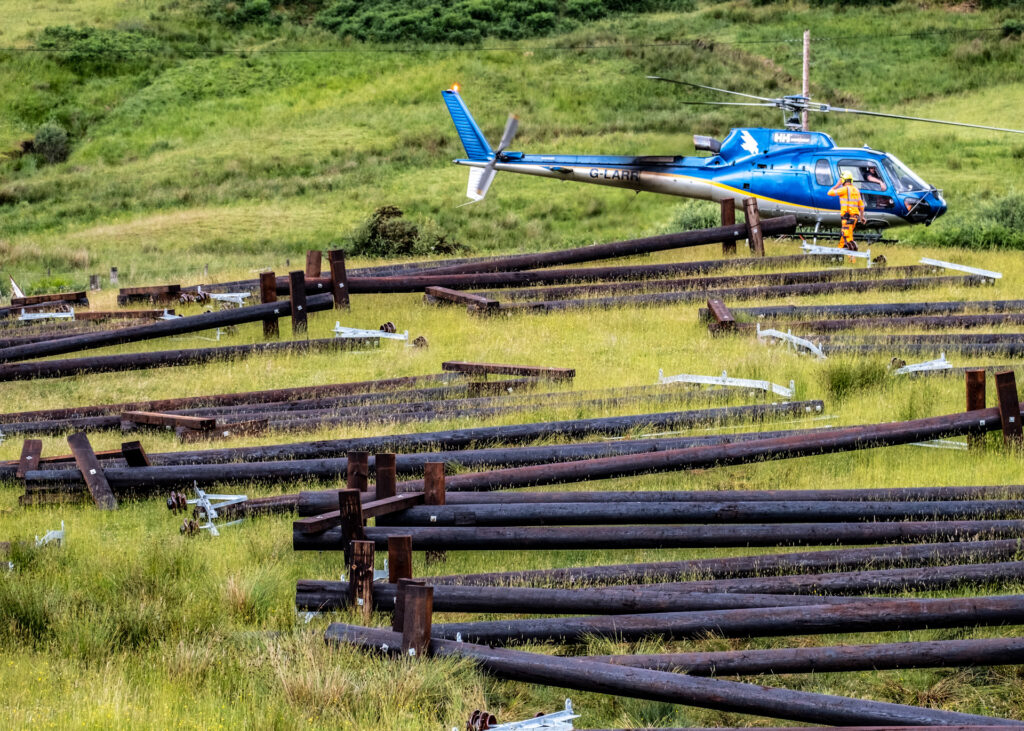
Pic Peter Devlin. Credit: SSEN Distribution
The projects, which will bring the Hutton together with businesses, local authorities and other leading research organisations, are:
CREOS-OUT
The first newly announced project which will see the Hutton collaborating with SSEN Distribution and project partners is CREOS-OUT.
This initiative looks to lessen the environmental impact of creosote, a tar-like substance used to preserve the millions of wooden poles which carry overhead distribution networks across the country. SSEN Distribution’s network includes one million poles and each year 20,000 of these are replaced as part of a rolling programme. While it is useful for protecting energy infrastructure, creosote can have a negative impact on the environment. To counter this, researchers working on the CREOS-OUT project will develop a biological cleaning solution which can break down the harmful chemicals found in creosote in an eco-friendly and cost-effective manner.
“The nation’s electricity infrastructure is crucial to all our futures and so we are excited to be helping find better ways to protect and enhance the network using science to connect people into the planning process and through nature-based approaches.”
Hutton CEO Professor Colin Campbell
The Hutton will work alongside the University of Strathclyde on this project, with risk and exposure modeller Professor Rupert Hough leading the Hutton’s contribution.
Nature4Networks
A second project, the Nature4Networks project will develop natural solutions to protect electricity networks in an increasingly uncertain climate.
Currently, artificial barriers are used to shield important electricity infrastructure such as overhead pylons, however Nature4Networks will explore how the use of natural troughs (a depression in the landscape which slows and redirects surface water), trees and planting specific species can replace these artificial measures in a way which reduces environmental impact and benefits biodiversity.
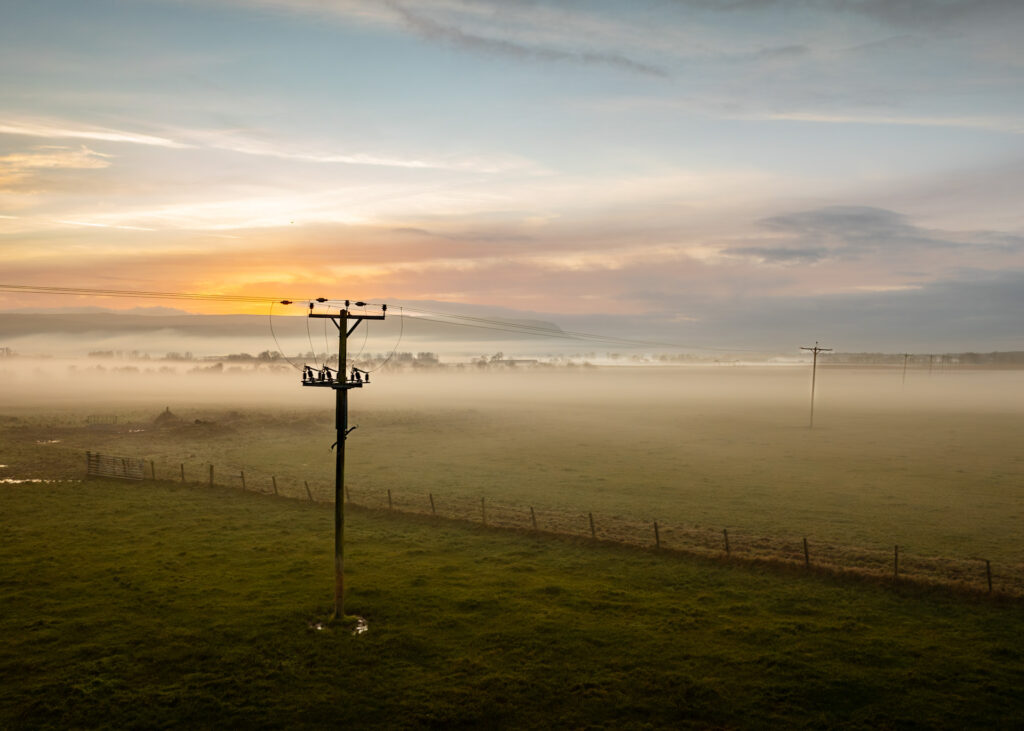
This new funding will allow the Nature4Networks project to conduct large-scale, real-world trials which build on previous research. Trials will include:
- Planting native woodland corridors in two locations alongside 1.5km of network to protect overhead lines
- ‘Bioswale’ natural drainage channels to contain, buffer and remediate any leaks from substation equipment
- Deploying different varieties of sustainable drainage systems around substations to protect against flooding
Ecologist Scot Ramsay will lead the Hutton’s contribution to Nature4Networks, working alongside project partners Frontier Economics, GHD, Guidehouse and Great Yellow.
Pathways to 2050
A third project, Pathways to 2050, is a three-year plan to transform how low-voltage, local electricity networks are planned, guaranteeing energy support for communities as these networks decarbonise.
With more homes and businesses moving towards heat pumps, rooftop solar panels and electric vehicles, the demand for clean power is increasing. To keep up with this demand, tens of thousands of local substations and hundreds of thousands of feeder lines (which transport electricity locally to transformers and customers) will need to adapt.
Pathways to 2050 will use a data-led approach to anticipate where and when investment is needed and assess alternatives which may be able to offer a better solution.
The project will bring together local foresight, customer insights and network data, helping planners and designers develop optimal solutions for each community.
This approach will simplify decarbonisation, making the process more affordable and more accessible to customers while supporting a secure, resilient and sustainable future for our electricity system.
Social scientist Dr Tony Craig will lead the Hutton’s work on Pathways to 2050, collaborating alongside project partners such as the National Farmers Union of Scotland, the Low Carbon Hub, Faculty, IFS Copperleaf, Sia and Energy Systems Catapult.
Antonia Boyce, business development manager facilitating all three projects, said, “CREOS-OUT, Nature4Networks and Pathways to 2050 are three invaluable projects which will provide great benefit for Scotland’s energy networks while aiding both communities and biodiversity.”
“We’re delighted to have been selected to work on these vital projects and look forward to making a significant contribution to our electricity networks and environment alongside our project partners.”
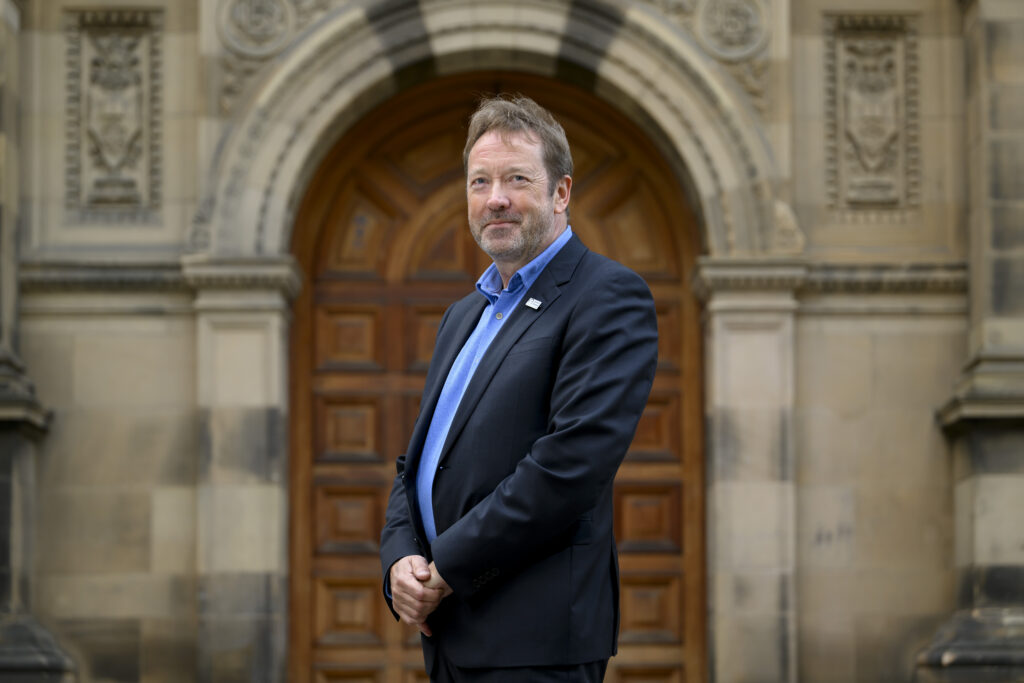
Pictured: Professor Colin Campbell. Credit: The James Hutton Institute
Hutton CEO Professor Colin Campbell added, “The nation’s electricity infrastructure is crucial to all our futures and so we are excited to be helping find better ways to protect and enhance the network using science to connect people into the planning process and through nature-based approaches.”