Raspberry Breeding
Industry-led innovation delivering the next generation of premium raspberry varieties
Our raspberry breeding programme, funded by the Raspberry Breeding Consortium (RBC), brings together growers, marketers and propagators to deliver varieties aligned with real industry needs. By combining cutting-edge science with commercial focus, we accelerate the development of high-quality, market-ready raspberries.
Raspberries – a growing success story
The raspberry breeding programme builds on over 60 years of previous breeding and has undergone a series of step changes since the 1990s, shifting breeding effort from processing and machine harvesting to fresh market, adapted to growing under protected cropping systems. The most significant advancement is the introduction and routine use of molecular markers, developed as part of the underpinning science of James Hutton Institute in order to develop varieties more quickly.
Currently the programme aims to develop new raspberry floricane and primocane cultivars with outstanding fruit quality and productivity for the fresh market. New cultivars will have improved resistance to pathogens, with particular emphasis on Phytophthora root rot, and will be economic to grow. The programme focuses on the use of molecular markers to identify important traits early in the process to shorten the timescale. The breeding objectives are reviewed annually with input from the industry partners, who have recently prioritised traits to reduce labour costs, especially to improve picking efficiency.
Nikki Jennings, Soft Fruit Breeder
Hutton’s Raspberry breeding is focusing on bring new varieties to market that tackle pressing industry concerns while still being flavourful and what the consumers wants.

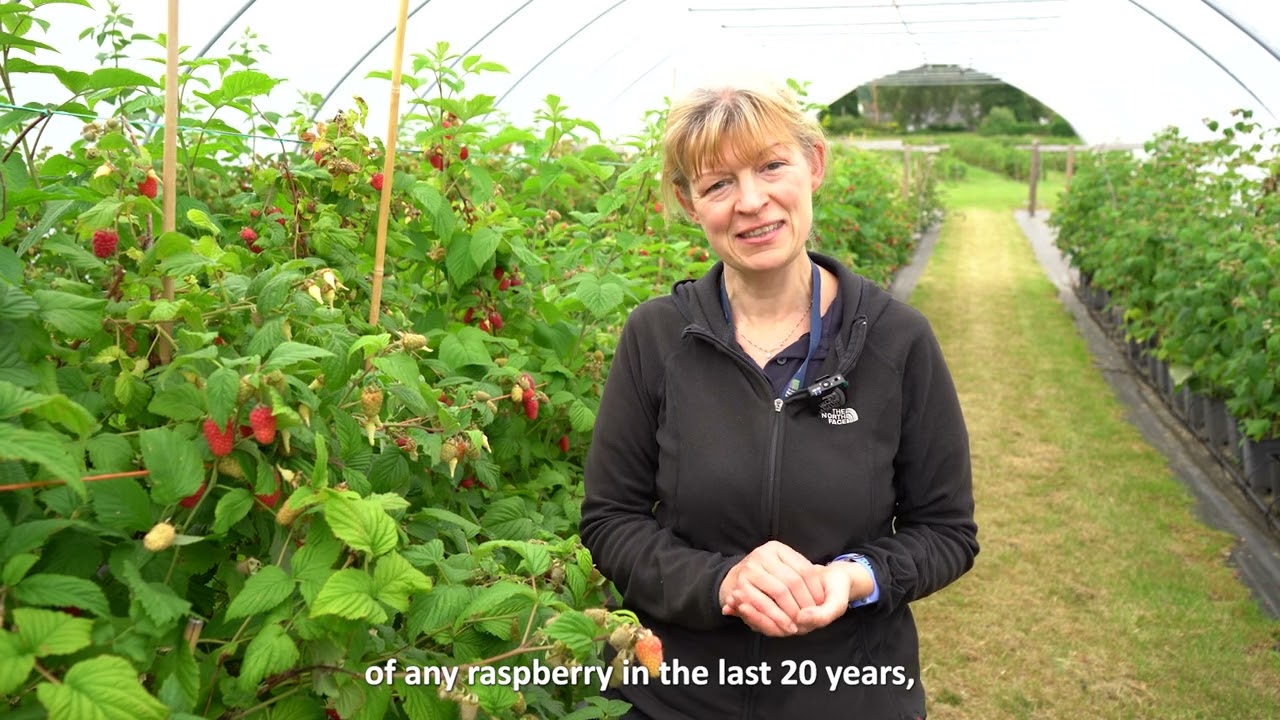
James Hutton has a portfolio of 23 raspberry cultivars since the establishment of the programme. Glen Moy and Glen Prosen were the first spinefree cultivars for machine harvesting. Glen Ample dominated the UK production area for more than a decade. Glen Dee and Glen Carron were both selected for the fresh market and protected cropping. More recently, James Hutton Institute Scientific Services commercialised Glen Mor, the first cultivar with the molecular marker for root rot resistance, Glen Eden and the first two primocanes to be released from the programme; Skye and Lewis.
Improved raspberry varieties can provide higher yields, better fruit quality and stronger disease resistance. James Hutton Institute Scientific Services develops varieties that help growers meet market demands while improving productivity and sustainability.
Many raspberry varieties developed by James Hutton Institute Scientific Services reflect their Scottish origins and carry the “Glen” prefix in their names. These varieties are widely grown and recognised for their quality and performance.
Growers, fruit producers, nurseries and food supply chains benefit from raspberry breeding programmes developed by James Hutton Institute Scientific Services, which provide reliable and high-quality soft fruit varieties.