Sustainable Land use & Natural Capital
Integrating science and society to support sustainable land management and resilient ecosystems
Natural capital refers to our land, soil, water, plants and animals, the assets that form ecosystems and underpin how we live, farm and produce food.
James Hutton Institute and Hutton Scientific Services bring expertise across the natural and social sciences to balance the sustainable use of natural capital with societal demands for food, water and energy, addressing the interconnected challenges of the climate and nature crises.
Collaborative solutions for sustainable land management, biodiversity, and circular economy
Our projects range from studying soil microbes through to landscape-level interventions. Working both within the UK and internationally, we bring a collaborative and solution-oriented approach to often complex challenges.
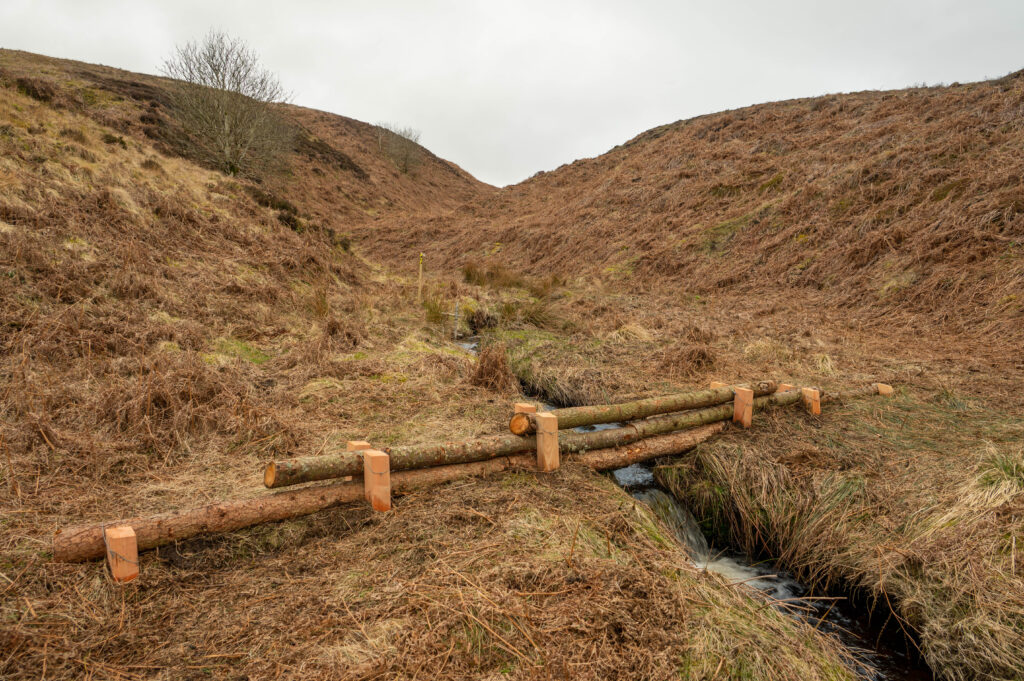
We work with policy makers, the public and private sectors on a range of projects from conserving and improving biodiversity and assessing soil health to designing nature-based solutions to manage water scarcity and flood.
We support the transition to the circular economy from studies to understand human behaviours to applying analytical skills to assess the recovery of value-added components from food waste/co-product streams and identifying potential unintended consequences of changes in practice through applying new techniques in pollutant modelling.
We have extensive experience in participatory research and facilitating stakeholder engagement as well as cost-benefit analysis and impact assessment.
We bring a rigorous, independent, evidence-based contribution to the evolving areas of natural capital measurement, valuation and nature finance.
Antonia Boyce, Business Development Manager
James Hutton Institute and Scientific Services bring a breadth of expertise across the natural and social sciences to balance the sustainable use of natural capital with societal demands for food, water and energy, tackling the intricate challenges posed by the nature and climate crises.

We develop and manage unique strategic datasets and create models that provide a structured framework that help us make biological predictions, quantify risk and support policy advice in areas such as climate change. We apply technology to support precision in agriculture and to measure and monitor the impact of land management decisions.
Our specialist resources and facilities enable us to develop and test innovative approaches to land use and the management of natural capital.
At our climate-positive farming initiative at Glensaugh Farm, we test and demonstrate novel approaches to sustainable land management in a real-world upland environment (link to Glensaugh web pages).
Our Centre for Sustainable Cropping (CSC) tests the effects of regenerative management practices on whole-system sustainability. The first of its scale in the UK, it provides an open research facility for studies of arable biodiversity, soil health, pollution and crop productivity over many decades, aiming to achieve multiple economic, environmental and ecological benefits from arable land.
Sustainable land use refers to managing land resources in a way that balances environmental protection, economic activity and social needs. Research collaborations involving James Hutton Institute Scientific Services explore how land can be managed to support agriculture, biodiversity and long-term ecosystem health.
Natural capital refers to the world’s natural assets, such as soils, water, forests and ecosystems, which provide essential services for people and the environment. Understanding natural capital helps organisations make informed decisions about land management and environmental sustainability.
Sustainable land management practices can improve soil health, protect biodiversity and enhance ecosystem services such as water regulation and carbon storage. Research supported by James Hutton Institute Scientific Services helps develop strategies for balancing productivity with environmental protection.
