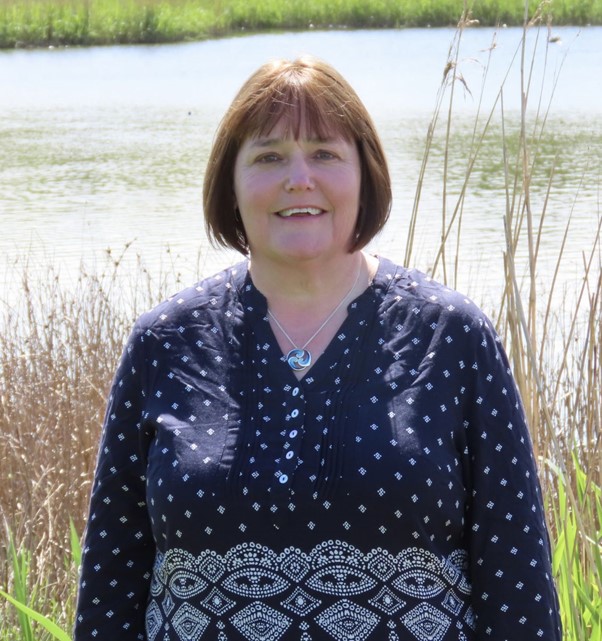
The James Hutton Institute Board Members, acting collectively, are responsible for ensuring that the objectives of the Institute are met. The Board approves the strategic direction of the Institute and creates an environment in which its aims are achieved and its potential realised.
Chair: Susan Davies
Susan Davies has had a career in nature conservation and responsible stewardship of land and natural resources. Her early career was spent as an adviser/ head of unit with the UK Joint Nature Conservation Committee (JNCC) where she was involved in the development and implementation of nature legislation and species and habitat recovery programmes; especially at a European and UK level. She returned to Scotland in 2000 taking up a science-policy role with Scottish Natural Heritage (now NatureScot) before becoming the Director of Operations (North), then Director of Policy and Advice and latterly interim CEO.
Susan left NatureScot in 2016 to be the Director of Conservation with the Scottish Wildlife Trust. In 2019 she took up the role of CEO at the Scottish Seabird Centre to lead the organisation through a period of change and at a time when more attention needed to be focused on the effective stewardship of Scotland’s marine environment.
Susan is originally from Peebles in the Scottish Borders and now lives in Dunbar, East Lothian. She gained her undergraduate degree from the University of St Andrews and a masters from University of Aberdeen. She was a Trustee/Chair of Venture Trust for over 7 years from 2015-2022 and has been a member of the James Hutton Institute’s Board since 2017, including being the Chair of its nominations, remuneration and governance group for the last 3 years. Susan is a Fellow of the Royal Society of Biology and is currently a member of the Scottish Government’s First Minister’s Environmental Council which was established to advise the Government on international best practice to help Scotland respond effectively to the climate and nature emergencies.
Sir Paul Grice
Sir Paul Grice
Sir Paul Grice, FRSE, FAcSS has been Principal and Vice Chancellor of Queen Margaret University Edinburgh since 2019. He was Clerk and Chief Executive of the Scottish Parliament from 1999 to 2019, and was knighted in the New Year’s Honours List 2016. Elected Fellow of the Royal Society of Edinburgh 2018. Elected Fellow of the Academy of Social Sciences 2020. Besides his board membership at the James Hutton Institute, his current non-executive roles include Council Member, Institute for Fiscal Studies; Scientific Advisory Board Member, Behaviour Change by Design Research Project, Cambridge University; Chair, Queen’s Nursing Institute Scotland; Convenor, Universities Scotland Learning and Teaching Committee; Board member of The British University in Egypt; Member, Place2Be Development Advisory Group Scotland. Previous roles include Trustee, Bank of Scotland Foundation, 2011-2020; Board Member, Edinburgh International Festival, 2013-2019; Board Member, Economic and Social Research Council, 2009-2015; Member of Court, University of Stirling, 2006-2013; Board Member, Policy Scotland (University of Glasgow) 2014-2019; Advisory Board Member, Scottish Centre for Social Research 2017-2020. He graduated in 1984 from University of Stirling, joined the UK Civil Service through the “Fast Stream” in 1985 and worked in several roles in Whitehall. Moved to The Scottish Office in 1992. Joined Constitution Group in May 1997 with lead responsibility for the Referendum on establishing the Scottish Parliament and, subsequently, the Scotland Act 1998 which laid the new constitutional framework.
Anne MacColl
Anne is a Non-Executive Director and high level international consultant. She has extensive experience as Chair and as a Board member across a number of public, private, third sector and research organisations. With direct experience of working with high profile public and private organisations and C-suite Executives, she draws on her prior experience as CEO of Scottish Development International and Executive Leadership Team member of Scottish Enterprise. She is a skilled relationship builder, coach and facilitator, with high cultural awareness. With dual nationality UK/France, she has fluent (bilingual) French, Spanish, intermediate level Portuguese and German. Her interests revolve around leadership, governance and organisational development, public speaking, growing a variety of things including companies, mindsets and fruit trees. She owns her own craft drinks business using only natural products. Sports include running, cycling, swimming, skiing and anything exhilarating and exhausting in equal measure. Anne is Chair of The James Hutton Institute’s People and Governance Committee.
Rebekah Widdowfield
Dr Rebekah Widdowfield is Vice Principal, People and Diversity at the University of St Andrews. A researcher by background, Rebekah worked in academia for a number of years before joining the Scottish Government in 2001 to pursue a more applied research career. She became a senior civil servant (SCS) in 2008 serving in a variety of analytical and policy roles including as Chief Researcher, Head of Rural and Environmental Science and Analysis and Head of Higher Education and Science.
As a member of the SCS, she led on several strategic advances including instigating and then working with the Commission on Widening Access, delivering the first carbon accounting of a financial budget, and initiating a programme of work on climate change behaviours.
Rebekah left Government to become Chief Executive of the Royal Society of Edinburgh in 2017, leading a programme of change to enhance the Society’s visibility, impact and reach through initiatives such as the RSE’s Women in Science Exhibition, a regular summer public engagement programme, the Post-Covid Futures Commission and development of a regional strategy. Rebekah is a Fellow of the Academy of Social Sciences, Manufactures and Commerce and an honorary Fellow of the Royal Scottish Geographical Society.
Ian Wall
Professor Ian Wall brings decades of experience in property development/management and in Public Engagement in Science (PES); before retiring he was CEO of The EDI Group responsible for many property development and refurbishment projects across central Scotland.
Ian has chaired two Committees on STEM education for the Scottish Government and was previously Chair of WASPS and the Scottish Poetry Library, a member of the Heriot Watt University Court, a non-executive director, SheIter, visiting Professor of Architecture at the Scott Sutherland School of Architecture and immediate past Chair of the Scottish Council for Development and Industry (SCDI). He is a Trustee of the National Museum of Scotland and of Newbattle Abbey College, a non-executive Director of Scotland’s Regeneration Forum (SURF), Visiting Professor of Urban Design at Heriot Watt University and a Board Director of the Edinburgh International Science Festival, the latter which he invented. He is an Honorary Fellow of the Royal Incorporation of Architects, Fellow of the Society of Antiquaries of Scotland, the Royal Institution of Chartered Surveyors and the Royal Society of Edinburgh.
Lindsay Sim
Lindsay Sim is a chartered management accountant (CIMA) and is currently employed as the Senior Manager for Finance and Revenues for Clackmannanshire Council and also undertakes the statutory role of Section 95 Officer. Lindsay is a key member of the Leadership Team, helping the Council to develop and implement strategy to resource and deliver the Councils strategic objectives sustainably and in the public interest. Lindsay has a strong focus on Financial Governance and leads the promotion and delivery across the Council of good financial management so that public money is safeguarded at all times and is used appropriately, economically, efficiently and effectively. Lindsay has spent her career in the Public Sector gaining experience across many Council Services. Lindsay is the current treasurer to the Central Scotland Valuation Joint Board providing financial advice and support and is also a member of the CIPFA Directors of Finance Group.
Susan Mitchell
Susan has held executive positions in Higher Education for several years and is currently Registrar, Secretary and Chief Operating Officer at Lancaster University. Susan’s previous role was Chief Operating Officer & Deputy Vice-Chancellor at Glasgow Caledonian University prior to which Susan held senior roles at Police Scotland as well as various other positions in retail leadership, including at Marks & Spencer and Boots. With a degree in Education from the University of Exeter and a MSc from the University of Warwick, Susan is also a Fellow of the Chartered Institute of Public Finance and Accountancy (CIPFA) and Chair of the Finance Committee at a Scottish Further Education College. Susan is Chair of The James Hutton Institute’s Audit and Finance Committee.
Robin Walker
Robin Walker is a seasoned and experienced business leader who is applying those skills in his business and charitable roles in a plural semi-retirement career. As a business leader he worked in the food sector in the UK and Internationally for 40+ years as a senior executive working at C-suite level in several large corporates such as H.J. Heinz, Danone and Northern Foods Plc. He now has a portfolio of Charity and Non Executive Director roles to employ that wealth of experience for the benefit of others. He currently sits on the board of Berry Gardens Growers Ltd as Chairman having been Vice Chairman for the preceding 6 years and on the board of James Hutton Ltd and has previously been on the boards of Polair in Russia, APHA (a DEFRA agency), Snaige in Lithuania and in the UK PizzaRossa Ltd and Shirlaws Group Ltd a consultancy and coaching business. In the charity sector he was appointed Chairman of trustees of Connect : North Korea and Korea Future Initiative in June 2017 and joined the Trustee board of Action4Youth Inspiration scheme in September 2017. He is also Chair of The Clare Foundation a Buckinghamshire charity which helps other charities where he joined the board in 2018.
Robin has lived in Chalfont St Peter in 2 spells which make up the bulk of his life and is married with one daughter and two grandsons. His interests outside of working include good food, wine and travel along with motor sport where he is a keen competitor.
Caroline Bowsher
Caroline Bowsher is a Professor of Biology at The University of Manchester and Deputy Head of the Molecular Cellular Function Division within the Faculty of Biology Medicine and Health. She is also Academic Theme lead for Digital Learning Environment as part of the University wide Flexible Learning Programme. Caroline has research expertise in molecular and cellular aspects of plant nitrogen and carbon metabolism, and has trained students at all levels. She also held the Royal Society Pickering Research Fellowship for 8 years. She has gained a breadth of knowledge and experience through representing the Faculty on numerous occasions at University level, and through leading University wide initiatives. She has a successful record of working with colleagues at all levels of seniority and experience and ensuring there is a culture to allow individuals to feel valued and empowered. In undertaking major academic administrative roles she has not only managed and led change to ensure the teaching and learning goals of the University and Faculty are delivered effectively, but also implemented processes that have facilitated delegation to others. In 2018 Caroline was made a National Teaching Fellow which is the highest national award given to Higher Education lecturers.
Dr Olga Kozlova
Dr Olga Kozlova, Director of Innovation and Engagement at the University of Oxford, is a visionary leader with a deep commitment to addressing global challenges through sustainable technology ventures. An experienced board director and advisor in both the commercial and charitable sectors, her passion lies in translating research excellence into practical solutions and creating opportunities for university students and staff to commercialise their innovations.
With a career marked by founding a biotech company and later establishing Converge Challenge, Scotland’s premier program for transforming university knowledge into thriving companies, Olga has a proven track record in entrepreneurship and research translation. Her previous role as Director of Innovation and Industry Engagement at the University of Strathclyde demonstrated her capacity to drive economic growth and societal impact through innovation.
A Fellow of both the Royal Society of Edinburgh (RSE) and the Royal Society for Arts, Manufactures and Commerce (RSA), Olga’s expertise extends to building successful partnerships and fostering high-performing, diverse teams. Her career includes collaboration with universities, governments, and the third sector, both in Scotland and internationally. She has championed campaigns to support female entrepreneurs emerging from academia and forged partnerships with 19 higher education institutions, government entities, and private sector companies. Olga is Chair of The James Hutton Institute’s Scientific Excellence and Research Impact Committee (SERIC).
Eileen Stuart
Eileen Stuart is Deputy Director for Nature & Climate Change with NatureScot. She is the strategic lead for work to restore nature and tackle climate change, as well as enhance people’s connection with nature.
Eileen leads teams of specialists working on species conservation, marine and terrestrial ecosystems, translating evidence into impactful advice for Scottish Government, and partners, to help create a nature-rich and climate resilient future for the people of Scotland. Eileen is the Chief Scientist for NatureScot and has a particular responsibility for science, monitoring and surveillance on land and sea and oversees the work of NatureScot’s Scientific Advisory Committee.
Eileen has extensive experience of working to promote nature across Scotland, including roles managing National Nature Reserves, supporting positive community action programmes and undertaking research and survey from Shetland to Central Scotland. Over many years, Eileen has conducted wader and raptor breeding surveys as well as undertaking voluntary control of invasive non-native species.
She is currently a Director of a community development company who own and manage land, and promote public access in her local area and Treasurer of a charity devoted to addressing violence against women across the Highlands.
Sarah Cowie
Sarah is currently studying an MSc in Public Policy and Management at Corvinus University of Budapest. Prior to relocating to Hungary, she worked for NFU Scotland as Senior Policy Manager for Climate Land and Business, leading on climate change and environmental policies for the organisation’s 9,000 strong membership. She advocates for an inclusive and participatory approach to developing policy to ensure a diverse range of views are heard. She also worked at Edinburgh-based political monitoring agency, Newsdirect. She co-founded the Women in Public Affairs Scotland network, with the aim of creating a safe space for women in the industry to meet, network and learn from each other. She was also an operational volunteer with the 2050 Climate Group for a number of years and has a strong interest in climate change action and policy.
Susan McDonald
Susan is an award-winning Electrical and Mechanical Engineer with over 13 years’ experience in designing and overseeing major engineering infrastructure programs in the electrical power, utilities, and renewables sector.
She is currently the Energy Transition Lead within Deloitte’s UK Sustainability & Climate Strategy team where she enables clients to design and develop credible energy transition plans including strategy development, use of innovation and technology deployment such as for novel grid design, and offshore wind systems.
Susan joined Deloitte in 2016, after six years at National Grid. Amongst her responsibilities there, Susan led the coordination of 12 UK Offshore Wind Projects.
She is an ambassador for the Queen Elizabeth Prize for Engineering, which helps promote engineering globally, and is a member of the Institution of Engineering and Technology and Women’s Engineering Society. Susan was selected to be a member of Homeward Bound Team 7 in 2022.
Susan has formerly been the Chair of Energy UK’s Young Energy Professionals Forum, and Deloitte’s Main Representative for the Major Projects Association.
She received her MEng in Electrical and Mechanical Engineering degree with Distinction from the University of Strathclyde, holds an Institute of Asset Management Certificate, and a Business Sustainability Management Certificate with Distinction from the University of Cambridge.
Jane Mitchell
Born and brought up on the family farm in Inverurie, with more than 30 years’ experience in the finance sector, Jane is currently in a business advisory role with accountancy practice, Johnston Carmichael, specialising in agriculture. Jane previously held several positions with the Clydesdale Bank throughout Scotland, including Senior Partner Agribusiness and Head of Customer Banking at the Bank’s Thainstone branch. Previous Board roles include 9 years on the ANM Board and Council member and Non-executive Director of SAOS. A graduate of Aberdeen University and CA, Jane was also a Trustee of RSABI for eight years. Jane will be a member of the Hutton’s Audit & Finance Committee.
The Role of the Board
In particular the Board is responsible for ensuring that proper arrangements are in place to:
Ensure that the purpose of the Institute is clearly defined and that measurable outputs to the organisations served are determined against long-term strategic aims and short-term key performance indicators.
Approval of the strategic direction of the Institute, strategic plans, mission statements and budgets and final decisions of fundamental concern to the continued viability of the Institute.
Holding the Executive to account:
The appointment of the Chief Executive, their delegated powers and the monitoring of their performance.
Ensuring that the Institute is managed effectively.
Ensuring solvency and safeguarding assets.
Adherence to the relevant Staff Codes and Employee Handbook.
Compliance with all laws and regulatory requirements including the Companies Acts, and ensuring that the Board does not exceed its powers:
Delegation of its powers appropriately.
Ensuring appropriate systems for internal control are in place and that these systems are reviewed.
Ensuring systems are in place to identify, understand, and manage risk.
Ensuring the effectiveness and performance of the Board is periodically reviewed, assessed and benchmarked against other similar organisations.
Ensuring the Board conducts itself in accordance with accepted behaviour and promotes these standards to other staff.
The Board carries significant responsibilities in these legislative areas:
Employment
Equality and anti-discrimination (Equality Act 2010)
Property law
Freedom of Information and data protection
Environmental law
Intellectual property law and procurement/competition
Company law
Charity Law
Anti-bribery and corruption and modern slavery
In addition, the Board has responsibilities under the Health and Safety at Work Act 1974 and other legislation where there are provisions for corporate liability. Accordingly, the Board needs to satisfy itself that the Institute has a written statement of policy on health and safety and that there is a Health, Safety and Welfare Committee.
Board Committees
IIn addition to the main Hutton Board, some of the Board’s functions are delegated to three committees, which act in accordance with Terms of Reference agreed by the main Board:
Audit and Finance Committee: has oversight of the financial stewardship of the Institute and wider Group, with both internal and external auditors, and the preparation of budgets and financial plans including risk register and risk assessment.
SERIC: is responsible for ensuring the quality of science carried out in the institute and for the validation of standards, especially with external examiners. The committee also advises the Board on science issues and policy.
People and Governance Committee : makes recommendations to the Board on the remuneration of the Chief Executive and advises the Chief Executive on the remuneration of other members of management and staff. The committee also makes recommendations to the Board on candidates for Board or committee membership. The Chair of People and Governance Committee is responsible for assessing the performance of the Chief Executive and the Chair of the Board.
There are also Board Champions in some specific areas including ED&I, Health and Safety, our Digital strategy and sustainability.
We use cookies on our website to give you the most relevant experience by remembering your preferences and repeat visits as well as to help us improve our website and understand usage. By clicking ‘Accept’, you consent to the use of ALL the cookies or you may wish to ‘Reject All’. However, this would not prevent us from using essential cookies.
For more information on how we use cookies, please read our Cookie Notice.
This website uses cookies to improve your experience while you navigate through the website. Out of these cookies, the cookies that are categorized as necessary are stored on your browser as they are essential for the working of basic functionalities of the website. We also use third-party cookies that help us analyze and understand how you use this website. These cookies will be stored in your browser only with your consent. You also have the option to opt-out of these cookies. But opting out of some of these cookies may have an effect on your browsing experience.
Necessary cookies are absolutely essential for the website to function properly. These cookies ensure basic functionalities and security features of the website, anonymously.
Cookie
Duration
Description
__cf_bm
1 hour
This cookie, set by Cloudflare, is used to support Cloudflare Bot Management.
cookielawinfo-checkbox-advertisement
1 year
Set by the GDPR Cookie Consent plugin, this cookie records the user consent for the cookies in the "Advertisement" category.
cookielawinfo-checkbox-analytics
11 months
This cookie is set by GDPR Cookie Consent plugin. The cookie is used to store the user consent for the cookies in the category "Analytics".
cookielawinfo-checkbox-functional
11 months
The cookie is set by GDPR cookie consent to record the user consent for the cookies in the category "Functional".
cookielawinfo-checkbox-necessary
11 months
This cookie is set by GDPR Cookie Consent plugin. The cookies is used to store the user consent for the cookies in the category "Necessary".
cookielawinfo-checkbox-others
11 months
This cookie is set by GDPR Cookie Consent plugin. The cookie is used to store the user consent for the cookies in the category "Other.
cookielawinfo-checkbox-performance
11 months
This cookie is set by GDPR Cookie Consent plugin. The cookie is used to store the user consent for the cookies in the category "Performance".
CookieLawInfoConsent
1 year
CookieYes sets this cookie to record the default button state of the corresponding category and the status of CCPA. It works only in coordination with the primary cookie.
viewed_cookie_policy
11 months
The cookie is set by the GDPR Cookie Consent plugin and is used to store whether or not user has consented to the use of cookies. It does not store any personal data.
wpEmojiSettingsSupports
session
WordPress sets this cookie when a user interacts with emojis on a WordPress site. It helps determine if the user's browser can display emojis properly.
Functional cookies help to perform certain functionalities like sharing the content of the website on social media platforms, collect feedbacks, and other third-party features.
Cookie
Duration
Description
yt-player-bandwidth
never
The yt-player-bandwidth cookie is used to store the user's video player preferences and settings, particularly related to bandwidth and streaming quality on YouTube.
yt-player-headers-readable
never
The yt-player-headers-readable cookie is used by YouTube to store user preferences related to video playback and interface, enhancing the user's viewing experience.
yt-remote-cast-installed
session
The yt-remote-cast-installed cookie is used to store the user's video player preferences using embedded YouTube video.
yt-remote-connected-devices
never
YouTube sets this cookie to store the user's video preferences using embedded YouTube videos.
yt-remote-device-id
never
YouTube sets this cookie to store the user's video preferences using embedded YouTube videos.
yt-remote-fast-check-period
session
The yt-remote-fast-check-period cookie is used by YouTube to store the user's video player preferences for embedded YouTube videos.
yt-remote-session-app
session
The yt-remote-session-app cookie is used by YouTube to store user preferences and information about the interface of the embedded YouTube video player.
yt-remote-session-name
session
The yt-remote-session-name cookie is used by YouTube to store the user's video player preferences using embedded YouTube video.
ytidb::LAST_RESULT_ENTRY_KEY
never
The cookie ytidb::LAST_RESULT_ENTRY_KEY is used by YouTube to store the last search result entry that was clicked by the user. This information is used to improve the user experience by providing more relevant search results in the future.
Performance cookies are used to understand and analyze the key performance indexes of the website which helps in delivering a better user experience for the visitors.
Analytical cookies are used to understand how visitors interact with the website. These cookies help provide information on metrics the number of visitors, bounce rate, traffic source, etc.
Cookie
Duration
Description
_ga
1 year 1 month 4 days
Google Analytics sets this cookie to calculate visitor, session and campaign data and track site usage for the site's analytics report. The cookie stores information anonymously and assigns a randomly generated number to recognise unique visitors.
_ga_*
1 year 1 month 4 days
Google Analytics sets this cookie to store and count page views.
vuid
1 year 1 month 4 days
Vimeo installs this cookie to collect tracking information by setting a unique ID to embed videos on the website.
Advertisement cookies are used to provide visitors with relevant ads and marketing campaigns. These cookies track visitors across websites and collect information to provide customized ads.
Cookie
Duration
Description
VISITOR_INFO1_LIVE
6 months
YouTube sets this cookie to measure bandwidth, determining whether the user gets the new or old player interface.
VISITOR_PRIVACY_METADATA
6 months
YouTube sets this cookie to store the user's cookie consent state for the current domain.
YSC
session
Youtube sets this cookie to track the views of embedded videos on Youtube pages.
yt.innertube::nextId
never
YouTube sets this cookie to register a unique ID to store data on what videos from YouTube the user has seen.
yt.innertube::requests
never
YouTube sets this cookie to register a unique ID to store data on what videos from YouTube the user has seen.