Solitary Spurtles to Marvellous Mosaics: a day with the Perthshire Artisans
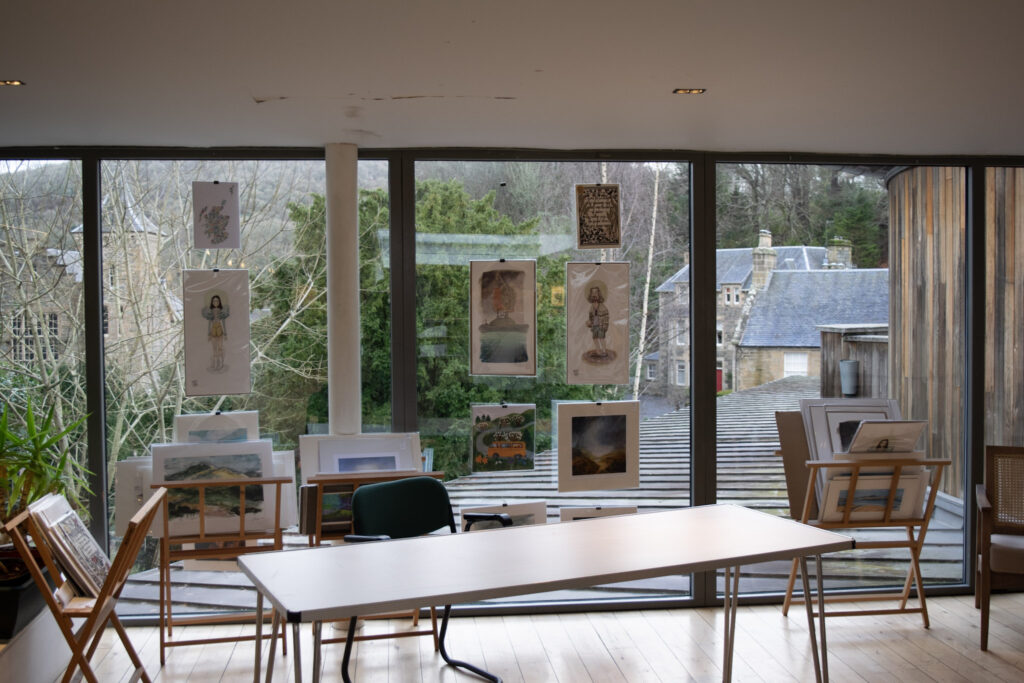
Do you know what a spurtle is? If not, then prepare to spend some money because you’re going to want one. According to the Perthshire Artisans website, these traditional Scottish kitchen utensils – used mainly for porridge or stews – have a “narrow tip which allows it to reach the corners of any pot, glide through the mixture, minimise splashing, and encourages gentle and consistent stirring in a way a spoon just can’t.” That’s right, even better than a spoon. It is a secret we keep tucked away here in Scotland, much like the makers themselves who are often tucked away in their rural workshops.
Artisanal craft can be a solitary profession, particularly in the rural stretches of Perthshire. While the quiet is often a draw for artists seeking inspiration in the landscape, the isolation can have its downsides. This is where the vibrant community of Perthshire Artisans shines. Established and managed by GrowBiz Scotland, the platform provides a vital support system for local creatives, integrating solitary talents into a rich mosaic of community, expertise, and lived experience.
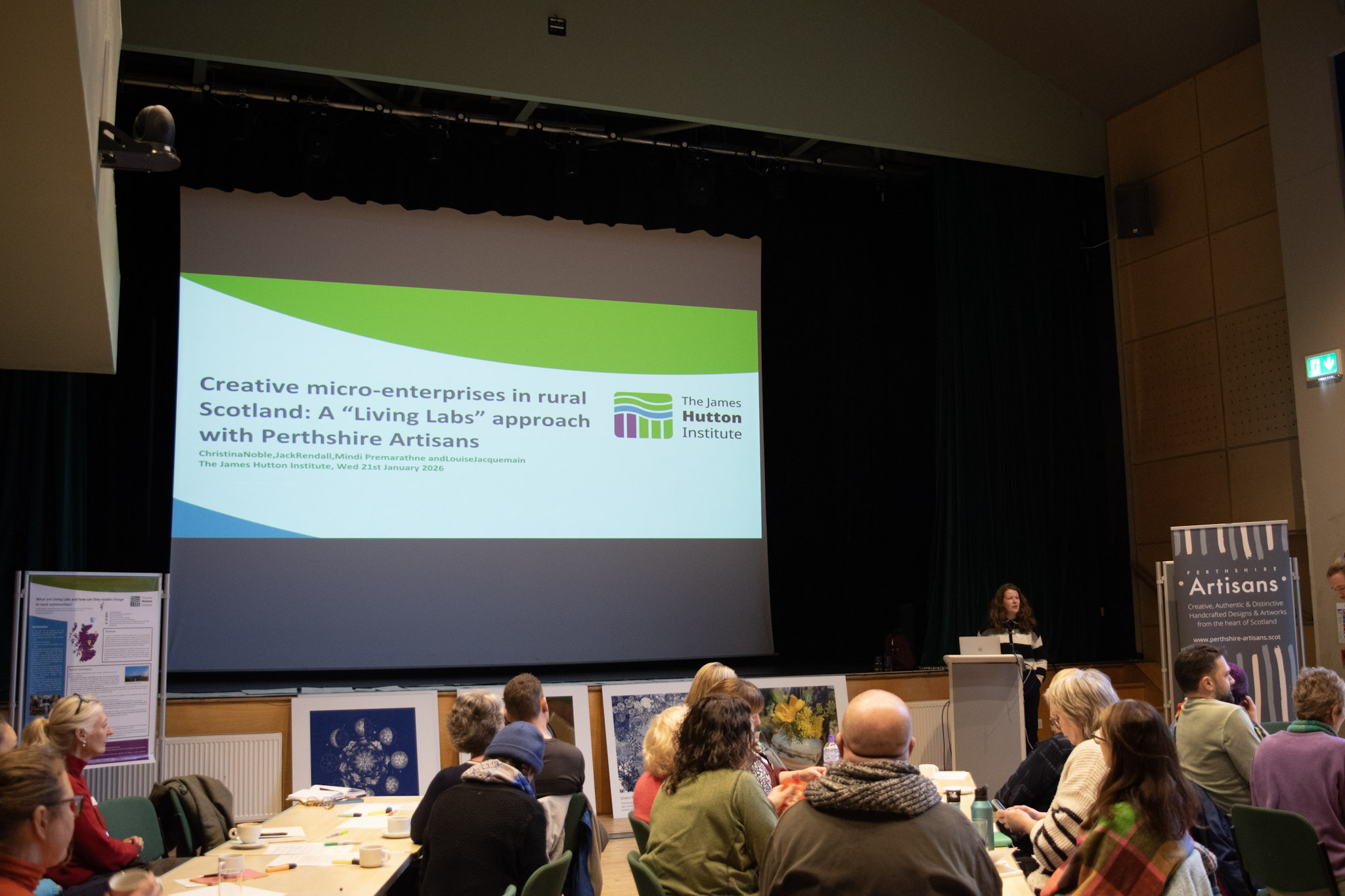
We spent a day with the Artisans during one of their in-person meet ups. It was a rainy day in Birnam, but thankfully we were hosted in a warm and dry Birnam Arts centre. With around 30 Artisans gathered around three large tables, the day kicked off with a fun and creative icebreaker. We were tasked with drawing our neighbour without looking down at the paper. The resulting portraits were – to put it mildly – abstract, but the laughter they sparked served as the perfect bridge into the day of discussions.
We then set about digging into what Perthshire Artisans has meant for these creatives, including their reasons and timing for joining. The group represents a broad spectrum of experiences: while some have been part of the collective since its inception, others are brand new. For several of these newer members, the group had long been on their radar as “just another thing,” but they are quickly discovering the unique benefits compared to other creative networks. For those we’ve interviewed before, we also explored how their journeys have evolved since we last spoke. While many people joined with a specific business need in mind, our discussions revealed that there was real value in the collective nature of the support networks that develop over time.
Here are 4 key themes that emerged from the day:
1. Created by and for Creatives – The origins of the Platform emerging during COVID-19 has seen it change into something very much shaped by the members, affording a unique identity: “officially a part of something, of a community”. Participants spoke about the camaraderie of the group and in being able to find comfort in being understood by other Artisans who share their solutions to similar problems: “the realisation that – when you’re kind of working as a sole person on your own, or creative, the creative problems are very similar, it doesn’t matter what the discipline is.”
2. Digital barriers – Being able to sell pieces of work online was an initial draw for some. They thought it would bring their work to a wider audience in a professional and slick manner. While this was certainly the case for some Artisans, others spoke of the new challenges it presented such as keeping the photos of their products up to date, or capturing them in a way that reflects the true nature of the art. Through our discussion, the group settled upon asking the wider team if it might be an idea to organise a photography day where Artisans would bring in their pieces to be professionally photographed for the website*. This is a good example of how the group can identify shared sticking points and come up with a solution that works for others.
3. Sharing skills – While the Artisans are without doubt extremely talented in their own crafts, the group also acts as a hub for informal education of other skills. During the workshop we found out that several members had signed up to the workshop of another Artisan to learn a new crafting technique. Others in the group also provided support to one another about digital aspects of their business, such as setting up computers. As one member summarised it: “…you can talk about the things that you’re not good at and get help to improve them, or you can talk about things that you are good about and share them!”. These examples show the group is an important place for shared learning in a safe and supportive environment, while keeping crafting techniques alive.
4. Greater than the sum of its parts – Perhaps most importantly, some members emphasised that Perthshire Artisans celebrates their individuality as artists without diminishing their ‘brand’ as it were. After all, as one member put it “you think about your creative life literally all the time…it’s your identity, not just your job”. Each Artisan has a strong presence in their own right, but what the Artisans group does is it allows them to pool resources such as sharing vans, splitting the costs of stands at shows, and achieving economies of scale so that they can make smaller shows worth their while.
What next for this piece of work? These are just some insights from a fuller report to be published in the coming months. When published, our report will help us to build the evidence base for how community networks such as the Perthshire Artisans can help to support rural creative economies. Finally, a massive thank you to GrowBiz, Perthshire Artisans, and all of those who shared their time and stories with us on the day!
*Since the workshop, a few of the Artisans have organised a skill-sharing session to learn photography skills for showcasing their work for different outlets.
Blog by Jack Rendall, Christina Noble and Mindi Premarathne (Researchers in the Social, Economic and Geographical Sciences Department)
Disclaimer: The views expressed in this blog post are the views of the author, and not an official position of the Hutton or funder.
