Energy, Renewables and Green Hydrogen
Innovative research and applied solutions supporting the low-carbon transition
James Hutton Institute Scientific Services bring extensive expertise to energy, renewables and green hydrogen projects.
From developing our own green hydrogen plant to assessing renewable energy impacts in rural and international contexts and exploring novel biofuels, we deliver practical, evidence-based solutions that support the transition to low-carbon energy systems.
Driving sustainable energy solutions
Our broad range of expertise relating to energy and renewables enables us to bring a multidisciplinary approach to projects.
We can provide independent socio-economic impact assessments of rural energy and renewables projects. Our experienced facilitators can also support consultation and stakeholder engagement processes to make sure projects are based on strong foundations.
Our environmental impact assessment capability includes the development of models and statistical methods that can be used to understand the possible effects of offshore renewable energy generation on seabirds and marine mammals.
We can apply simulation approaches such as agent-based modelling to test ideas, predict outcomes, and explore scenarios in complex systems that would be difficult or impossible to study in real life.
Antonia Boyce, Business Development Manager
James Hutton Institute and Scientific Services bring a wide range of expertise to projects in the area of energy, renewables and green hydrogen.

Our capability in biofuels includes researching crop genetics to enhance biofuel efficiency, field trials for biofuel crops and the environmental impact of biofuel crops.
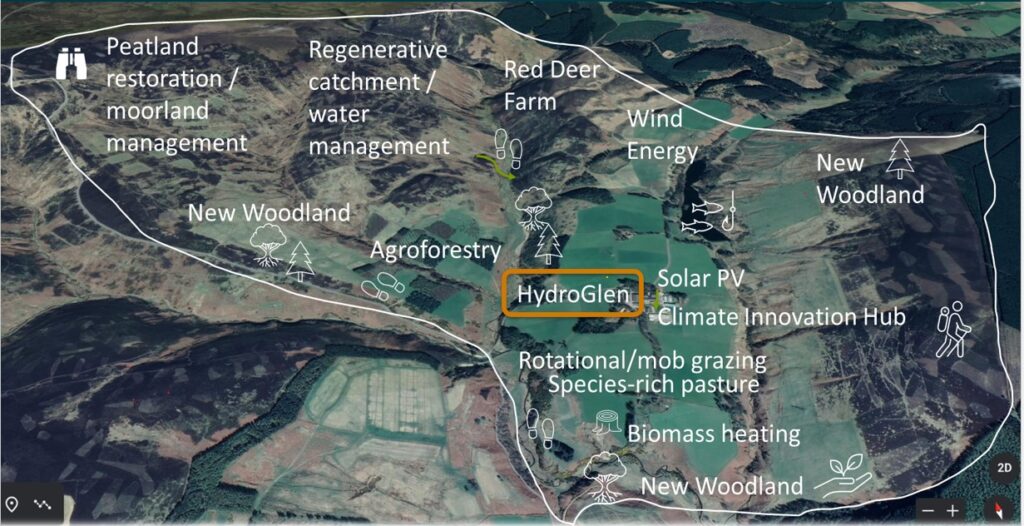
In 2025 our green hydrogen plant will become operational. Based at our Glensaugh Farm, the HydroGlen project will provide a demonstrator of local hydrogen production to support a rural community (link here to HydroGlen page) and is part of our climate-positive farming initiative.
Green hydrogen is a clean energy source produced using renewable electricity to split water into hydrogen and oxygen. Research collaborations involving James Hutton Institute Scientific Services explore how green hydrogen can support the transition to low-carbon energy systems.
Green hydrogen can help reduce greenhouse gas emissions by providing a low-carbon alternative to fossil fuels in sectors such as energy, transport and industry. Research supported by James Hutton Institute Scientific Services examines how hydrogen technologies can be integrated into sustainable energy systems.
Renewable energy sources such as wind, solar and hydropower can be used to produce green hydrogen through electrolysis. Collaborations involving James Hutton Institute Scientific Services investigate how renewable energy can support future hydrogen economies.