The James Hutton Institute and the University of Edinburgh unveil the Scottish Observatory for Atmospheric Research (SOAR): A tall tower transforming emissions and pollutant tracking
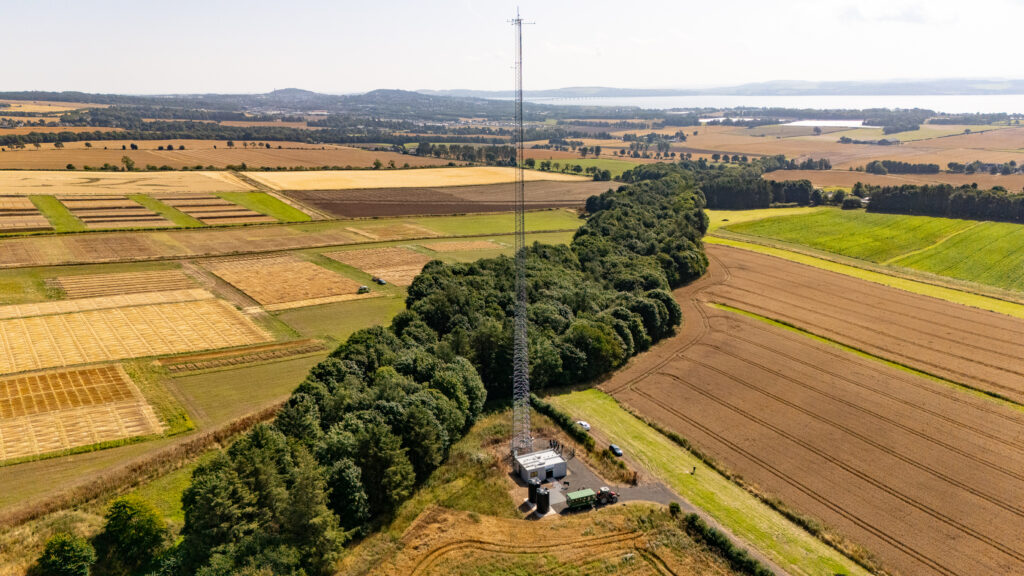
A striking new facility, jointly owned by The James Hutton Institute and the University of Edinburgh (UoE), was officially opened today (24th August) at Balruddery Farm in Angus, near Dundee.
The Scottish Observatory for Atmospheric Research (SOAR), the first purpose-built tall tower for science in the UK, stands at 100m and is transforming how scientists monitor greenhouse gases, atmospheric pollutants and other atmospheric gases. It is one of the country’s most advanced tools in the fight against climate change.
Designed to measure over 60 different greenhouse gases (GHGs), such as carbon dioxide (CO₂), methane (CH₄), nitrous oxide (N₂O) and hydrofluorocarbons, the tower enables researchers to shift from broad national estimates to highly detailed, real-time information about the sources of emissions and their changes over time. The SOAR tower continuously samples air at two heights (50m and 100m) using an array of highly sensitive instruments.
Dr Jagadeesh Yeluripati, a senior scientist at the Hutton, said, “Greenhouse gas emission estimates largely rely on bottom-up accountancy methodologies, which are associated with significant uncertainties. In contrast, tall-tower atmospheric monitoring provides direct and independent emission estimates. This approach will play a crucial role in reducing bottom-up uncertainties and improving the accuracy and reliability of the estimates.
“Scotland has one of the most ambitious climate goals in the world, having pledged to achieve net-zero emissions by 2045, so having accurate and trustworthy data is essential for tracking progress and guiding decisions to reach this target.”
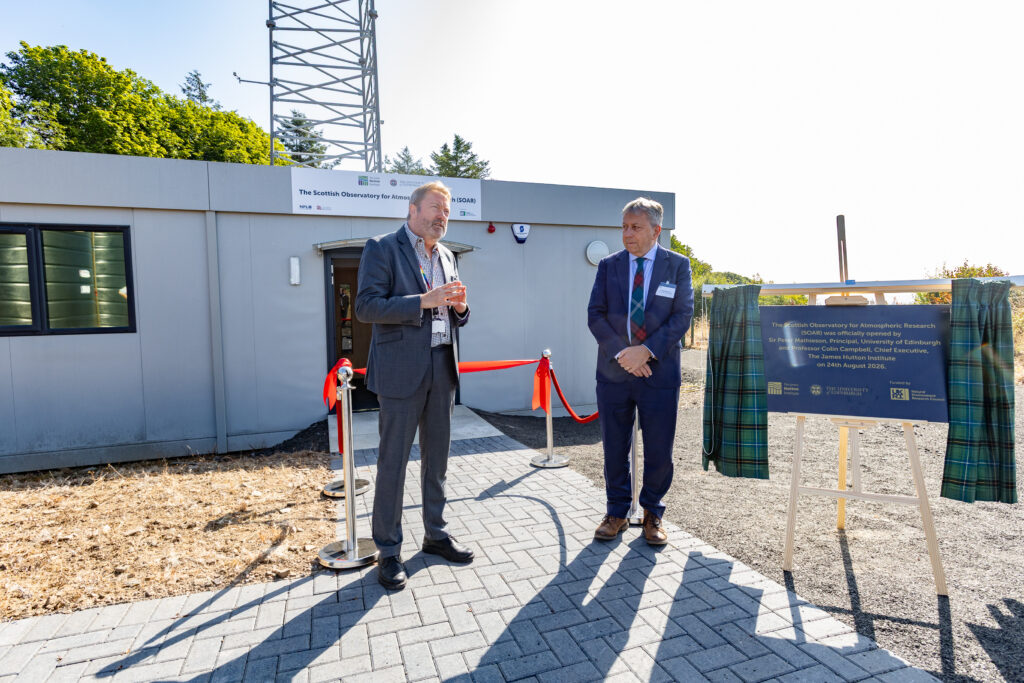
The data from SOAR will make a major contribution to determining emissions estimates. The effectiveness of climate policies can then be demonstrated and actions targeted where they are most needed.
It is part of the UK Deriving Emissions linked to Climate Change (DECC) network and a growing international network of atmospheric observatories aimed at improving how countries monitor their emissions under the United Nation’s Paris Agreement.
Professor Mathew Williams, lead scientist at the University of Edinburgh, said, “SOAR’s location in Scotland fills a critical gap for the UK and Europe. It can sample air from the North Atlantic, from the northern UK and from the European continent depending on wind direction. It is already revealing regional patterns of greenhouse gas emissions that help test our understanding and thereby improve our knowledge.”
Linking SOAR with other initiatives in Scotland, such as the new Land Lidar Programme, offers exciting opportunities in monitoring, reporting and verification (MRV).
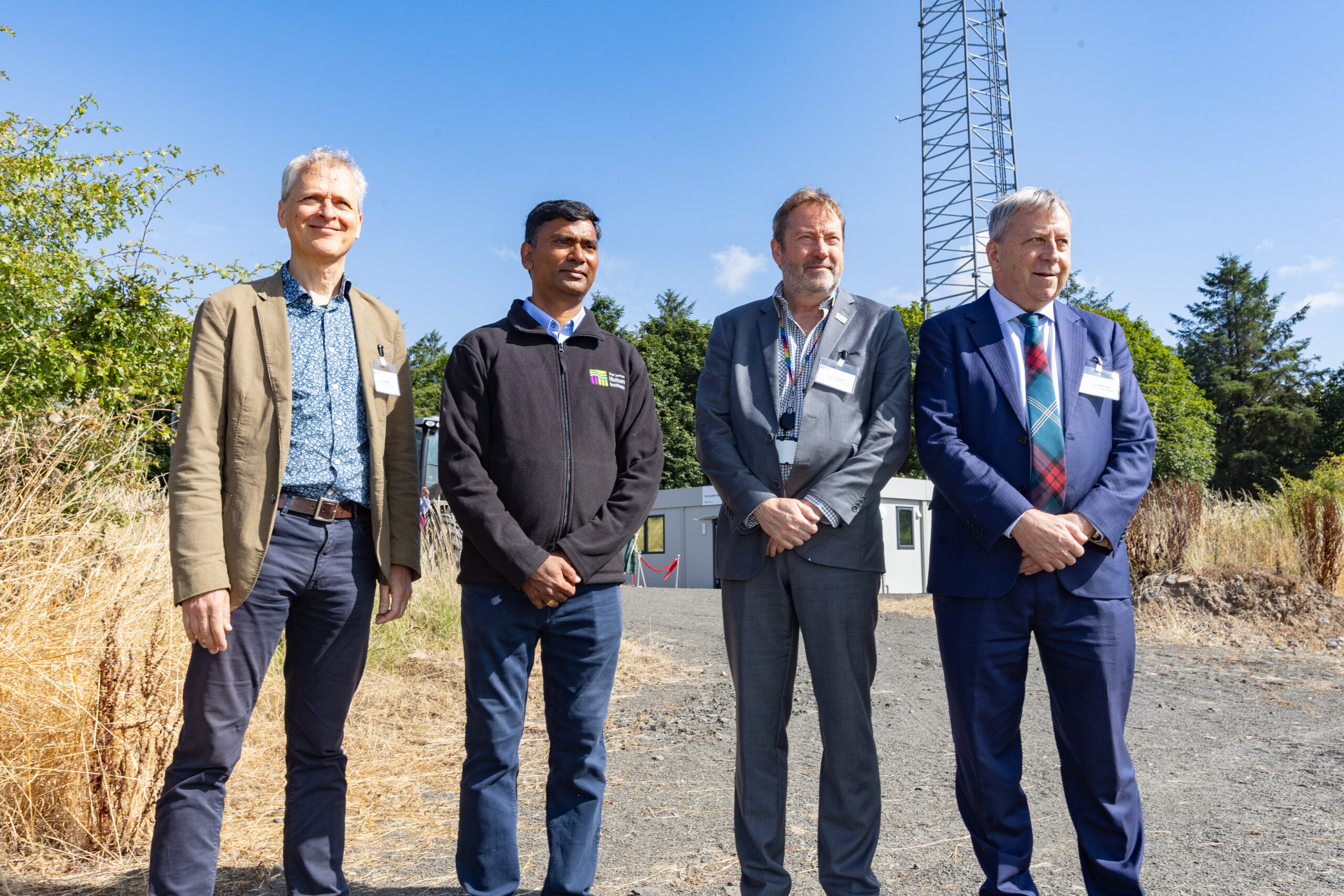
SOAR also has agreements with other institutions, such as the National Physical Laboratory and the University of Bristol, to use the facility for research into greenhouse gas emissions and atmospheric processes.
This tower is particularly important in Scotland, where agriculture and land use represent a significant share of GHG emissions. It will aid in developing climate-smart farming practices and understanding the true carbon footprint of land-based sectors, including peatlands, forestry, and livestock.
Additionally, SOAR will provide Scotland, and the world, with the tools needed to take real, measurable action on climate change.