Inductively Coupled Plasma (ICP)
ICP elemental analysis services
Trace metal and multi-element analysis using ICP-MS and ICP-OES
Our ICP analysis services provide fast, reliable measurement of trace metals and elemental composition using Inductively Coupled Plasma Mass Spectrometry (ICP-MS) and Inductively Coupled Plasma Optical Emission Spectrometry (ICP-OES). Businesses and researchers rely on our laboratory to generate precise elemental data for environmental samples, soils, water, food products, agricultural materials and industrial processes.
From ultra-trace contaminants to major elements, our ICP techniques deliver highly accurate results that help organisations demonstrate regulatory compliance, monitor environmental impact, optimise products and maintain quality standards. With decades of analytical expertise, we combine advanced instrumentation with robust laboratory methods to provide trusted elemental analysis for industry, regulators and research partners.
ICP-MS (Inductively Coupled Plasma Mass Spectrometry)
ICP-MS is an extremely sensitive analytical technique designed to detect elements at trace and ultra-trace levels. It is widely used where very low concentrations of metals or contaminants must be measured with high accuracy.
Common applications include:
- Trace metal testing in environmental and industrial samples
- Monitoring environmental contamination in soils and water
- Heavy metal analysis in food and drinking water
- Low-level elemental analysis in biological materials
- Ultra-trace element detection for regulatory and research purposes
ICP-MS provides exceptionally low detection limits and allows laboratories to analyse multiple elements simultaneously in a single run, making it ideal for comprehensive trace metal screening.
ICP-OES (Inductively Coupled Plasma Optical Emission Spectrometry)
ICP-OES is particularly well suited to analysing major, minor and trace elements present at higher concentrations. It is commonly used where robust, accurate measurement of elemental composition is required across a wide range of materials.
Typical applications include:
Nutrient analysis in soils and plant materials
Industrial materials and raw material testing
Geochemical and environmental sample analysis
Product composition verification
Routine quality control and manufacturing support
By combining ICP-MS and ICP-OES, our laboratory can measure elements across an exceptionally wide concentration range from ultra-trace contaminants to major nutrients, providing comprehensive, high-quality elemental analysis to support scientific research, regulatory compliance and industrial decision-making.
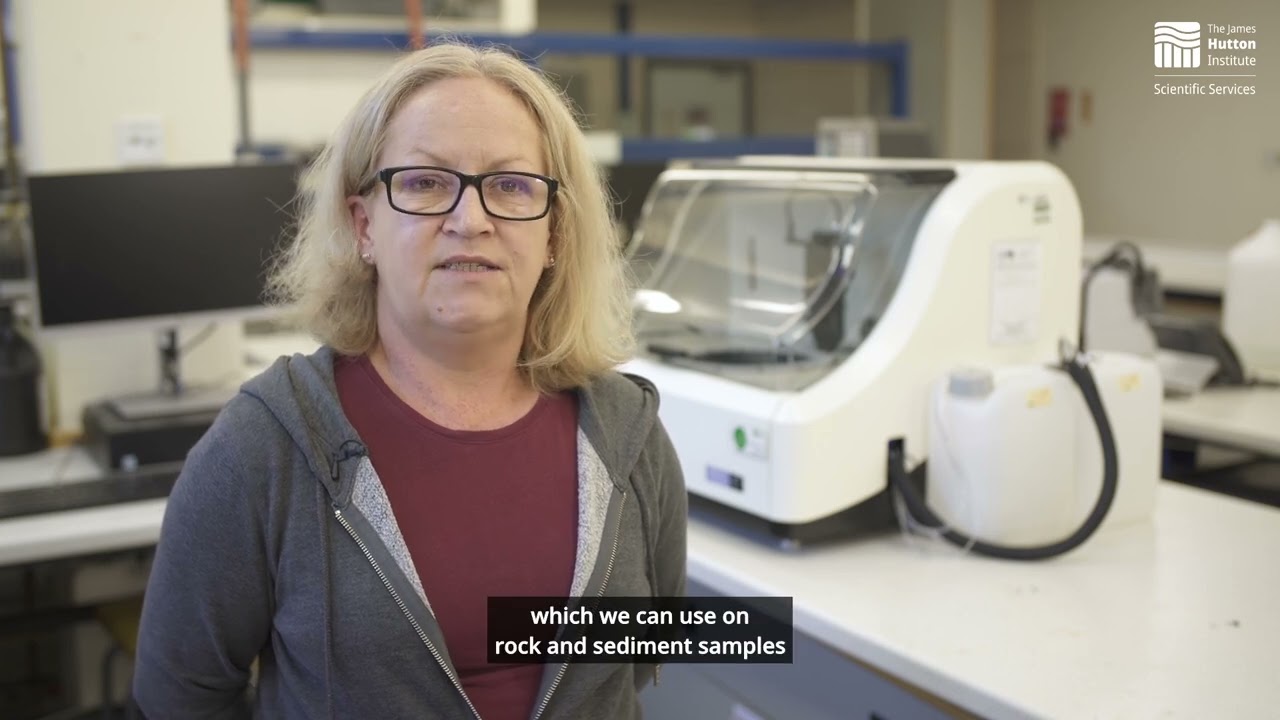
Unlock unparalleled precision, gain deeper insights, with reliable ICP-MS and ICP-OES analysis.
Fiona Sturgeon, ICP section Lead
ICP Analysis Applications
Our ICP elemental analysis services support a wide range of commercial testing and research projects.
Typical applications include:
Marine and seaweed analysis
Measurement of trace metals and nutrients in marine samples and biological materials.
Environmental monitoring
Trace metal analysis in water, soils and sediments to support environmental assessment and regulatory compliance.
Agriculture and plant science
Nutrient and elemental analysis in soils, plants and fertilisers for crop management and agronomic research.
Food safety testing
Detection of heavy metals such as lead, cadmium and arsenic in food products and ingredients.
Industrial materials testing
Elemental composition and impurity analysis for manufactured materials, chemicals and raw materials.
Quality and Reliability
Our ICP laboratory combines advanced ICP-MS and ICP-OES instrumentation, experienced analytical scientists and robust quality procedures to deliver accurate and dependable elemental analysis.
We support both routine commercial testing and complex research and development projects, with clear reporting that helps clients interpret results and make informed decisions.
Turnaround Times
Typical turnaround time for ICP elemental analysis is around 10 working days, depending on sample type and analytical requirements.
Express turnaround options may be available for urgent projects.
FAQs
ICP (Inductively Coupled Plasma) analysis is a technique used to measure trace metals and elemental composition in a wide range of materials. It is widely used for environmental monitoring, food safety testing and industrial quality control.
ICP techniques allow precise detection of trace elements and potential contaminants. James Hutton Institute Scientific Services uses ICP analysis to help organisations monitor environmental quality, assess pollution and support sustainable land and water management.
Our ICP methods allow analysis of a wide range of elements including:
Aluminium (Al), Antimony (Sb), Arsenic (As), Barium (Ba), Boron (B), Cadmium (Cd), Calcium (Ca), Chromium (Cr), Cobalt (Co), Copper (Cu), Iron (Fe), Lead (Pb), Magnesium (Mg), Manganese (Mn), Nickel (Ni), Potassium (K), Sodium (Na), Strontium (Sr),
Zinc (Zn)
Along with many other trace, minor and major elements.
Typical sample requirements are:
Solid samples: around 0.2–1 g
Liquid samples: typically 10–50 mL
We can also work with low weight and volume samples. Requirements may vary depending on the analytical method.
Most materials that can be dissolved or digested into solution can be analysed, including water, soils, plants, food, seaweed, rocks and industrial materials.
ICP-MS is used for trace and ultra-trace element detection, while ICP-OES is suited to higher concentrations of elements. Many laboratories use both techniques to provide complete elemental analysis.