New microscopy investment will help unlock solutions to costly crop diseases
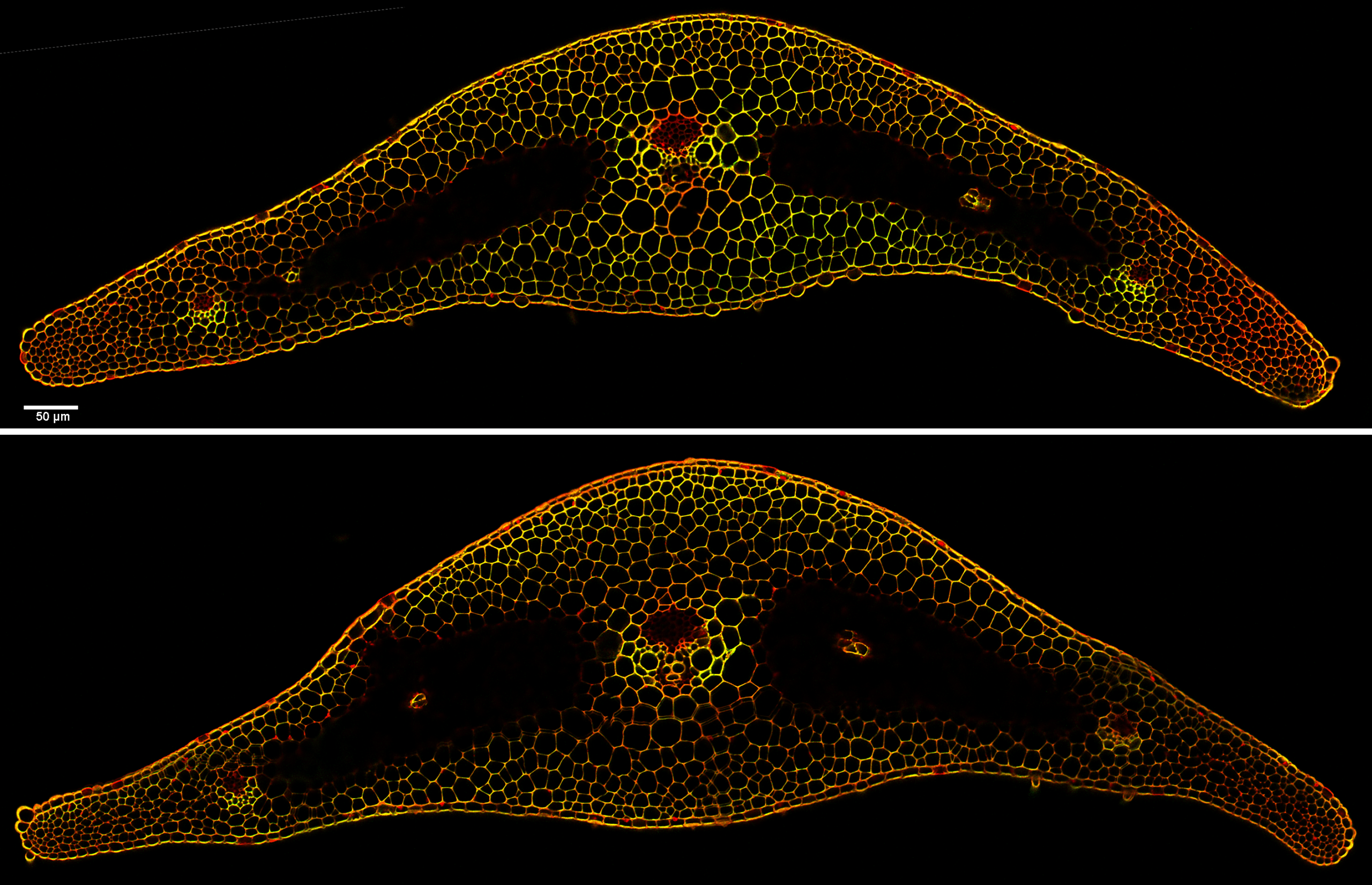
The James Hutton Institute has secured £640,000 from the Biotechnology and Biological Sciences Research Council (BBSRC) ALERT 2025 programme to install a new confocal microscope that will enable scientists to undertake a range of studies at the cellular level, while also opening up new scientific possibilities through enhanced imaging capabilities.
Microscopy plays a central role in plant science, allowing researchers to observe what is happening within plant cells and tissues. For instance, by examining interactions between plants and disease-causing organisms at cellular and molecular levels, scientists can better understand how infections develop and identify potential routes to resistance.
The new microscope will be an essential part of Hutton’s Imaging Technologies Facility, which combines advanced microscopy equipment with specialist expertise in sample preparation, imaging and data analysis. Together, these capabilities enable researchers to generate and interpret complex images that reveal how biological systems function and contribute to studies of plant anatomy, physiology and pathology.
“This investment ensures our researchers can continue to carry out essential work on some of the most important challenges facing agriculture today.”
Dr Alison Roberts, Head of Imaging Technologies
Every year, significant amounts of crop production are lost to disease and pests or to adverse climatic conditions, creating major challenges for farmers and adding pressure to food prices. Understanding exactly how these threats affect plants is a crucial step towards developing more resilient crops and securing sustainable food production.
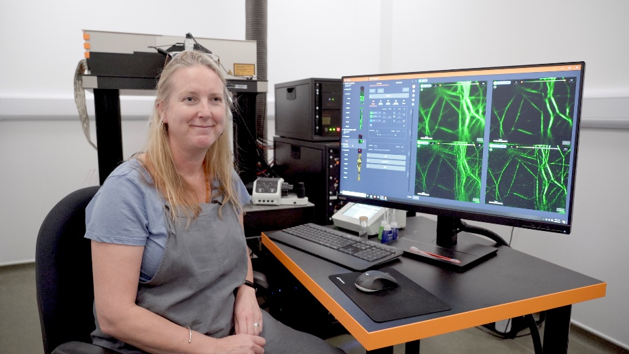
Dr Alison Roberts, Head of Imaging Technologies, said, “This investment ensures our researchers can continue to carry out essential work on some of the most important challenges facing agriculture today.
“We’ve been lucky to maintain a suite of high-end imaging equipment at the Hutton for over two decades and this investment secures the future of our imaging excellence. The funding will support a year-long project to test, tender for and install a new microscope and to train the facility and research staff to utilise the equipment.”
“We expect to purchase a new confocal laser-scanning microscope to replace a piece of equipment that’s essential for our research but has become obsolete and is no longer suitable for repair.”
Confocal microscopes use intense laser light and a tiny, physical ‘pinhole’ that only allows in-focus light to pass into the detector. It can scan tissue in three directions to build up a 3D image in incredible detail, with each point in focus. The new microscope will have exciting new functionality compared to the older technologies, including higher resolution and faster scanning, while also being more energy efficient.
Importantly, the project also reflects the Hutton’s commitment to sustainability. Rather than simply retiring the existing microscope, the tender process to buy new equipment requires reuse of parts of current systems to create a valuable widefield microscope. This will extend the life of valuable components and reduce waste while providing complementary technologies for the imaging facility.
Dr Roberts said, “As purchasers, we can play our part to encourage manufacturers to recycle equipment wherever possible. If we demand a sustainable solution during the tender process, it becomes something that companies have to address.”
By strengthening its imaging capabilities, the Hutton will continue to provide scientists with the tools they need to tackle major crop diseases, support agricultural innovation and contribute to more resilient and sustainable food systems.