ILUSC: Example Outputs on Land Use
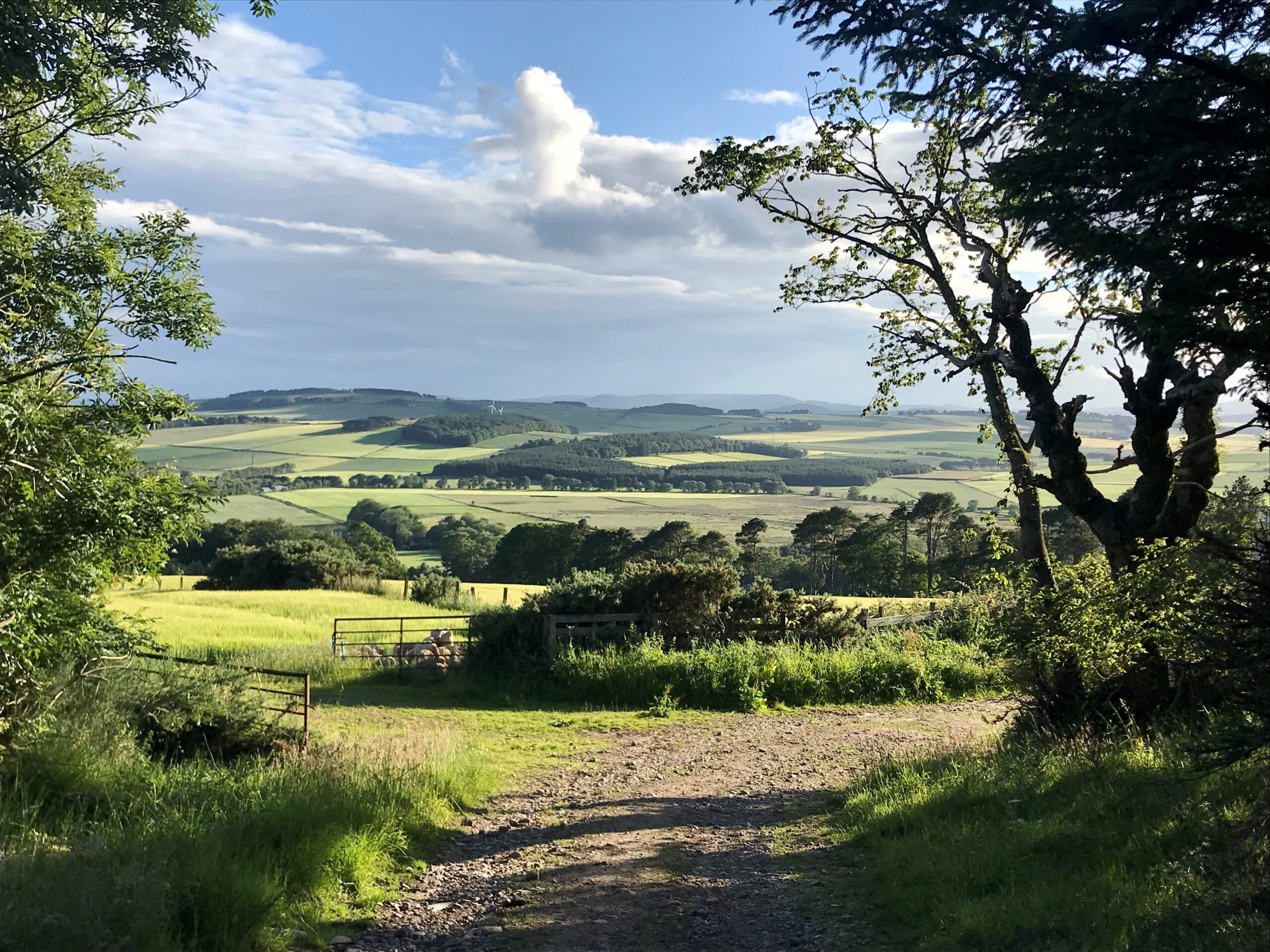
This page highlights a small selection of outputs related to landscapes and land uses, explaining our range of insights and output types, drawing on everything from spatial analysis of landscape change through to ecology and sociology.
Many of our outputs take the form of written documents which allow us to convey precision and detail. Our research also often involves other means of communication, such as blogs, podcasts or videos that allows us to communicate with a variety of audiences, from peer academics through to policy and the general public. For more information about the types of research projects that generate these insights, please visit our research projects page.
Reports
Many of our research funders seek insights about how to improve and adjust landscape management: the main output of many projects is therefore reports that give the full detail on challenges and how to respond.
- The DiversiTree project produced insights about how to improve the resilience of varied woodlands in landscapes, relevant to those who work in forestry and seek to enable resilient woodlands. Examples of its outputs include reports on how to increase the resilience of Scots Pine: Diversifying tree species composition within Sitka spruce forests – implications for biodiversity and how to improve the biodiversity hosted within Sitka spruce plantations: Diversifying tree species composition within Scots pine forests – does it increase resilience for biodiversity?
- Influencing land use also requires insights about how to govern and organise all the different interests who live, work or influence landscapes. It requires many different groups to contribute and ideally collaborate. This report, commissioned by Scotland’s Climate Exchange Centre (CXC) explored possibilities for supporting collaborative landscape management. Enabling collaborative landscape management | ClimateXChange
Briefings
These are short documents giving useful summaries of key findings and insights, often targeted at specific stakeholder groups, such as policy-makers. These may synthesise insights across different projects, disciplines and institutions.
- This very short note was produced by researchers in both Hutton and with colleagues in SRUC, providing 3 distinct recommendations about how to collect and handle spatial data linked to the land reform agenda. Policy Note Spatial Landownership Data FINAL.pdf
- Sometimes we produce visual rather than written summaries of our work. For example, research into the socio-economic impacts of ‘green’ land investment in rural Scotland, produced a visual summary as well a longer main report.
Academic papers
We know that not everybody enjoys reading peer-reviewed academic papers! However, these are important, as the peer review process gives assurance that we are making high quality and world class contributions to understanding. All of our papers are published open access.
- Many papers help to give insight about the consequences of different land uses. For example, a recent paper in Forest Policy gives insight about the Feasibility of woodland expansion for carbon offsetting in Scotland
- We also explore how these different goals could be governed. For example, Exploring policy coherence for land use transformations: The case of Scotland, is a recent paper in the Journal of Environmental Management.
Blogs and podcasts
Below we highlight relevant Hutton blogs (you may also find our researchers contributing to blogs hosted on other platforms).
- Flax used to be widely grown across Scotland, but fell out of popularity in Scotland. Could it come back? Exploring the potential for flax as an industrial crop https://www.hutton.ac.uk/blog/researchers-from-the-james-hutton-institute-assess-the-potential-of-flax-as-an-industrial-crop/
- This blog discusses how Hutton scientists have explored the use of Ai to improve environmental mapping https://www.hutton.ac.uk/blog/hutton-scientists-help-develop-new-standards-to-asses-ai-reliability-for-environmental-mapping/
Videos
There are several videos on land use and landscape management hosted on the James Hutton Institute YouTube channel. Additionally – as for blogs – our researchers sometimes contribute videos and other material linked to multi-institutional research projects and other platforms.
- A set of videos related to managing woodlands for resilience
- A set of videos about land management at Glensaugh farm
- Our tour of our new Hutton Hub, which include technology and facilities to inclusively visualise and explore landscape change.
Webinars
In 2026 ILUSC commenced its webinar series.
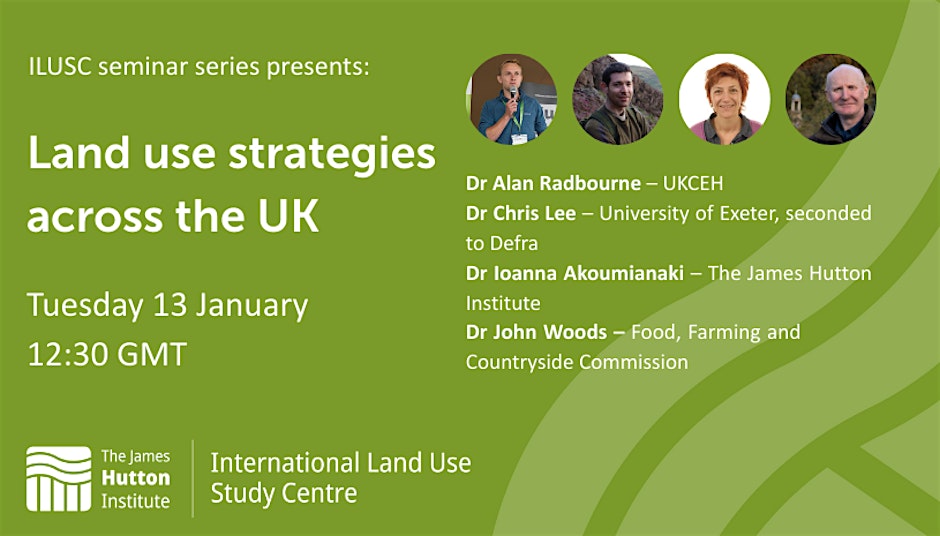
The first webinar featured experts on Land Use Frameworks and Strategies from across Wales, England, Scotland and Northern Ireland, giving a unique opportunity share and compare across the UK.
One of the hosts of this event, Kerry Waylen, wrote a blog review of the seminar. If you’re interested in land use, policy development, or the future of UK landscapes, this is well worth a read.
We hope these links give a useful sense of the variety of outputs and insights that we are generating on land use. Please also visit [/models page] to see our interactive model outputs.
We also recognise that we at the Hutton also are a part of the landscapes that we manage, and have been considering how we could manage our own land and facilities differently – for example to encourage local engagement in nature.
For more information about the individuals, disciplines and research approaches we use to understand land use and landscape management, please get in touch with ILUSC key contacts:
