X-Ray Diffraction (XRD)
Accurate crystalline phase identification and mineral quantification for complex solid samples
X-Ray Diffraction (XRD) is a powerful analytical technique used to identify and quantify crystalline materials in solid samples. We provide precise mineral and phase analysis to support research, quality control, environmental investigation and industrial applications.
Advanced XRD services for precise mineral identification, quantification, and analysis
XRD is a versatile technique that can be used to identify any crystalline substance such as most minerals. It can also be used to quantify the proportions of different minerals or indeed many other substances when they are present in a mixture. Most samples are analysed in powder form, but it is also possible with some samples to analyse surface deposits without removing them from the object. XRD can also be used for proportional quantification, a specialty for which we are world renowned.
We are an extremely well equipped and staffed group, routinely undertaking mineralogical investigations for a wide variety of clients, including oil and gas, industrial minerals, ceramics, environmental, and research.
The lab has 3 XRD instruments; two Bruker D8 Advance and one Panalytical Xpert Pro. All have position sensitive detectors, including the latest Lynxeye XE-T on our latest Bruker D8 Advance instrument, and optics featuring motorised divergence slits. The Xpert Pro has recently upgraded optics and interchangeable stages including an Anton Par XRK 900 reaction chamber which is used for controlled humidity experiments and non-ambient diffraction at temperatures up to 900°C.
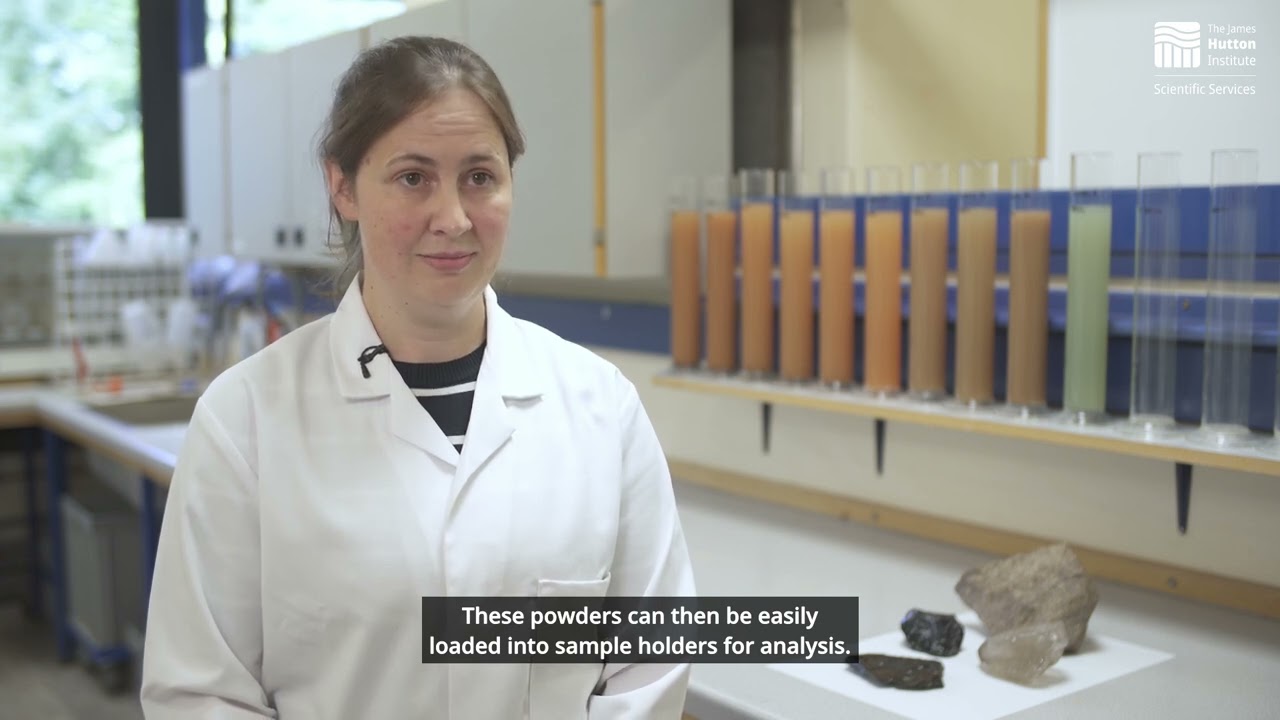
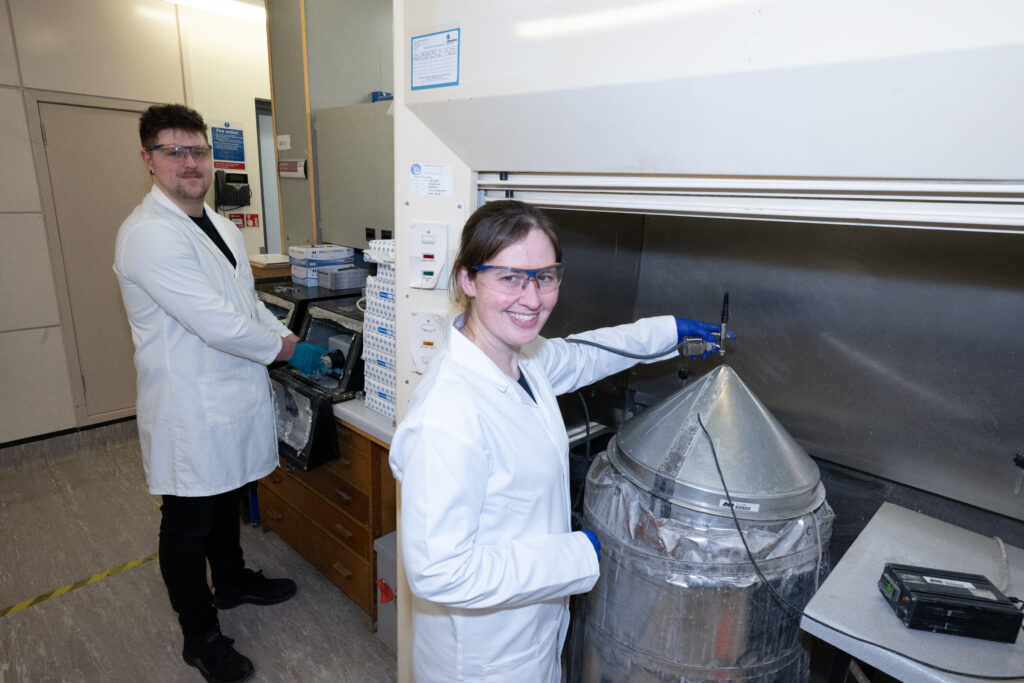
Sample preparation is probably the most important step for a successful analysis, and we place great emphasis on careful and appropriate sample preparation for all of our methods.
Helen Pendlowski, XRD Lab Manager
Once collected diffraction data is processed and analysed using a variety of software, including Bruker’s Diffrac.Eva, Profex and PowdR. In addition, we have the latest versions of the International Centre for Diffraction (ICDD) databases, that are used for identification of unknowns.
All of our methods are UKAS accredited. For further information on XRD at the James Hutton Institute visit www.claysandminerals.com.
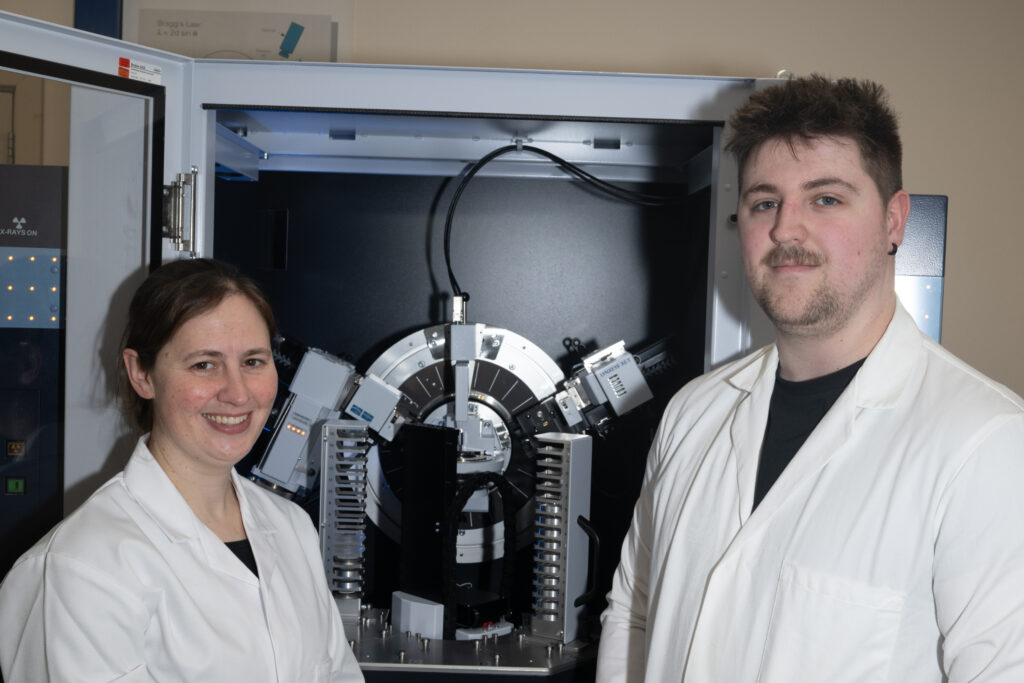
X-Ray Diffraction (XRD) is an analytical technique used to identify and quantify the crystalline minerals and compounds present in a sample. James Hutton Institute Scientific Services uses XRD to analyse the structure and composition of materials, providing valuable insights for research in geology, soil science, environmental studies and materials analysis.
XRD provides detailed information about the mineral phases present in soils and geological samples. James Hutton Institute Scientific Services uses this technique to help researchers understand soil formation, mineral composition and environmental processes that influence land use and ecosystem health.
XRD analysis from James Hutton Institute Scientific Services supports researchers, environmental consultants, geologists and industry partners. The data produced helps organisations identify mineral structures, assess materials and gain deeper insight into environmental and geological systems.