Vertical Farming
Controlled environment agriculture designed for innovation and scalability
Vertical farming offers a scalable solution for year-round crop production in controlled environments. By maximising resource efficiency and accelerating crop development, it provides a dynamic platform for innovation, research collaboration and sustainable growth.
Vertical Farming – transforming agriculture
Vertical farming is transforming agriculture by providing a sustainable solution to key challenges like climate resilience, food security, and resource efficiency. This innovative approach uses stacked layers and controlled environments to cultivate crops year-round, independent of external weather conditions. The promise of vertical farming lies in its ability to optimise resource use, such as water and land, while significantly reducing the need for pesticides and chemical fertilisers.
At its core, vertical farming supports rapid crop development, including speed breeding, allowing for accelerated testing and refinement of new crop varieties. By controlling all aspects of the growth environment—light, temperature, humidity, and nutrient delivery—crops can be tailored to achieve optimal quality, nutritional content, and yield. This method is particularly effective for high-value crops like leafy greens, herbs, and microgreens, but also has the potential to diversify as technology and research progress.
Our approach incorporates a hybrid mindset, using vertical farming in conjunction with traditional greenhouse operations and supporting field production, which enhances resilience across agricultural supply chains. This versatility allows vertical farming to serve as both a standalone production system and a complementary technology that bolsters conventional agriculture. For companies seeking to innovate, our state-of-the-art facilities offer unique opportunities for collaborative trials and research and development programs. We welcome partners to test products, integrate advanced technologies such as automation and smart sensors, and explore new growth protocols. Let’s work together to shape the future of sustainable agriculture through cutting-edge research, tailored trials, and impactful partnerships.
Ramin Ebrahimnejad, Business Development Manager
Our approach incorporates a hybrid mindset, using vertical farming in conjunction with traditional greenhouse operations and supporting field production, which enhances resilience across agricultural supply chains. This versatility allows vertical farming to serve as both a standalone production system and a complementary technology that bolsters conventional agriculture.
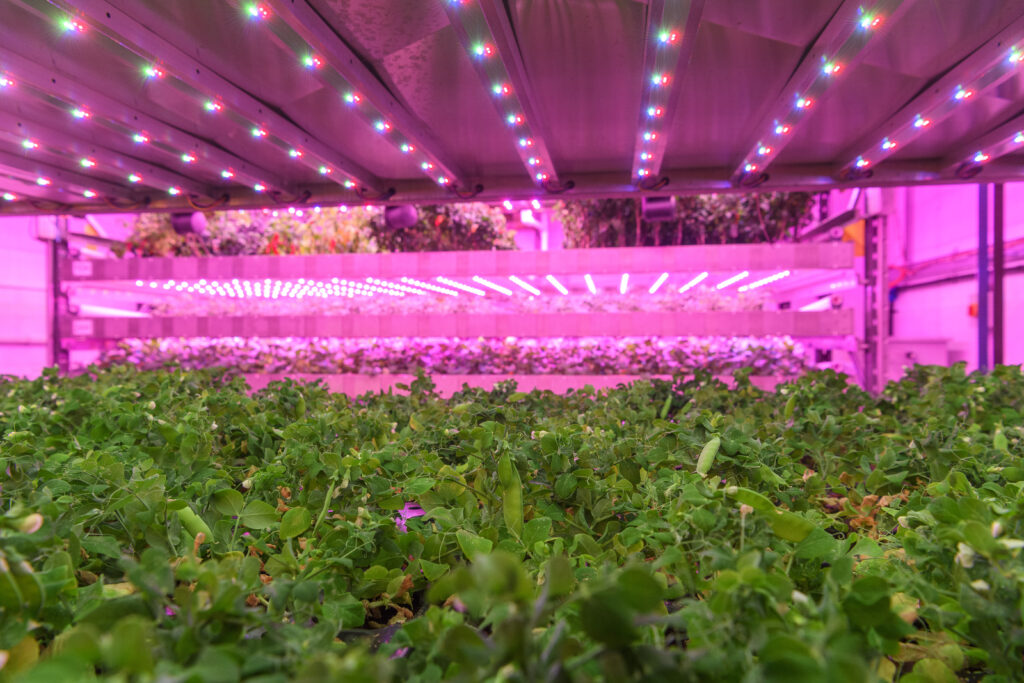
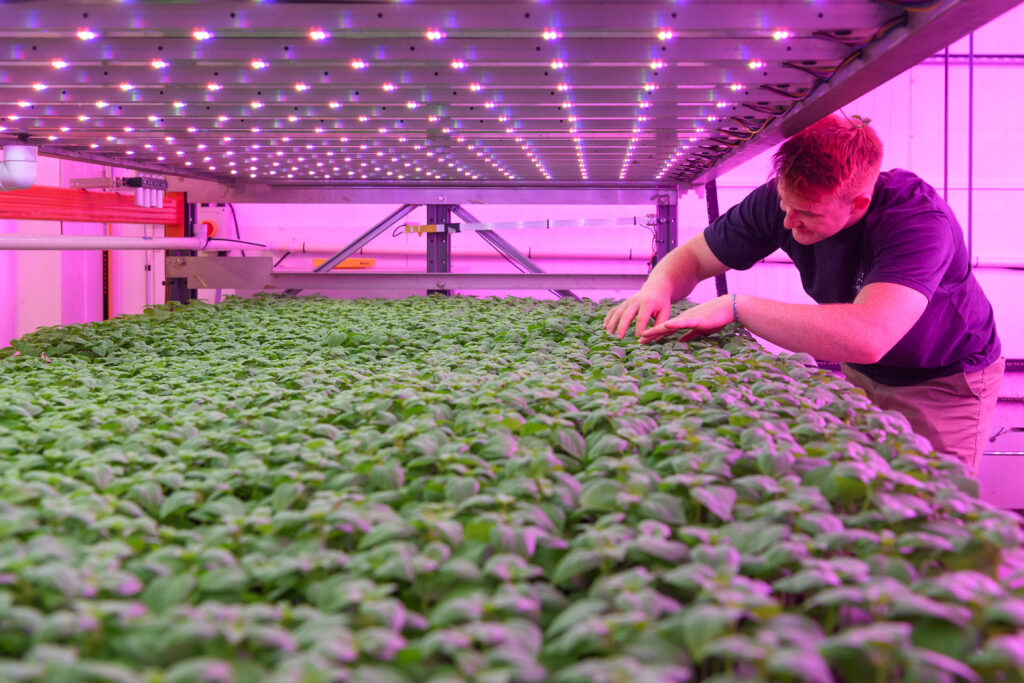
Vertical farming is a method of growing crops in stacked layers within controlled indoor environments. James Hutton Institute Scientific Services collaborates with partners to explore how vertical farming technologies can support year-round crop production and more efficient use of resources.
Vertical farming allows crops to be grown with precise control over light, temperature and nutrients. This approach can increase productivity, reduce land use and support sustainable food production. James Hutton Institute Scientific Services works with industry partners to test and develop vertical farming systems.
Vertical farming systems are commonly used to grow leafy greens, herbs and other high-value crops. Research collaborations involving James Hutton Institute Scientific Services explore how controlled environment agriculture can support crop development and innovation.
