Soil Forensics
The James Hutton Institute hosts the world-leading Centre for Forensic Soil Science, which specialises in the analysis of soils and various ecological and environmental materials.
The centre’s expertise is utilised across the criminal justice systems both civil, criminal, and environmental, offering support in investigations, advice and providing expert witness testimony in court. The forensic analysis plays a crucial role in providing information in intelligence-led investigations and in offering advice and evidence for civil, environmental, wildlife and criminal cases.
Expert forensic analysis & ecological solutions
Led by Dame Professor Lorna Dawson, a fully trained Expert Witness in soil science, we assist law enforcement, military, government, legal professionals, farmers and growers, and individuals by providing outdoor scene sampling, expert assessments, and bespoke reports based on contextual data.
Through a comprehensive process of sampling, examination, analysis and evaluation we examine and compare evidence, helping to interpret environmental characteristics for opinion based evaluations.
Our techniques allow us to deliver a bespoke forensic service, uncovering critical environmental and ecological factors that play a pivotal role in criminal investigations—providing unique insights on a case-by-case basis.
Professor Lorna Dawson, Head of Forensic Science
Examples of Case Applications:
Inorganic Analysis:
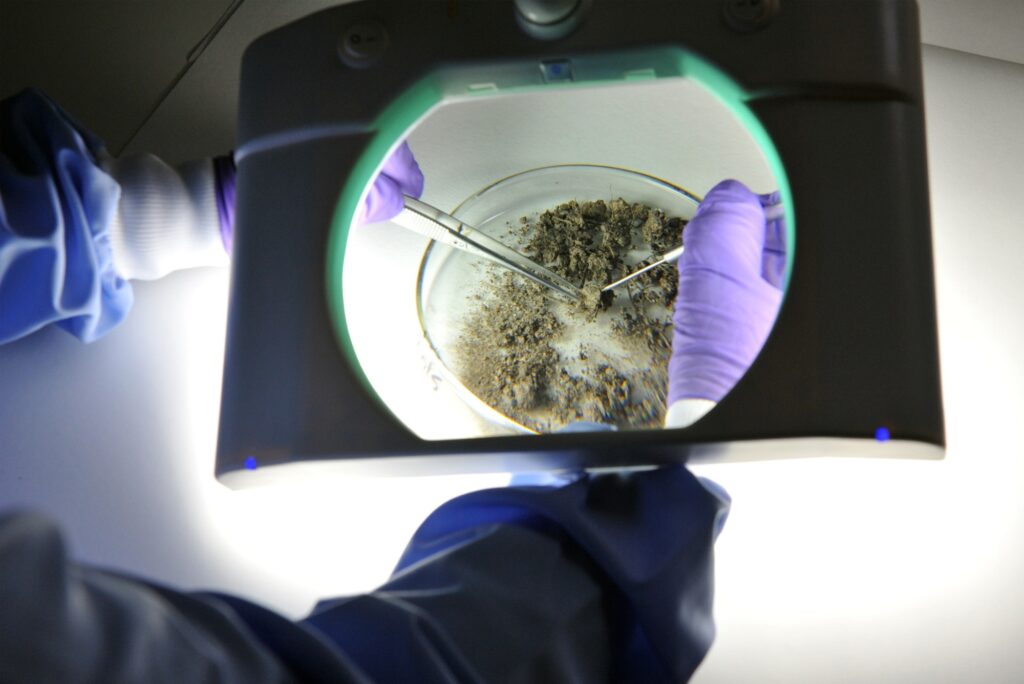
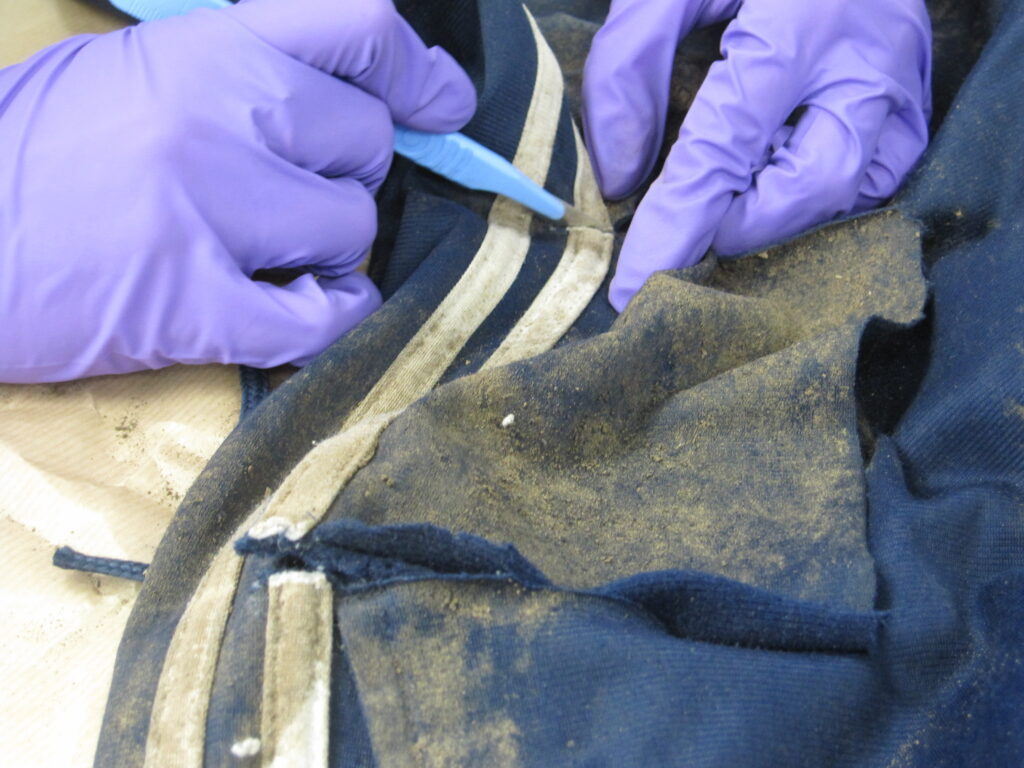
- Elemental Analysis and Soil Characterisation help identify contaminants or trace particles at crime scenes, linking evidence such as soil or particles found on clothing to specific locations.
- Particle Size Analysis using laser diffraction discriminates locations, while Trace Particle Identification (SEM-EDS) identifies elements and their potential sources.
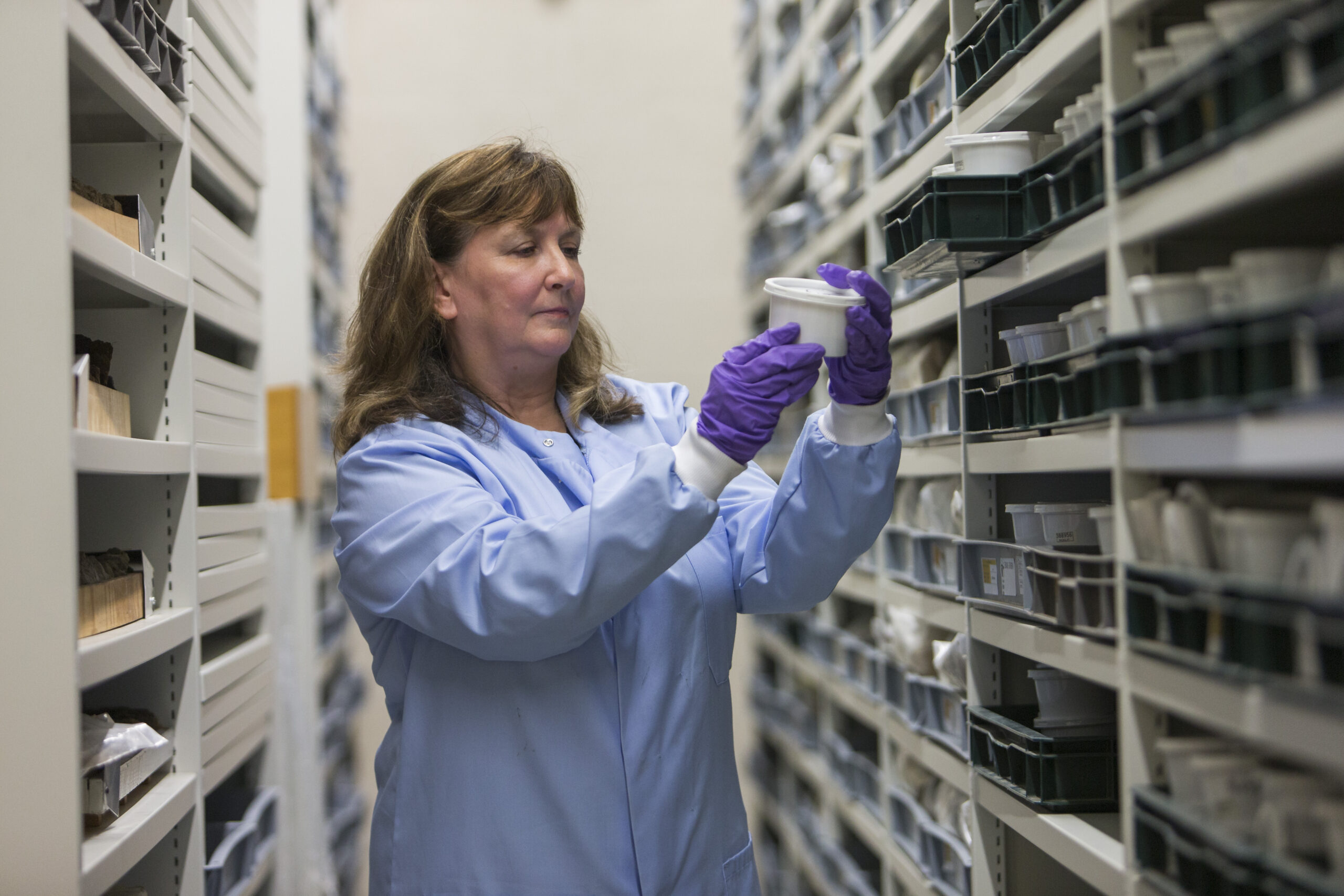
- XRD analyses determine mineral profiles and can be linked to data from the soil archive held at the institute, identifying the origin of unknown samples.
(Photo: Ross Johnston/Newsline Media)
Organic Analysis:
- GC-FID and GC-MS techniques allow for the comparison of soil samples to determine their source or to compare them with specific locations.
Fourier Transform Infrared Analysis:
- FTIR Analysis helps identify unknown products found in soil and can assist in determining their point of origin.
Isotope and DNA Analysis:
- Isotope and Molecular DNA Analysis link samples, such as plant fragments or animal faeces, to specific sources, and identify animal species.
- Plant Characterisation involves identifying natural plant species, tree species, or crops, such as soft fruits, cereals, and potatoes, while Plant DNA analysis is used for matching species from unknown fragments.
Other Methods:
- Geographical Information Systems (GIS) map soil and vegetation characteristics in a georeferenced model, aiding in search efforts by narrowing areas of focus.
- Organism Identification (e.g., bacteria, fungi, diatoms) helps identify contamination sources and characterise habitats for ecological forensic investigations.
Head of the Centre, Dame Professor Lorna Dawson, CBE, FRSE, FRSB, FRSA, FRSGS, FISoilSCi, ChSci has been involved in over 100 forensic cases and has presented evidence in over 20 trials in the UK and overseas.
Soil forensics involves analysing soil samples to determine their origin, composition and environmental history. James Hutton Institute Scientific Services uses advanced analytical techniques to compare soil samples and provide evidence that can support criminal investigations, environmental assessments and land use studies.
Soil can act as trace evidence because its composition varies between locations. By analysing physical, chemical and biological characteristics, James Hutton Institute Scientific Services can compare soil samples and help establish links between people, objects and specific environments.
James Hutton Institute Scientific Services uses a range of analytical methods including mineralogical analysis, chemical profiling and microscopic examination. These techniques allow scientists to characterise soil samples in detail and identify distinguishing features that may link them to particular locations.
Contact for more information
Lorna Dawson
Head of Forensic Science
Based in Aberdeen
T: +44 (0)7815 178093
Dame Professor Lorna Dawson is Head of the Centre for Forensic Soil Forensic Science at the James Hutton Institute and has over 30 years’ experience in managing and conducting research in soil and plant interactions, in particular its application in the criminal justice system. She was awarded Dame Commander of the Order of the British Empire (DBE) in the King’s New Year Honours List for 2026.